
Free on-site gate assessment - hinges, posts, and your LiftMaster or Nice gate operator checked before anything is quoted
The assessment is free and the quote is the invoice.


 Before
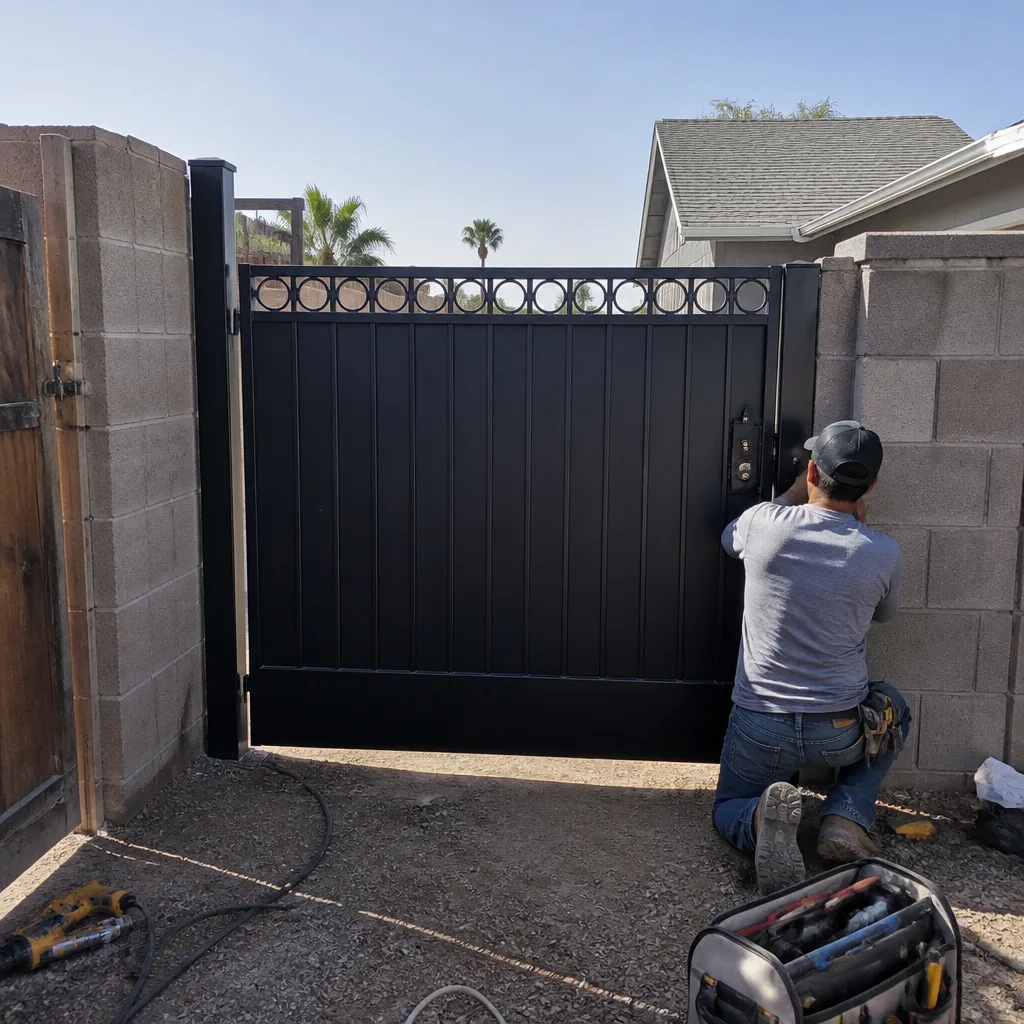 After
After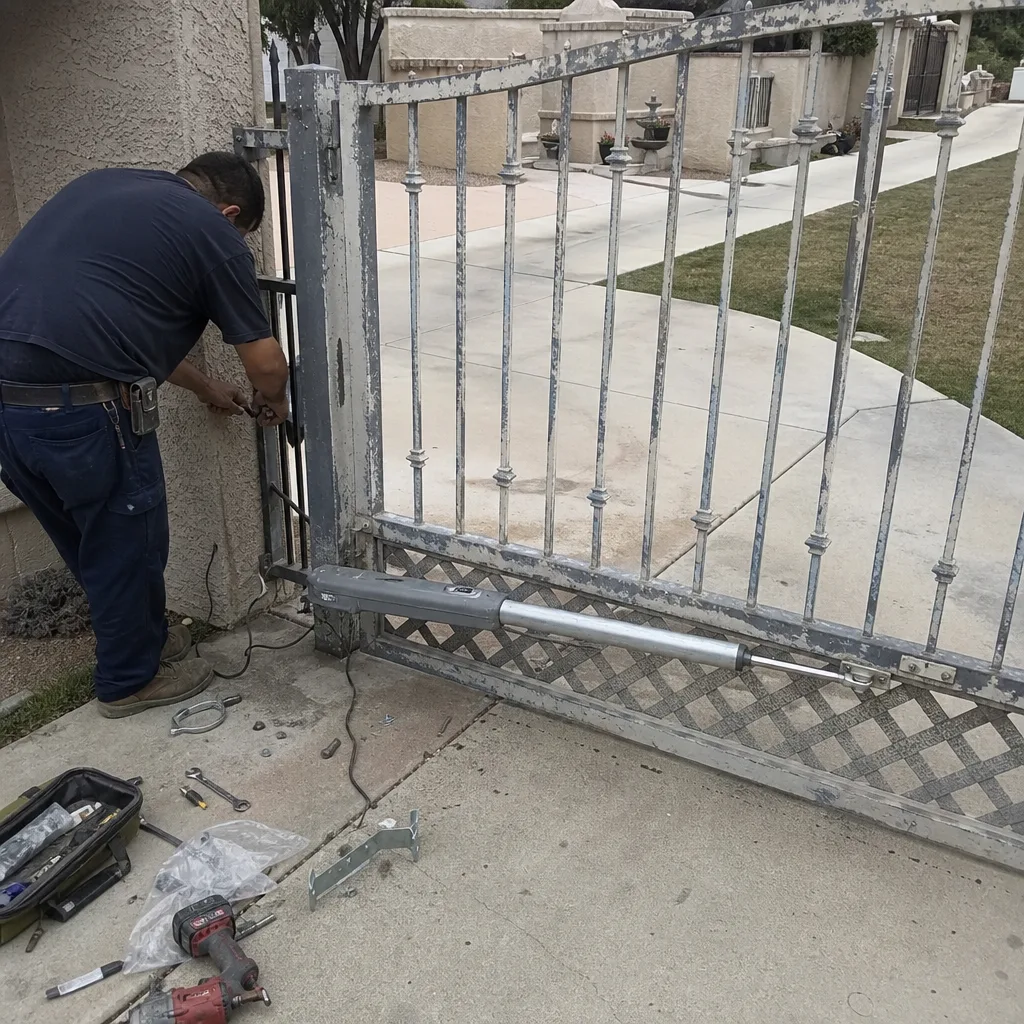 Before
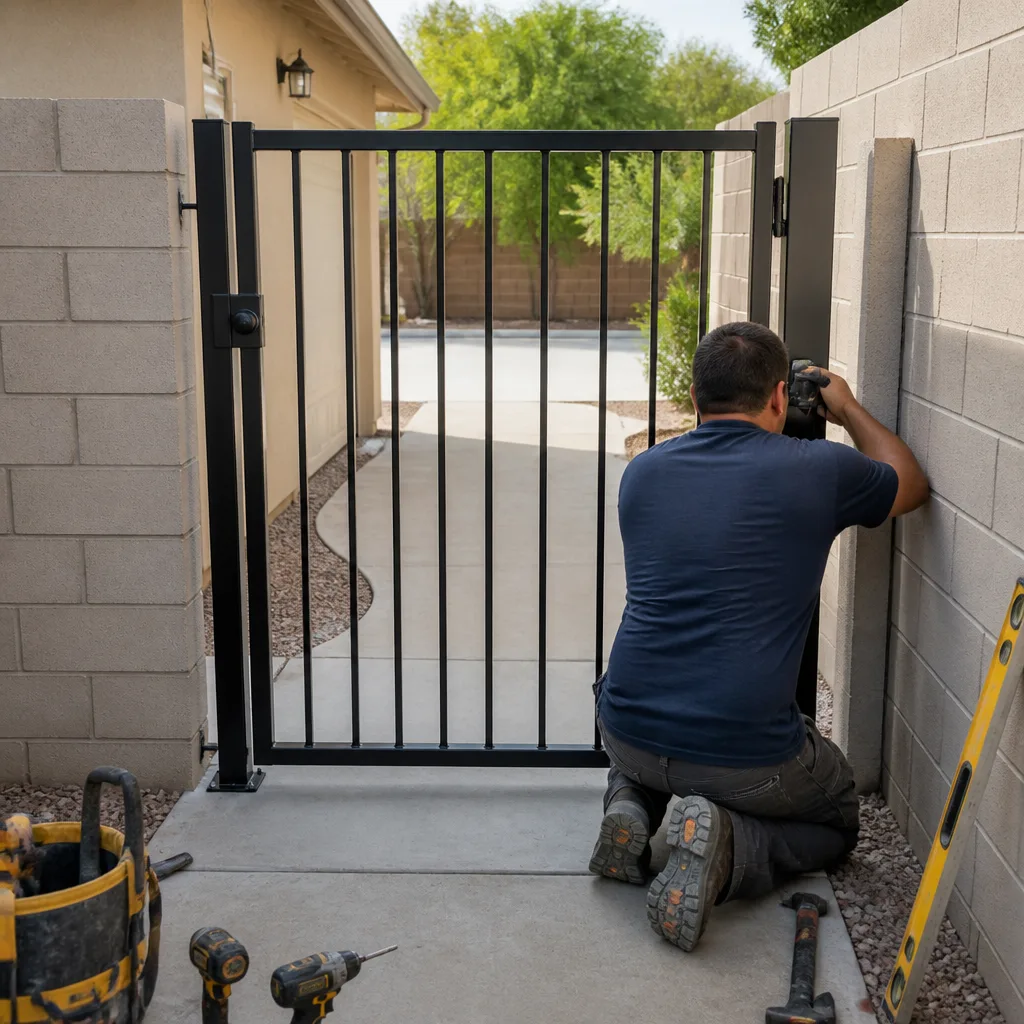 After
After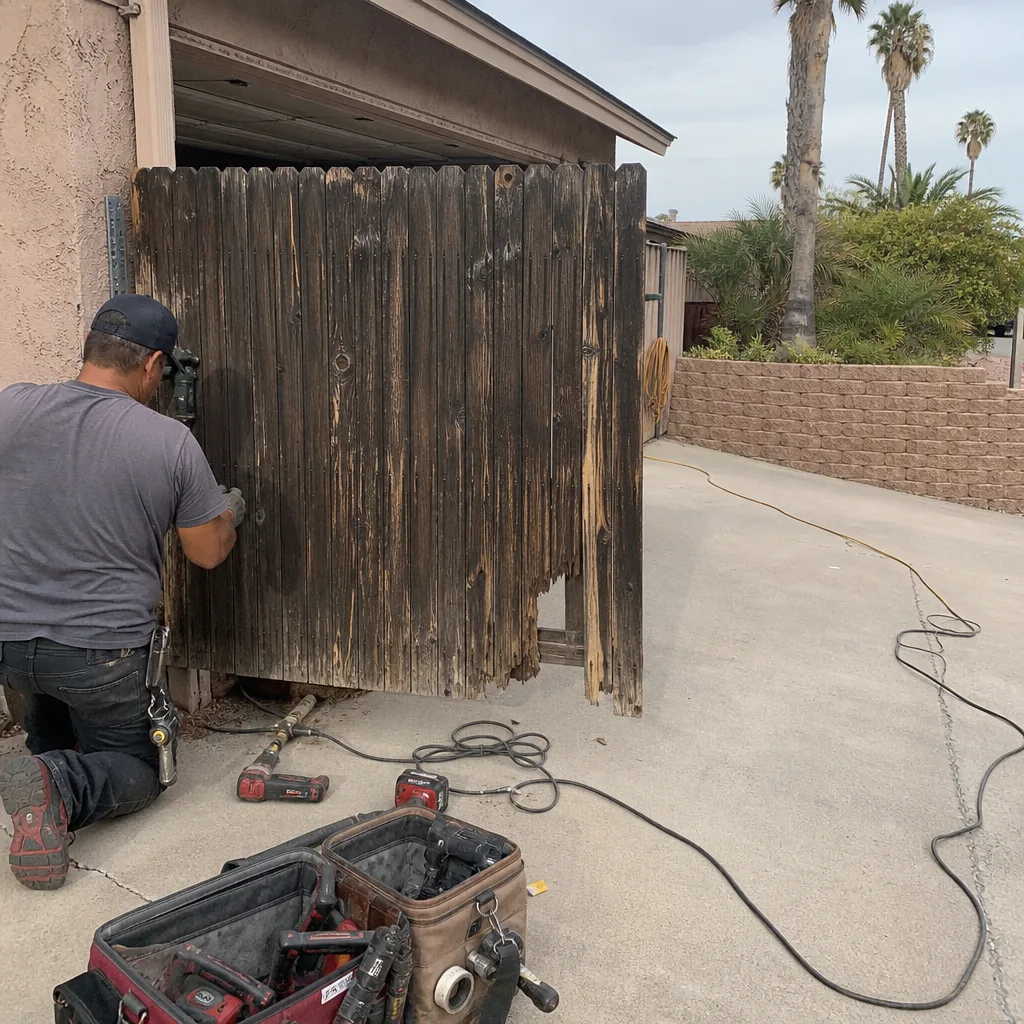 Before
 After
AfterGhost Controls Gate Motor Replacement: The Tempe Owner’s Guide
A Ghost Controls gate motor replacement in Tempe typically runs $680-$1,240 installed, depending on whether we’re swapping a single swing arm on a TSS1 or a dual system like the DEP2. We stock Ghost Controls-compatible motors and mounting hardware on our Tempe service vans, and most replacements are completed in a single visit. Most Tempe homeowners realize the motor’s failing when the gate starts reversing mid-travel or the remote triggers a loud click with no movement, especially during our summer afternoons when the actuator thermal protector kicks in early.
Which Ghost Controls Models This Applies To
Ghost Controls organizes their residential line into three series, and the motor assembly differs across each. The TSS1 (single swing), TDS2 (dual swing), and DEP2 (heavy-duty dual) use distinct actuator housings, though the internal DC motor module is often the same 24V unit. The critical compatibility gotcha is the arm length and bracket geometry: a TSS1XP “extreme” motor has a longer stroke than the standard TSS1, and swapping them without measuring pin-to-pin travel will leave your gate stopping short or over-traveling into the stop post.
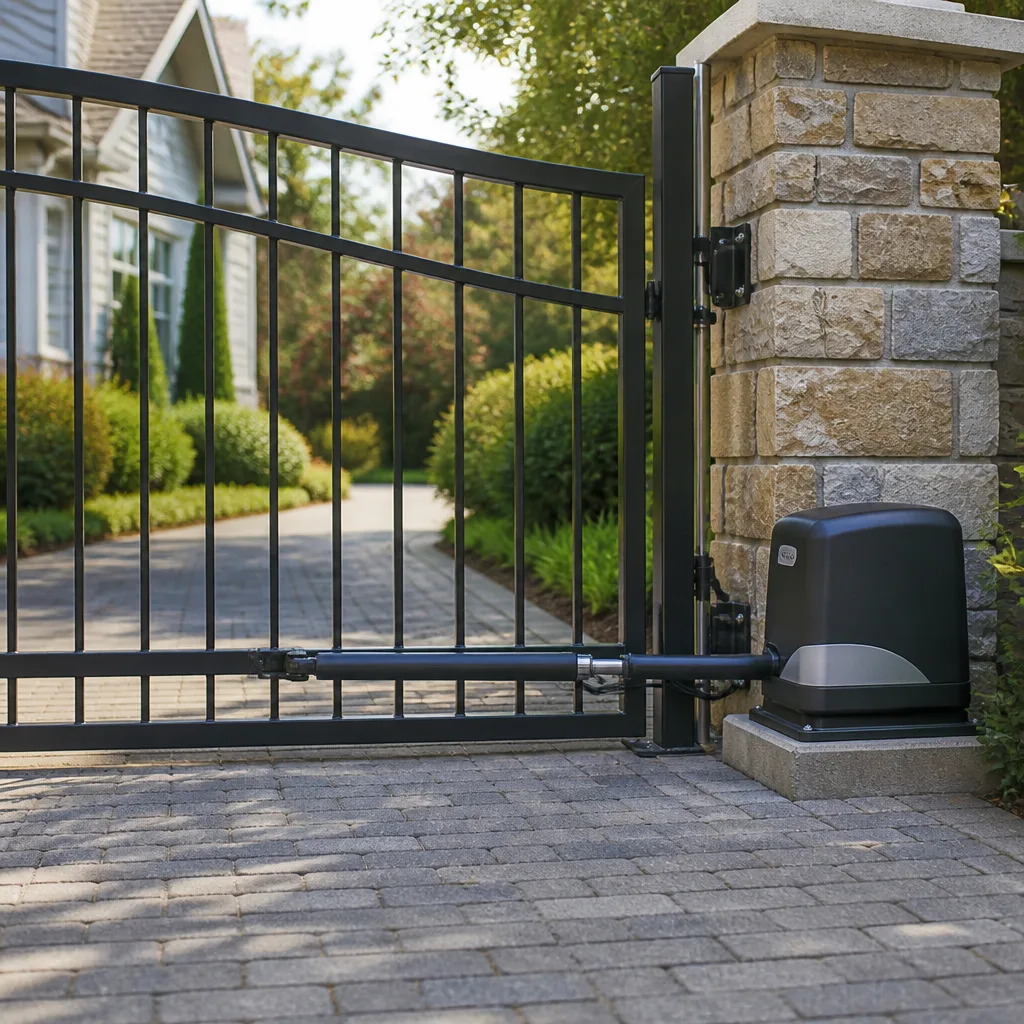
To identify your motor, check the silver label on the actuator tube near the battery box. You’ll see a model prefix (TSS, TDS, or DEP) followed by voltage and date code. We cross-reference that against Ghost Controls’ service bulletins, but we also measure the existing arm’s extended and retracted lengths with the gate in both open and closed positions. That measurement goes on your work order.
For OEM versus aftermarket on Ghost Controls specifically, we stock both. The Ghost Controls factory motor carries their two-year warranty and matches the original harness connectors exactly. Our aftermarket equivalent, built to the same 24V DC, 800-lb peak torque spec, uses upgraded seals against dust and monsoon moisture. Both are priced in writing before we start. We don’t steer toward one or the other; we show you the part, the warranty term, and the installed cost, then you decide.
Signs Your Ghost Controls Gate Motor Replacement Is Failing
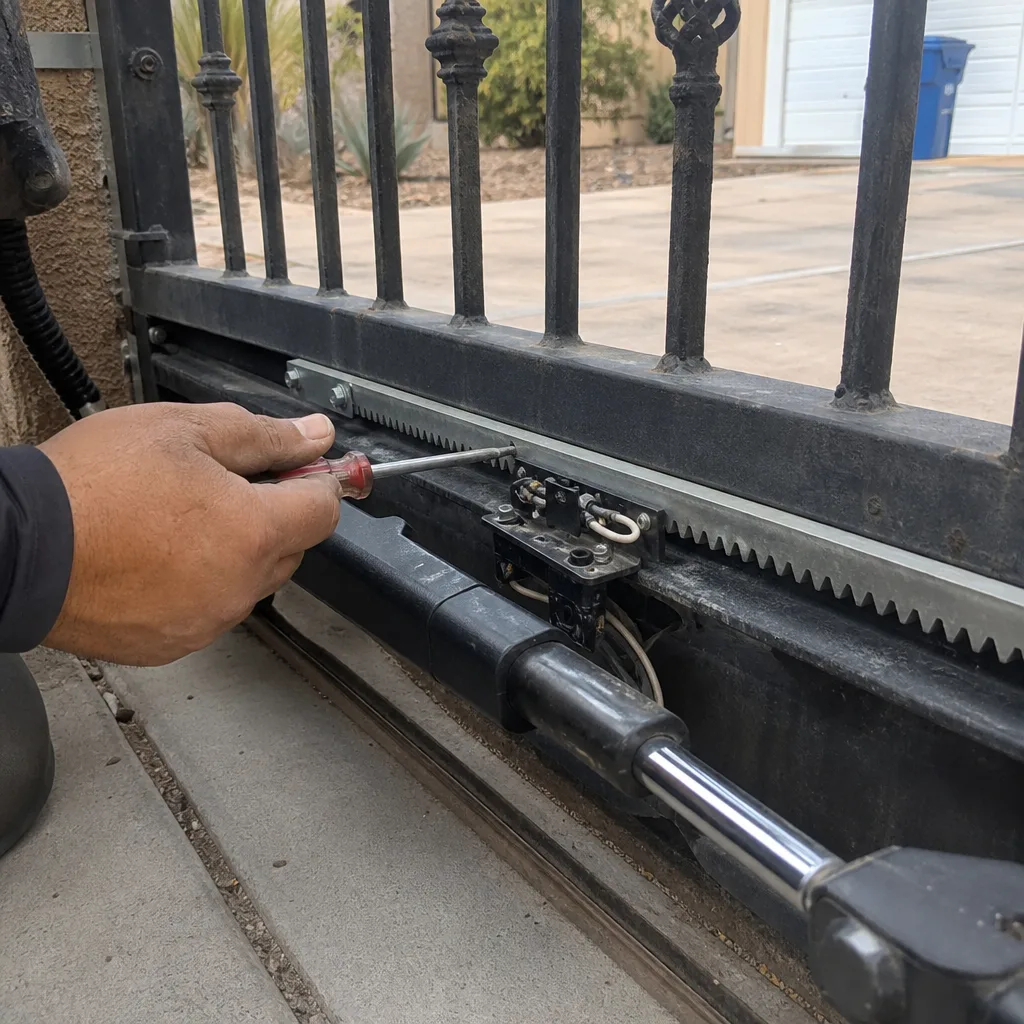
- Gate reverses before fully opening or closing. The motor is drawing excessive amperage as internal brushes wear down, so the control board interprets the spike as an obstruction and reverses travel. In Tempe, we see this most often on west-facing gates where the actuator tube hits 140°F by 3 p.m.
- Audible click from the control box, but the arm doesn’t move. The motor’s starter capacitor or internal thermal switch has failed. The relay is closing, but no torque reaches the gearbox. This often follows a period of slower gate speed that owners mistake for battery weakness.
- Intermittent operation that worsens after the gate sits idle. Moisture has entered the motor housing through worn shaft seals, corroding the commutator. The motor stalls until vibration or heat temporarily breaks the oxide layer. Monsoon season in Tempe accelerates this, particularly on gates with ground-level drainage issues.
- Grinding or gear chatter during travel. The planetary gearbox has lost grease or chipped a gear tooth. Ghost Controls motors use a nylon primary gear that quiets operation but degrades faster in dry heat than metal alternatives. Once the gear slips, the motor runs but the arm doesn’t translate that rotation into linear force.
- Gate slows dramatically on the slope or during battery-only operation. The motor’s winding resistance has increased with age, reducing output torque. A healthy Ghost Controls motor pulls 4-6 amps under load; we meter anything above 8 amps as replacement territory.
 Before
 After
AfterReplacement Cost & What’s Included
Here’s how Ghost Controls gate motor replacement pricing breaks down in Tempe:
| Component | Price Range |
|---|---|
| OEM Ghost Controls motor assembly (single) | $380-$520 |
| Aftermarket equivalent motor (single) | $280-$390 |
| Dual swing (two motors, TDS2/DEP2) | $640-$980 |
| Labor: removal, install, limit reset, testing | $220-$340 |
| Mounting bracket replacement (if corroded) | $45-$85 |
| Control board reprogram or firmware update | $0 (included) |
What drives the range: dual systems obviously need two motors; DEP2 heavy-duty units use a larger gearbox that adds parts cost; and if the original bracket has Arizona rust at the concrete wedge anchors, we replace it rather than bolt a new motor to compromised steel. The price we write on your estimate is the price on the invoice. Under Haven Standard Clause 1, that written price is fixed before any tool leaves the van. The 365-Day Done Right Promise covers the motor, the labor, and any related adjustment we make during the install.
DIY or Call Us?
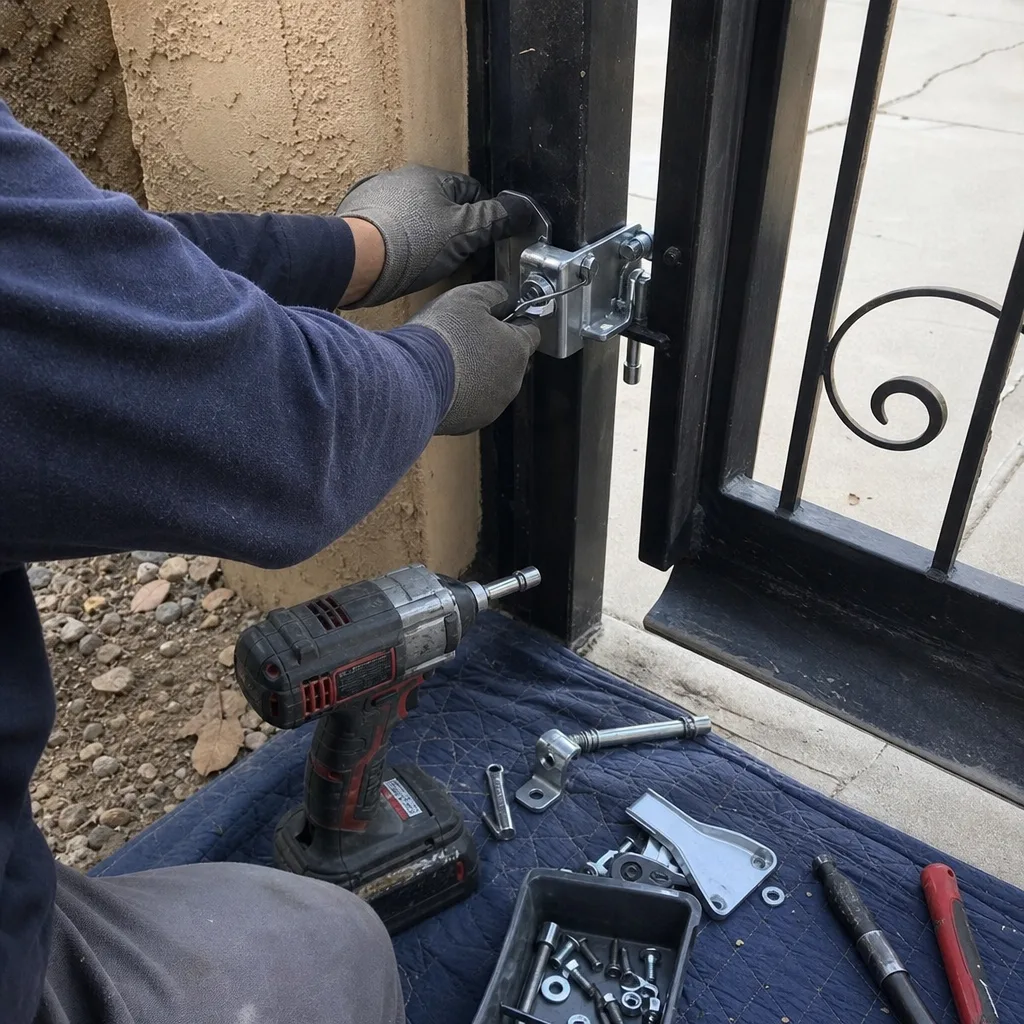
There’s a safe middle ground here, and then there’s the point where a mistake costs more than the motor.
What you can check safely: verify the battery voltage at the control box terminals (should read 12.6V+ for a charged single battery, 13.0V+ for dual 12V in series). Clear debris from the photo-eye lenses. Confirm the gate moves freely by hand with the motor disengaged using the manual release key. These three checks eliminate the most common misdiagnoses.
Where DIY goes wrong: the actuator arm is under spring-assisted tension even with the power off, and the manual release doesn’t fully unload the internal return spring. Removing the motor without supporting the gate leaf can drop a 300-lb wrought-iron panel on its hinge or your foot. The control board stores limit positions in non-volatile memory, but if you disconnect the motor harness without noting wire orientation, reversing two pins will spin the new motor backward and potentially damage the gearbox. We don’t publish step-by-step removal instructions for this reason. If you’ve already bought the motor and want it installed correctly with documented limit-switch settings, call us. If you want to confirm whether the motor is actually the problem before buying anything, we’ll diagnose it in person and hand you a written price.
Name what you found. Name what it costs. Leave the gate better than you met it.
FAQs
Most Ghost Controls motors we replace in Tempe have 6-10 years of service, but west-facing gates with poor shade often see thermal failure at 4-5 years. The 24V DC brush motor is rated for roughly 2,000 cycles annually under moderate load; Arizona heat and dust cut that effective lifespan by 20-30 percent compared to milder climates.
Sometimes. If the failure is external, a corroded harness connector or failed external capacitor can be repaired for $120-$180. Internal gearbox or winding failures require replacement, we don’t rebuild sealed actuator tubes because the labor exceeds the cost of a new motor and the reseal rarely holds against monsoon moisture. Call (623) 323-3849 and we’ll tell you which category yours falls into after a look.
A single Ghost Controls motor replacement takes 90-120 minutes on site, including removal, bracket inspection, install, limit programming, and safety testing. Dual systems run 2.5-3 hours. We don’t rush the limit-switch calibration; a gate that doesn’t stop exactly at the mechanical stops will hammer the post or drag the ground within a month.
We carry Ghost Controls-compatible motors, mounting kits, and control boards on our Tempe service vans. For less common configurations, we source overnight from our Phoenix-area supplier. We don’t send a technician to confirm a part we don’t have access to. Call (623) 323-3849 with your model number and we’ll verify stock before scheduling.
Written by Adrian Vance, Owner, Vance Gate Repair Tempe at Vance Gate Repair Tempe, serving Tempe and nearby areas.