
Free on-site gate assessment - hinges, posts, and your LiftMaster or Nice gate operator checked before anything is quoted
The assessment is free and the quote is the invoice.
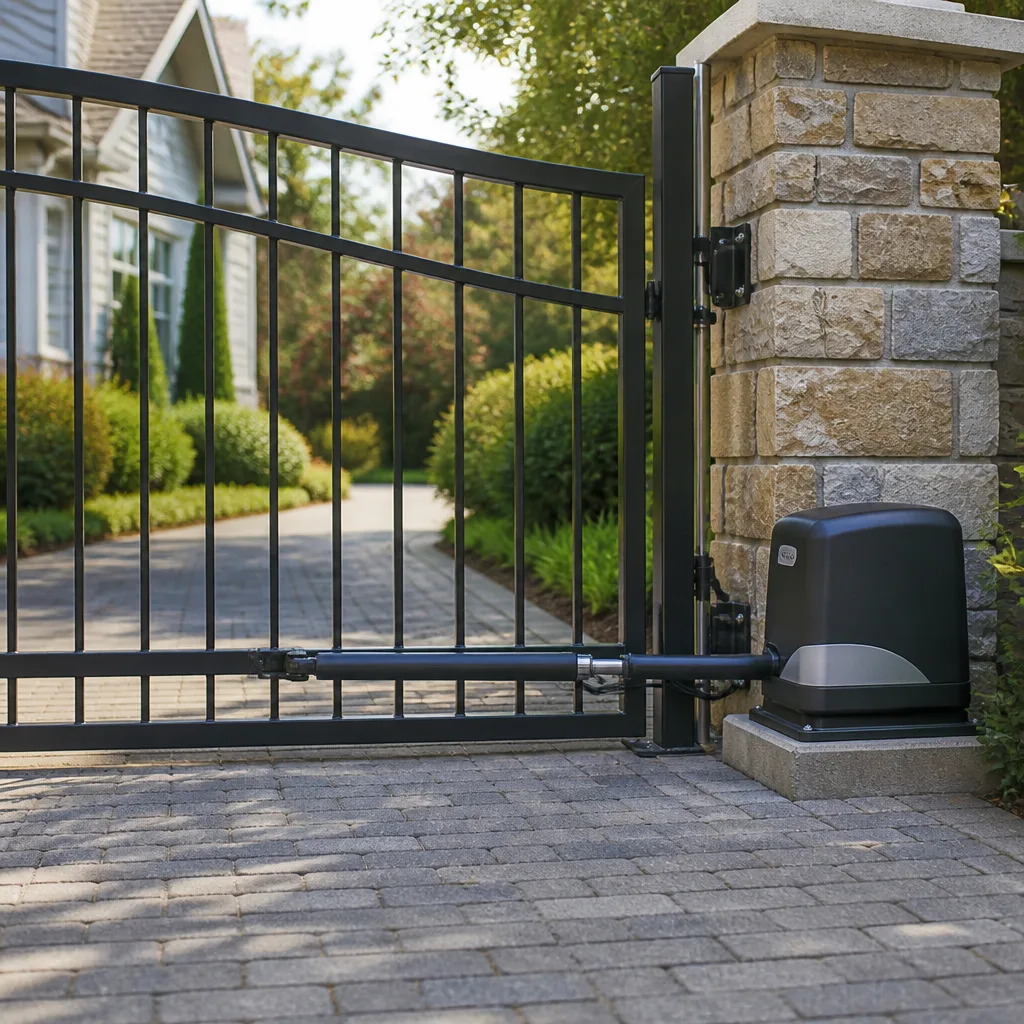
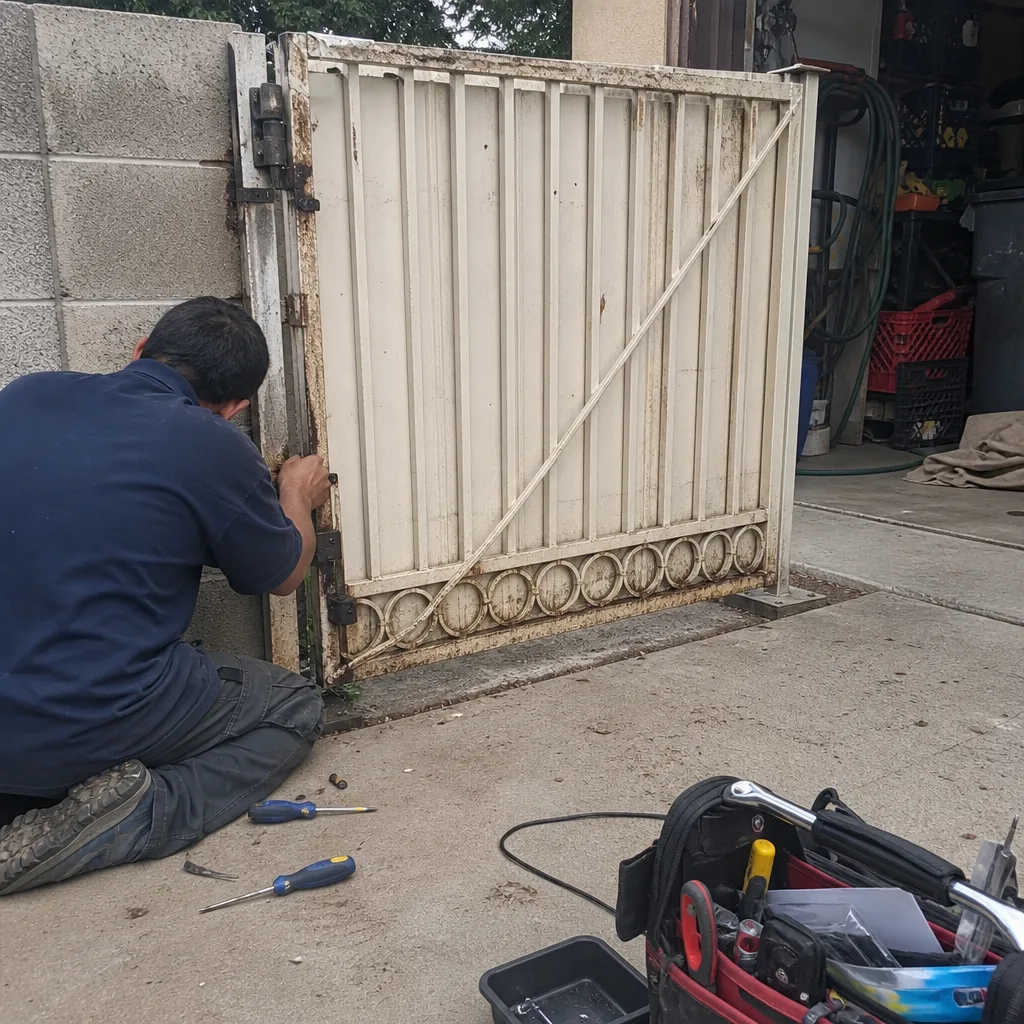 Before
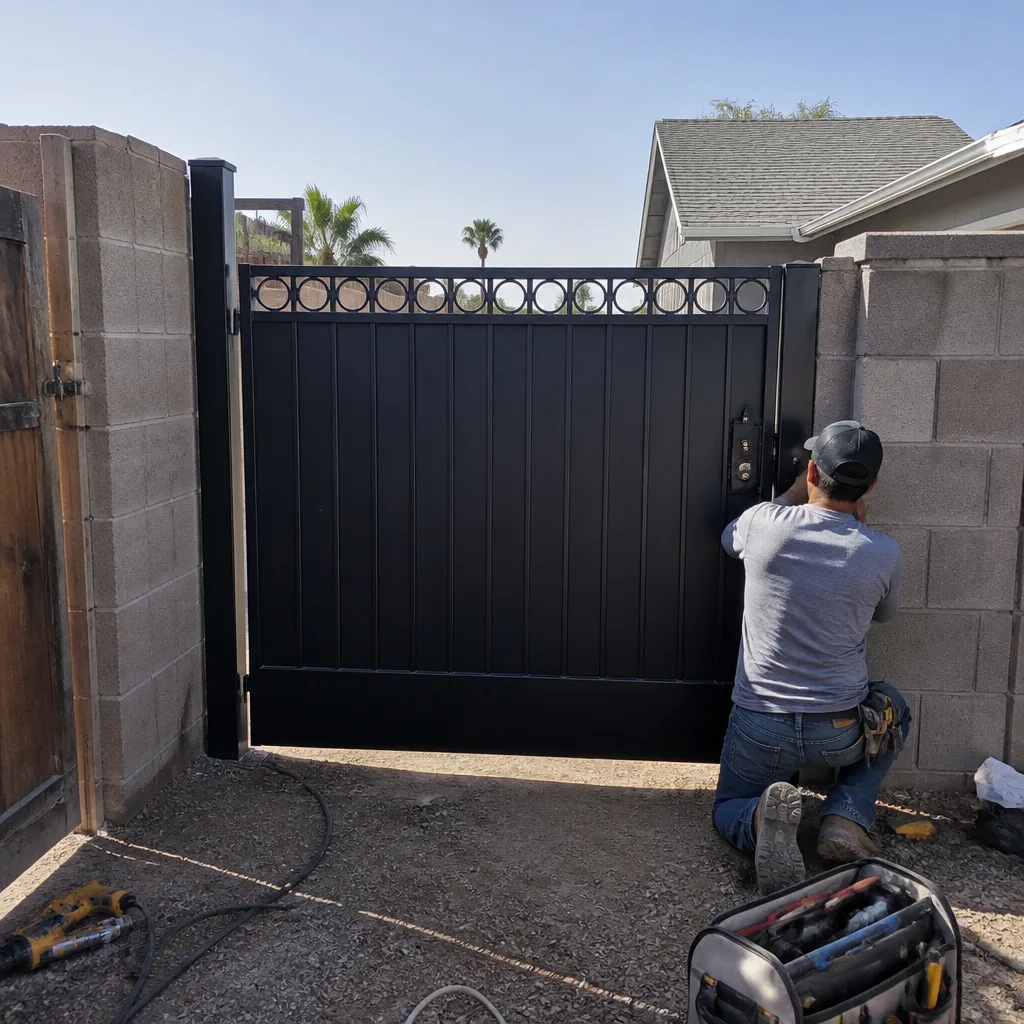 After
After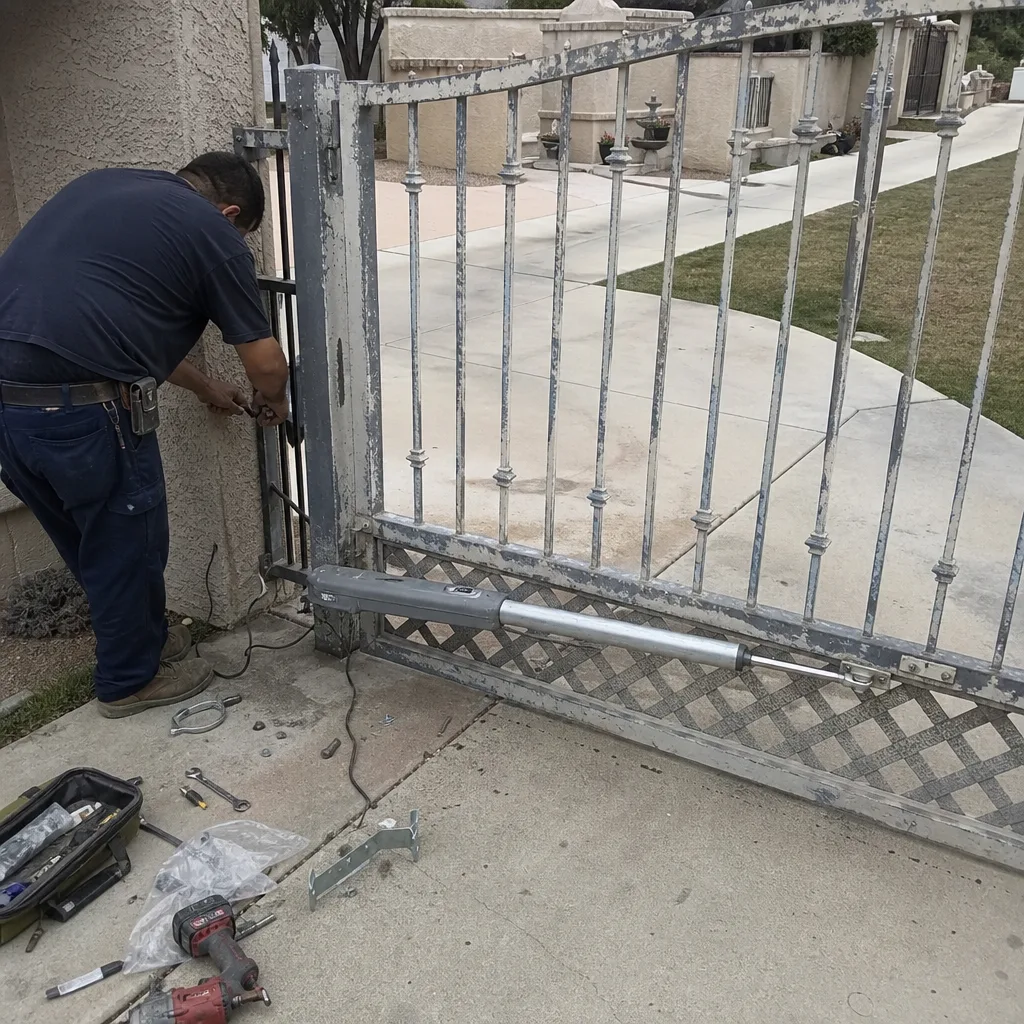 Before
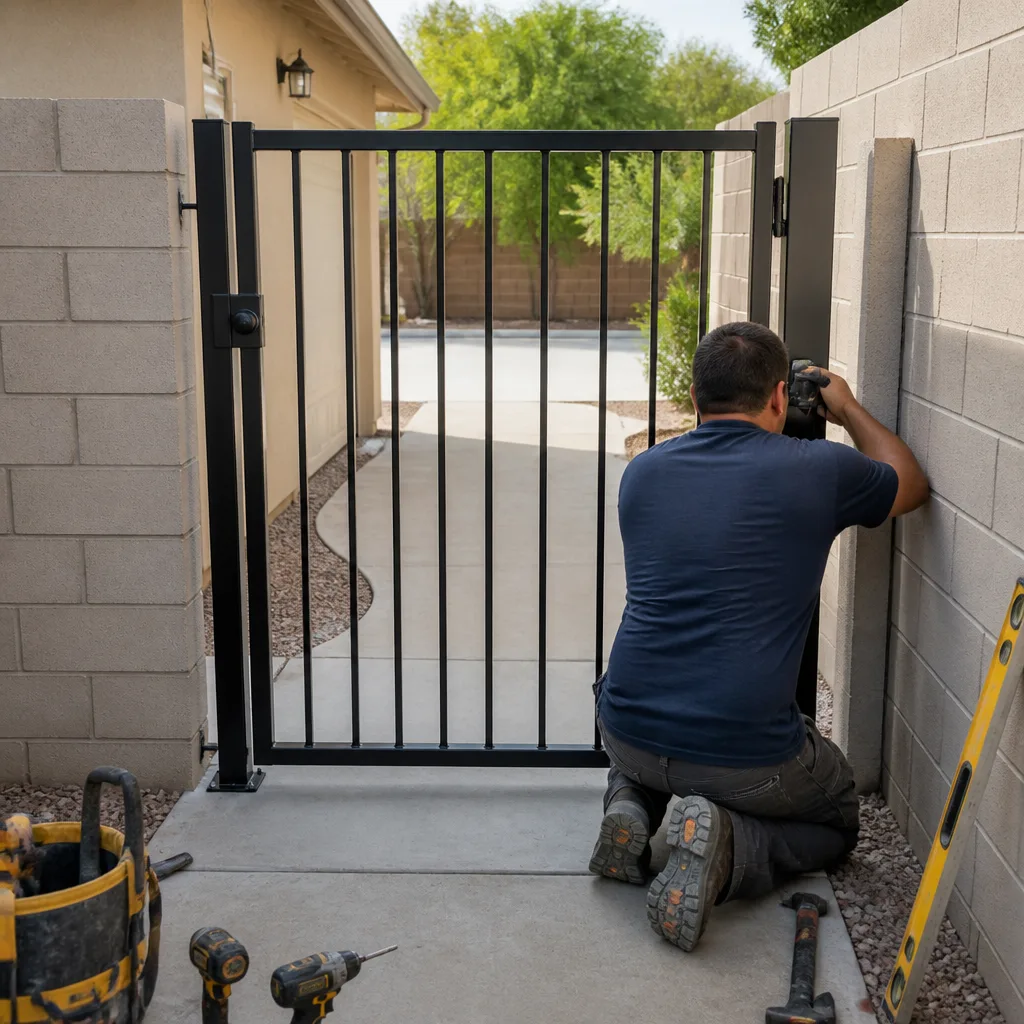 After
After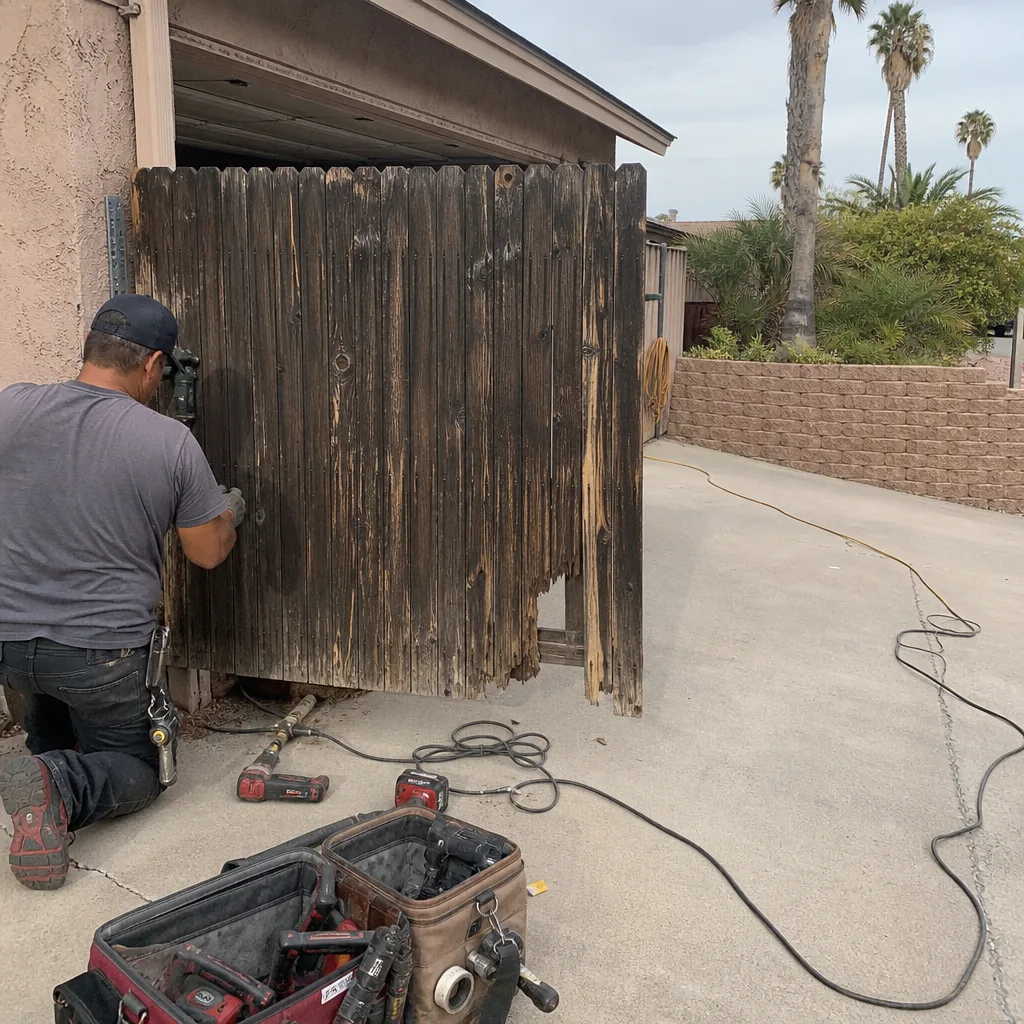 Before
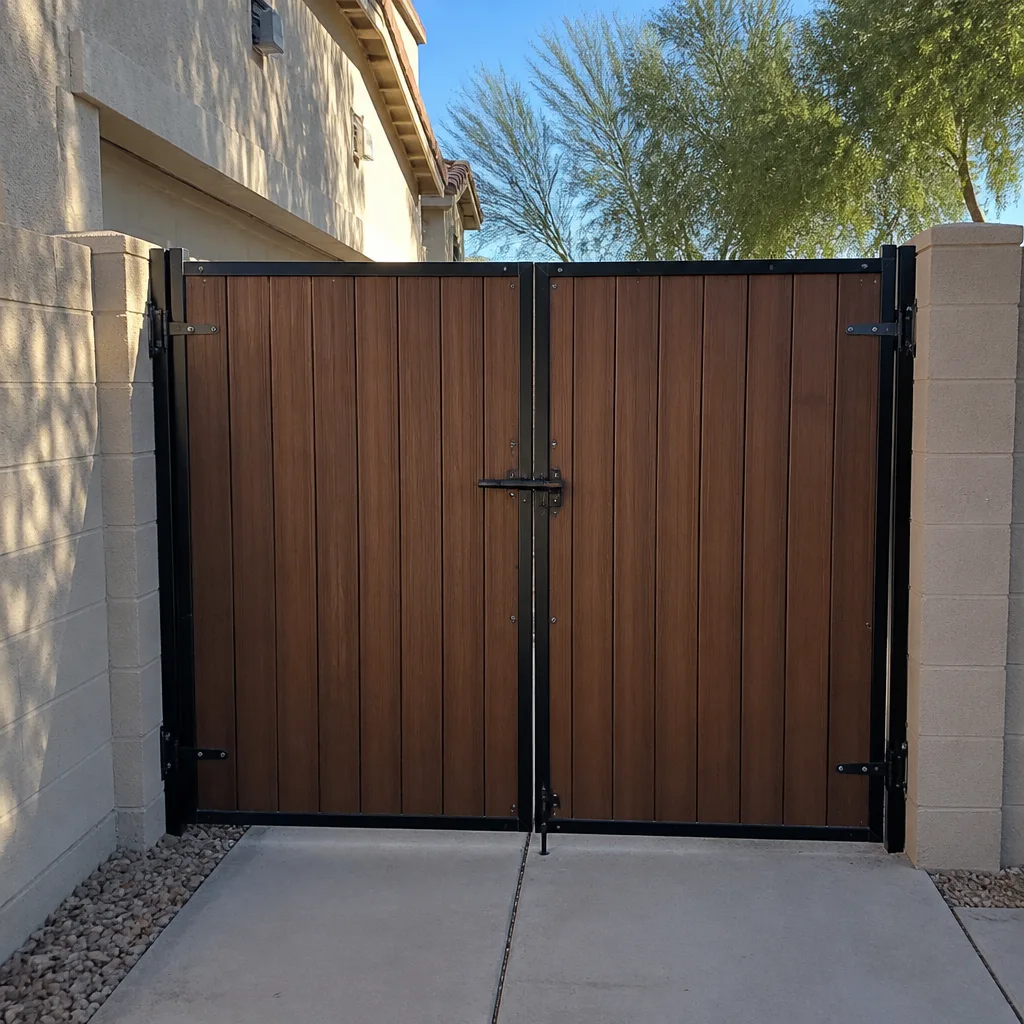 After
AfterFAAC Access Control Installation: The Tempe Owner’s Guide
FAAC access control installation in Tempe typically runs $1,200-$2,800 for a complete keypad or card-reader setup on an existing FAAC operator, depending on whether the run is surface-mounted or trenched, and whether low-voltage wiring is already in place. Most residential FAAC keypad retrofits we do in Tempe fall between $1,200 and $1,850, with same-day completion when the model and wiring path are straightforward. The call usually starts with a keypad that beeps but won’t release the gate, or a card reader that flashes red on every credential.
We stock FAAC-compatible control boards, keypads, and loop detectors on our Tempe-based trucks. That means when a 422 or 620 series operator stops responding to inputs, we’re not ordering parts; we’re tracing the 24V output and swapping the failed component.
Which FAAC Models This Applies To
FAAC access control hardware breaks into two families: the residential swing and slide operators (400 series, 422, 746, 844) and the commercial-grade hydraulics and electromechanical units (620, 640, S800). The control boards, keypads, and loop detectors are not cross-compatible between these families. A 422 MPS control board will not mount in a 620 housing; the pinouts and voltage rails differ.
Identifying your FAAC model starts with the nameplate on the operator housing, usually a metal tag riveted near the motor cap. Record the full model string, including any suffix like “MPS” or “CBAC” - that suffix determines which keypad protocol the board speaks. For keypads specifically, FAAC’s KP and E024 series use different mounting patterns; the KP is a surface-mount box, while the E024 is flush. We’ve seen Tempe homeowners order the wrong one based on photo alone and end up with a gap around the bezel or a box that interferes with stucco trim.
On OEM versus aftermarket for FAAC: the factory KP keypad and E024 are built in Italy and carry a 24-month warranty. Quality aftermarket equivalents exist for most 400-series boards, but we only install aftermarket units that we’ve bench-tested against FAAC’s protocol handshake. The 620 and 640 series are pickier; we’ve seen third-party loop detectors cause intermittent ghost calls on commercial sites near Tempe Marketplace. For those, we specify OEM unless the customer requests otherwise in writing.
Signs Your FAAC Access Control Installation Is Failing
- Keypad beeps on button press but gate doesn’t move. The keypad is receiving 12V or 24V and completing its own circuit, but the control board isn’t seeing the release command. Usually a failed relay on the board or corrosion at the terminal block where the keypad lands.
- Card reader flashes red on every credential, even known-good fobs. The reader is powered and communicating, but the controller has lost its credential database or the Wiegand wiring has a break. We’ve traced this twice in Tempe to landscape crews nicking the low-voltage run with a spade.
- Gate opens randomly, especially mid-day. A loop detector is picking up interference or has drifted its sensitivity. In Tempe, the thermal expansion of asphalt around the loop wire can shift the inductance enough to trigger a false detect.
- Intercom call connects but gate won’t release from the handset. The audio path is intact but the dry-contact output from the intercom controller has failed. On older FAAC systems, this is often a mechanical relay with welded contacts.
- Keypad display is dim or shows garbled characters. Backlight inverter failing on the keypad itself, or the supply voltage has dropped below spec due to a long wire run or a failing transformer in the operator housing.
 Before
 After
AfterReplacement Cost & What’s Included
| Component | Typical Range in Tempe | What Drives the Price |
|---|---|---|
| Keypad only (swap, existing wiring good) | $380-$620 | OEM vs. aftermarket; surface vs. flush mount |
| Control board replacement | $680-$1,100 | 400 series vs. 620 series; programming from backup or full re-learn |
| Loop detector + vehicle loop | $740-$1,200 | Saw-cut vs. existing conduit; asphalt vs. paver surface |
| Complete access control install (new wiring, keypad, board integration) | $1,200-$2,800 | Trench length, wall construction, stucco repair, WiFi bridge for app access |
The price we write down is the price on the invoice. Before any work starts, you get a scope sheet with part numbers, labor line items, and the total. Under Clause 1 of The Haven Standard, that written price is fixed. If we find a corroded junction box that wasn’t visible during estimate, we stop, explain, and get a signed change order before continuing. No surprise charges.
Every FAAC access control installation in Tempe carries our 365-Day Done Right Promise. If the keypad sticks, the loop falses, or the board throws a code we missed, we return and make it right at no charge.
DIY or Call Us?
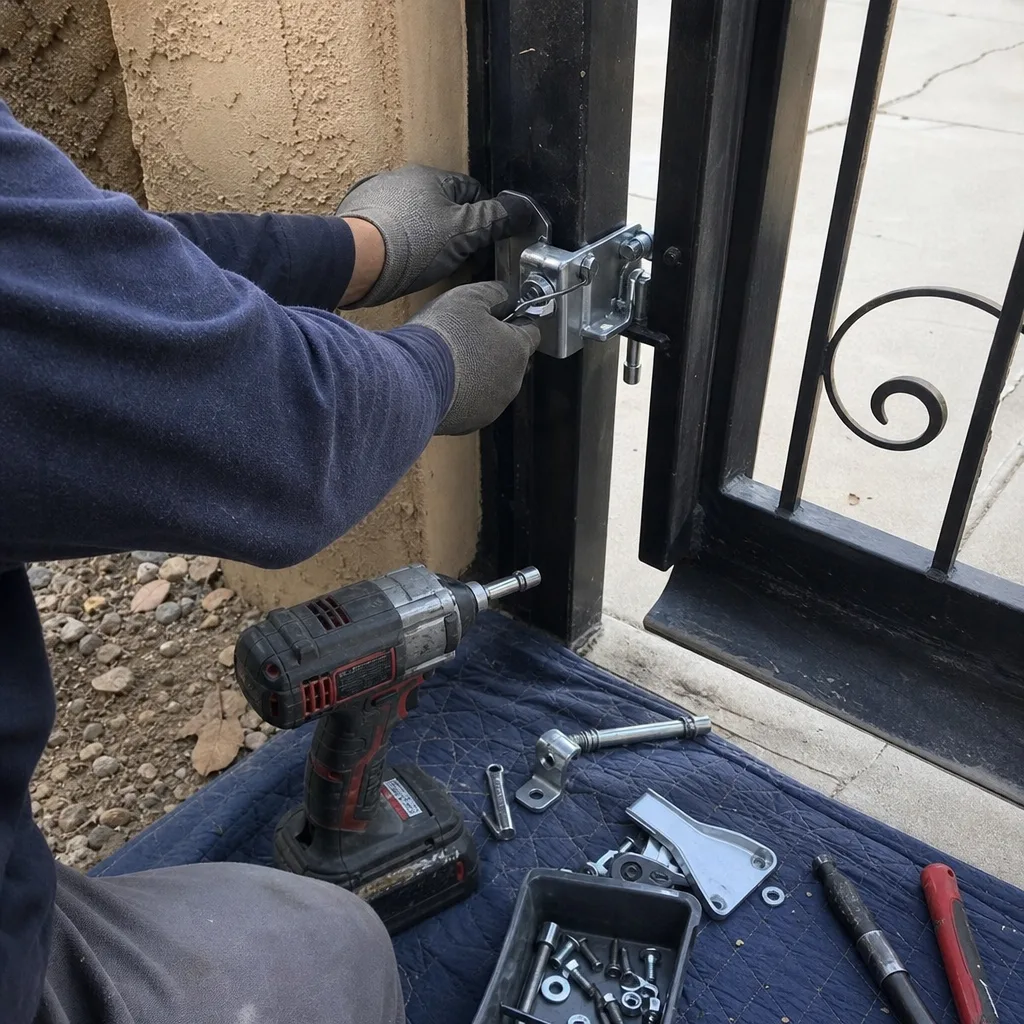
There’s a safe middle ground. A homeowner can verify that the keypad has power at the terminal block with a multimeter, and can check whether the issue follows the keypad by swapping it to a second gate if one exists. What we don’t recommend: opening the operator housing to probe the control board live, or cutting into a saw-cut loop without locating underground utilities. The 24V control circuit won’t kill you, but a miswired loop detector can backfeed 120V through the chassis if the previous installer took shortcuts.
FAAC’s Italian manuals translate oddly, and the dip-switch charts for addressable keypads are easy to misread. We’ve had Tempe customers set a keypad to “master” when they needed “slave,” and lock themselves out of both gates. If you’re unsure which model you have or whether your wiring is low-voltage only, call us at (623) 323-3849. We’ll review what you’ve found, name what it costs to fix, and schedule a visit if it makes sense.
FAQs
In Tempe’s climate, a quality FAAC keypad or card reader typically lasts 8-12 years if it’s shaded and the gasket is intact. Direct summer sun on a south-facing pedestal degrades the LCD and rubber buttons faster; we’ve replaced 5-year-old units on unshaded driveways in the Escalante neighborhood. Loop detectors in asphalt last 10-15 years unless the pavement cracks and shifts. Call (623) 323-3849 and we’ll inspect your specific setup - estimates are free.
Sometimes. A failed relay on a control board can be soldered, and corroded terminal blocks can be cleaned and treated with dielectric grease. But FAAC stopped stocking individual relays for the 400-series boards in 2019, so board-level repair is often uneconomical compared to a replacement. We always diagnose first and present both options with prices. Call (623) 323-3849 for a free second opinion on any written estimate.
A straightforward keypad swap on existing wiring takes 90 minutes to 2 hours. A full access control installation with trenching, conduit, and stucco repair is usually a full day. We schedule, not rush. Under Clause 4 of The Haven Standard, you get a photo log of every connection and a written record of dip-switch settings before we leave. Call (623) 323-3849 to book a measure and written quote.
Yes. We carry FAAC-compatible keypads, control boards, loop detectors, and safety edges on our Tempe-based trucks, along with parts for LiftMaster, Mighty Mule, and Ghost Controls. For less common 620-series configurations, we may need a day to pull from our Phoenix warehouse. When you call (623) 323-3849, we’ll confirm your model and reserve the part before dispatch.
Vance Gate Repair Tempe is an independent service provider; we are not affiliated with FAAC S.p.A. We service nine major automation brands and do not steer customers toward replacement when repair is the right call.
Written by Adrian Vance, Owner, Vance Gate Repair Tempe at Vance Gate Repair Tempe, serving Tempe and nearby areas.