
Last updated September 22, 2026
Free on-site gate assessment - hinges, posts, and your LiftMaster or Nice gate operator checked before anything is quoted
The assessment is free and the quote is the invoice.


 Before
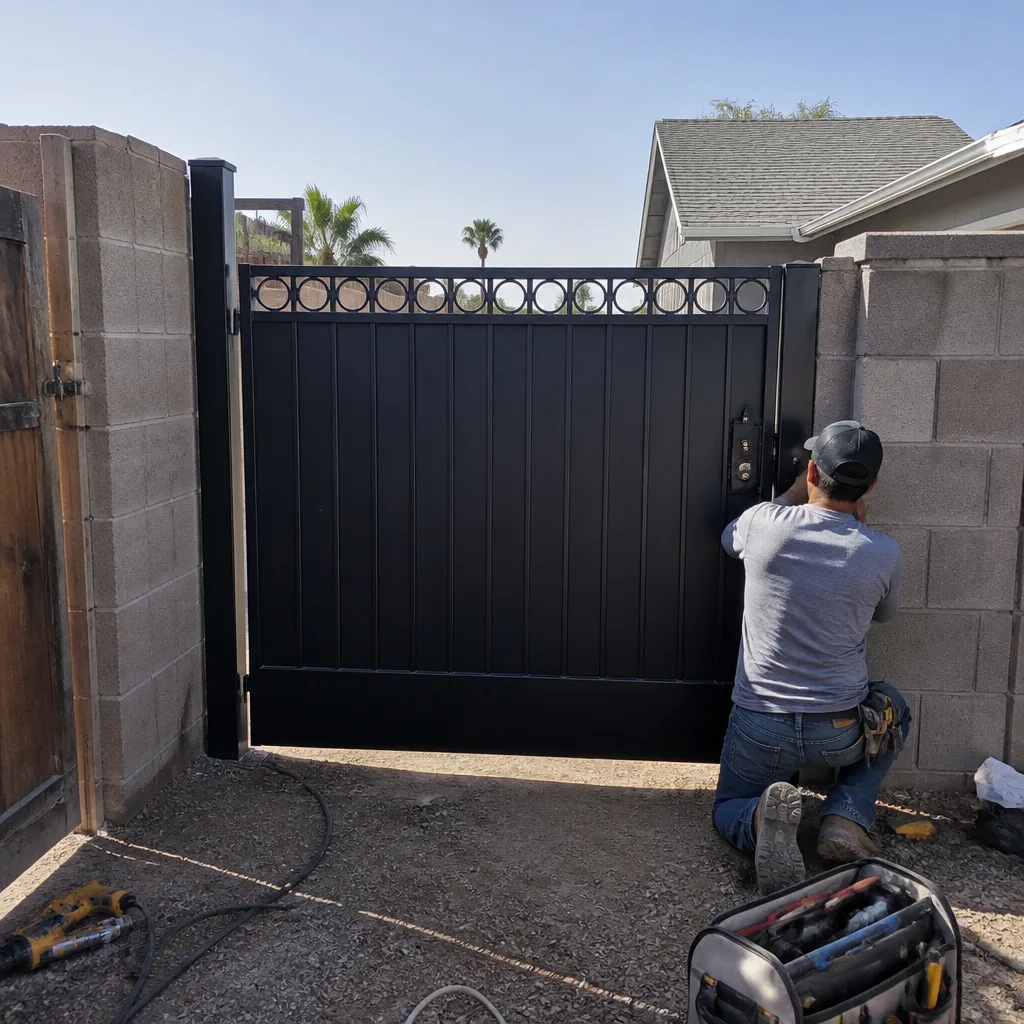 After
After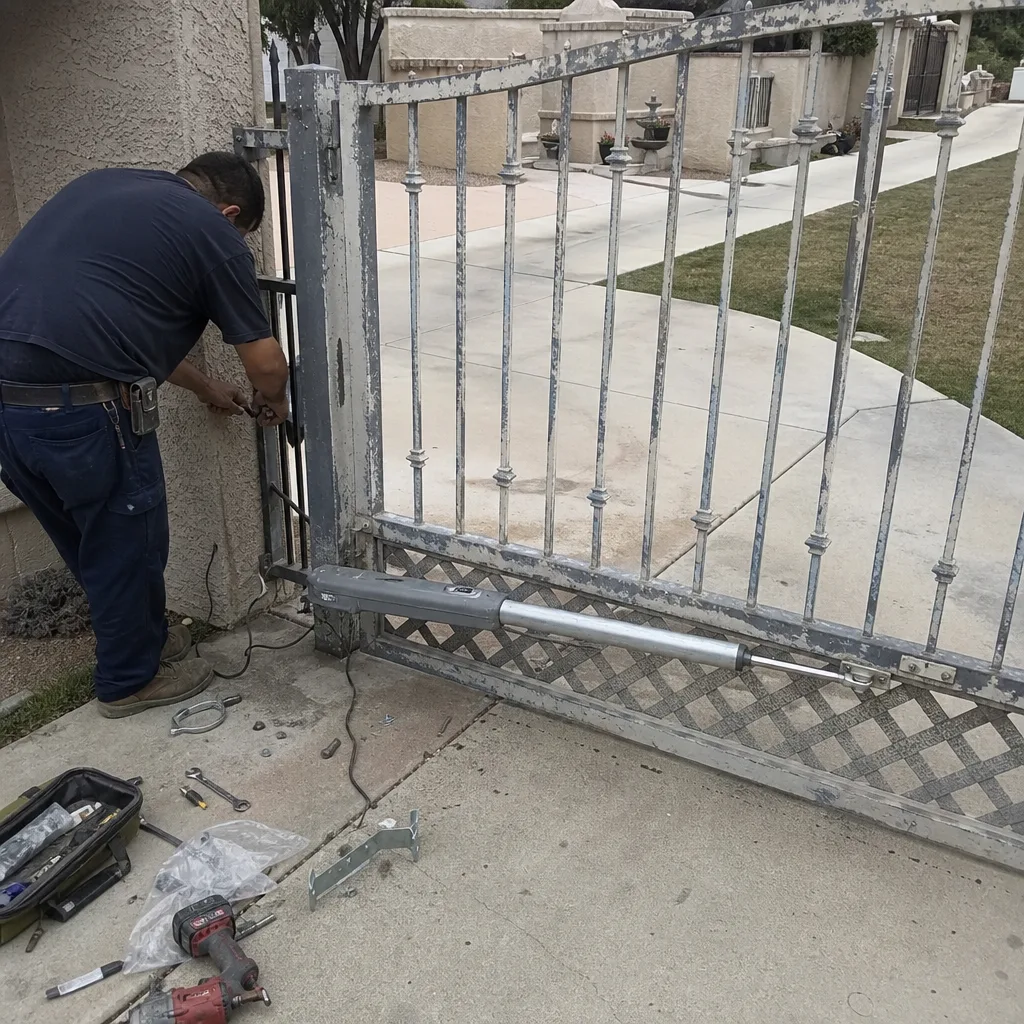 Before
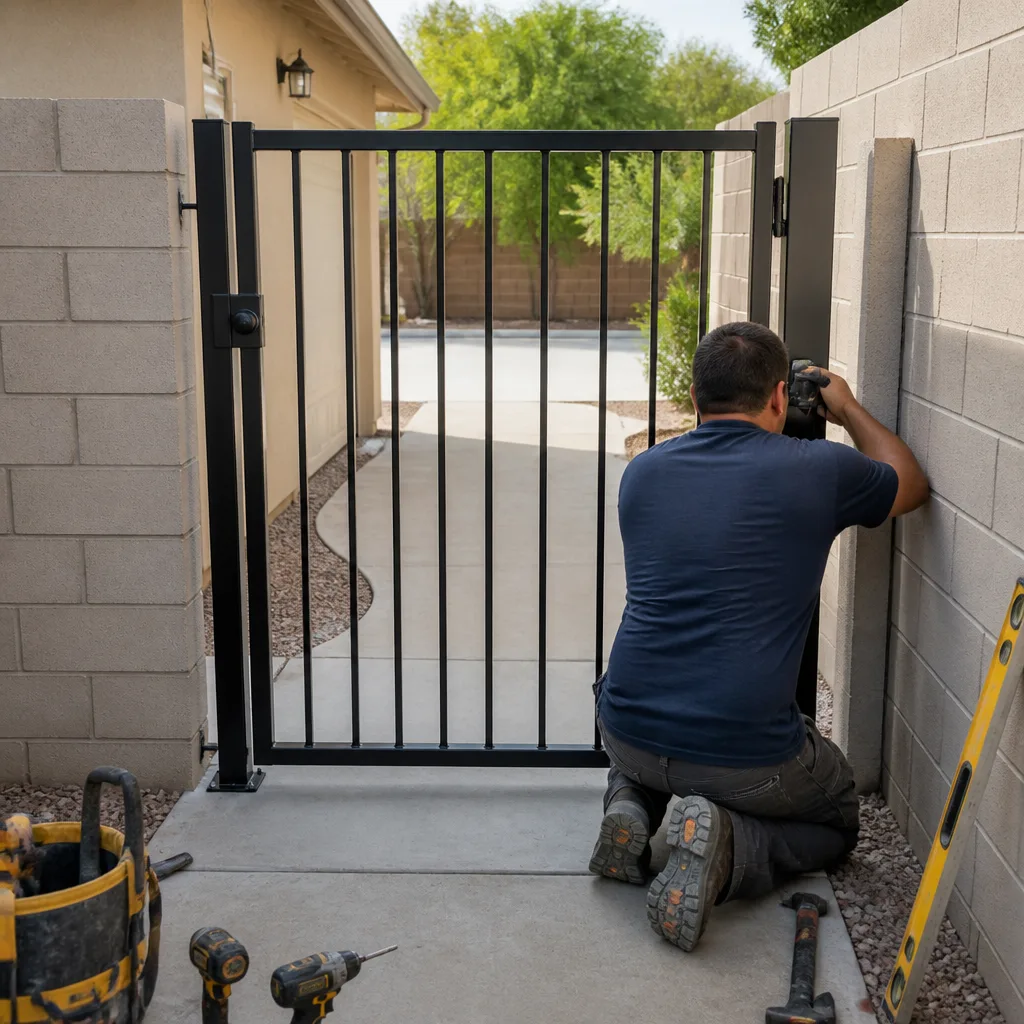 After
After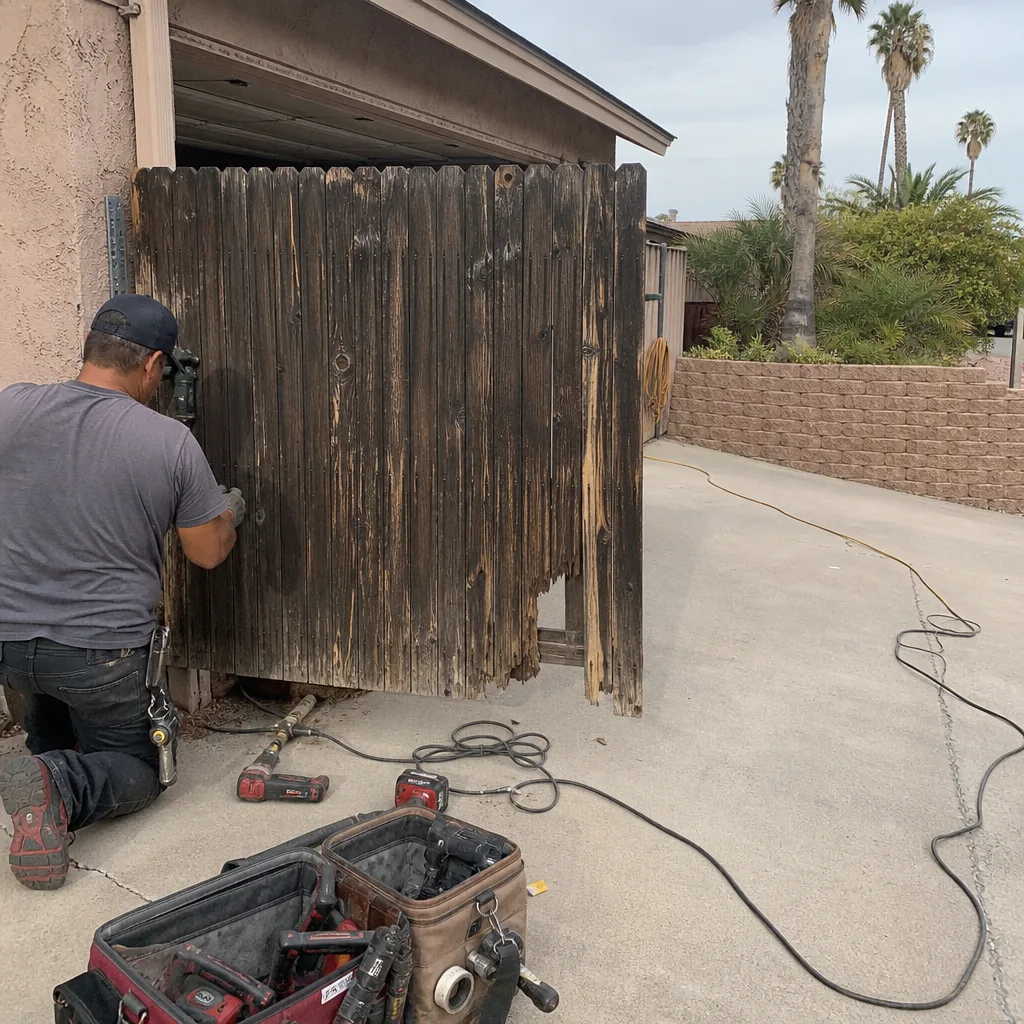 Before
 After
AfterDIY vs Professional Gate Repair: The Tempe Homeowner’s Decision Guide
Adjusting a gate’s limit switches is a 10-minute task that requires no tools and carries no real risk. Adjusting a gate’s photocell sensitivity is also a 10-minute task, and getting it wrong means the gate no longer stops for an obstruction. Both feel the same to do. Only one of them matters. In Tempe, where summer temperatures push gate motors past their thermal limits and monsoon debris regularly knocks photo-eyes out of alignment, homeowners face this distinction constantly. This guide will show you exactly which repairs you can handle yourself, which ones create liability you cannot afford, and how to tell the difference before you pick up a tool. For professional help, see our Gate Repair services.
Quick Answer
Most Tempe homeowners can safely handle mechanical adjustments like limit-switch resets, hinge lubrication, and debris clearing. Any repair involving safety sensors, 120V electrical work, structural welding, or load-bearing hardware should be performed by a documented professional, both for safety and because Arizona premises liability law treats self-repaired automated gates differently than professionally serviced ones in injury claims. The dividing line is not skill, it’s downstream risk.
Table of Contents
- The Ten-Minute Test: Why Some Easy Repairs Still Need a Pro
- The DIY-Safe Category: Mechanical Adjustments and Cosmetic Fixes
- The Professional-Only Category: Where Mistakes Have Consequences
- Arizona Liability Exposure: What DIY Repair Means in Court
- The Tempe Parts Reality: What You Can Actually Buy Locally
- Undoing Homeowner Fixes: Three Repairs That Hide the Real Problem
- The Four-Question Decision Framework
- Cost Comparison: DIY Expense vs. Professional Pricing in Tempe
 Before
 After
AfterThe Ten-Minute Test: Why Some Easy Repairs Still Need a Pro
Gate repair has a deceptive quality. Many tasks look simple, take little time, and require minimal tools. The problem is that difficulty and risk are not the same thing.
We see this distinction constantly in Tempe, especially in neighborhoods like Maple-Ash and the North Tempe historic district where homeowners are hands-on and technically capable. A software engineer in Kiwanis Park can follow a YouTube video to reset a FAAC limit switch in ten minutes. The gate stops slamming. The repair feels successful. But that same homeowner cannot test whether the gate’s entrapment force now exceeds the 40-pound UL 325 standard without a force-testing gauge, which costs more than the repair itself and requires calibration.
The ten-minute test is not about whether you can do something. It’s about whether you can verify that you did it correctly.
Here is the practical distinction we use in the field:
- Verifiable by observation: The gate opens fully, the hinge moves freely, the debris is cleared. You can see the result.
- Requires instrumentation to verify: The gate’s reverse sensitivity meets code, the motor draw is within spec, the photo-eye alignment is within the manufacturer’s tolerance. You cannot see these; you measure them.
Any repair in the second category, no matter how simple the procedure, carries hidden failure modes. A misaligned photo-eye in Tempe’s intense UV exposure can drift further out of spec within weeks. A gate that reverses correctly at 8 AM may fail to reverse at 4 PM when the motor is heat-soaked from 118-degree ambient temperature. Without documentation and measurement, you are guessing.
This is why gate repair in Tempe often involves more than the visible symptom. The heat, the dust, the monsoon-driven debris load, these all create failure modes that do not appear in generic repair guides written for milder climates.
The DIY-Safe Category: Mechanical Adjustments and Cosmetic Fixes
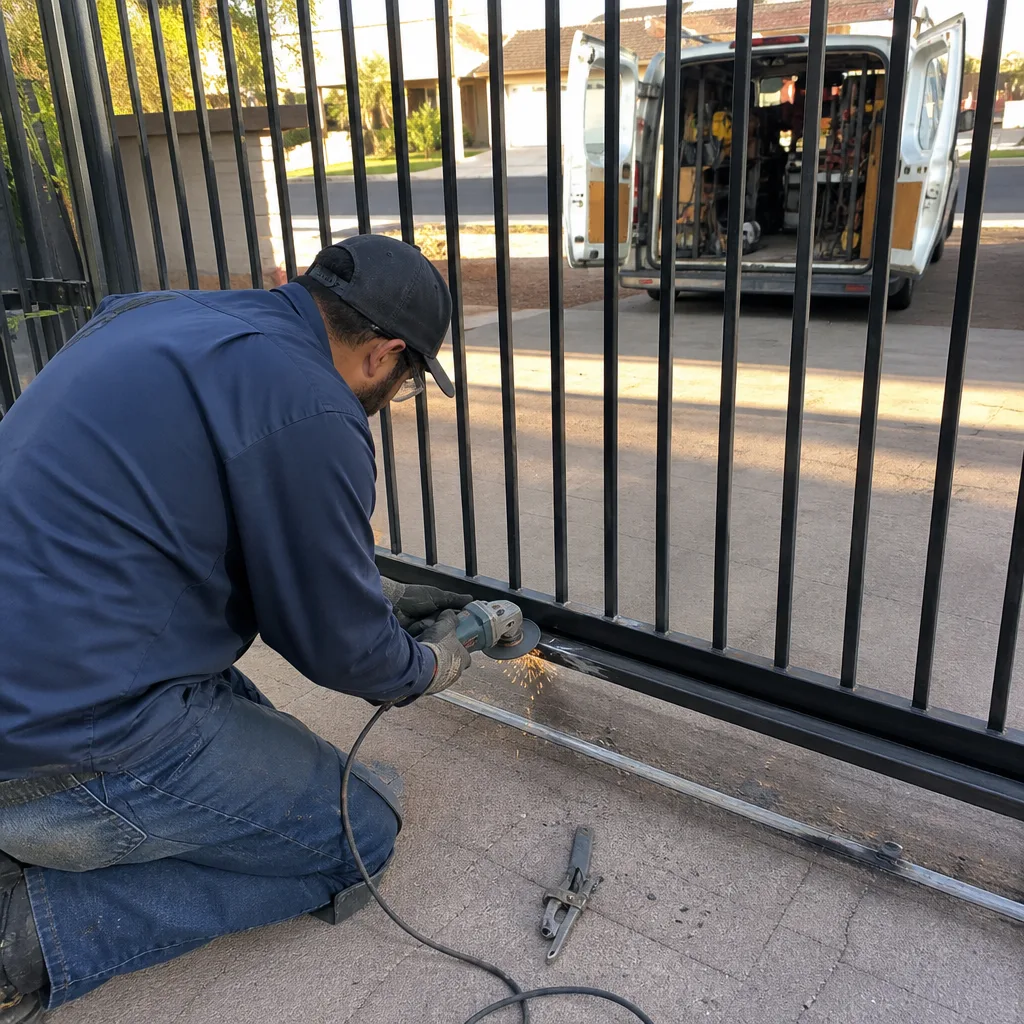
Certain gate repairs genuinely belong in the homeowner’s toolkit. They involve no safety-critical systems, create no liability exposure, and fail in obvious ways if done wrong.
Limit Switch Reset on Swing Gates
Most swing-gate operators, including common Linear and Mighty Mule models in Tempe’s older Ranch-style neighborhoods, use mechanical limit switches that tell the motor when to stop. These drift over time, especially with temperature cycling. The reset procedure typically involves:
- Opening the control box cover
- Locating the limit switch assembly (usually two white or gray plastic cams on a shaft)
- Manually running the gate to the desired open position
- Pressing and releasing the set button or rotating the cam until it clicks
- Repeating for the closed position
If you set it wrong, the gate stops too soon or tries to push past the post. The failure is obvious and causes no damage. Readjust. No harm done.
Hinge and Roller Lubrication
Tempe’s dust and occasional sand load chew through gate hinges faster than in wetter climates. A homeowner with a grease gun and lithium-based lubricant can service residential hinges annually. Use a rag, not a pressure washer, to clean before lubricating. Pressure washers drive grit into the pin bore.
Debris Clearing from Track and Travel Path
Monsoon season in Tempe deposits palo verde blossoms, mesquite pods, and wind-blown trash in slide-gate tracks. Clearing this is maintenance, not repair. A stiff brush and a shop vacuum handle it. Check after every major storm.
Cosmetic Rust Treatment (Non-Structural)
Surface rust on ornamental iron can be wire-brushed, converted with phosphoric acid treatment, and painted. This is purely cosmetic. Do not grind into structural welds or load-bearing posts.
Remote Battery Replacement and Reprogramming
Most gate remotes use CR2032 or similar coin cells. Replacement is obvious. Reprogramming a remote to a LiftMaster or DoorKing receiver typically involves pressing a learn button and holding the remote button within 30 seconds. The manual, not a video, is the authoritative source for your specific model.
What these repairs share: they are reversible, observable, and isolated from safety systems. If you make a mistake, you know immediately, and no one gets hurt.
The Professional-Only Category: Where Mistakes Have Consequences
Other repairs are technically within the capability of a determined homeowner but should never be attempted without professional documentation. The risk is not the repair itself. It is what happens when the repair fails and someone is injured.
Safety Sensor Alignment and Sensitivity
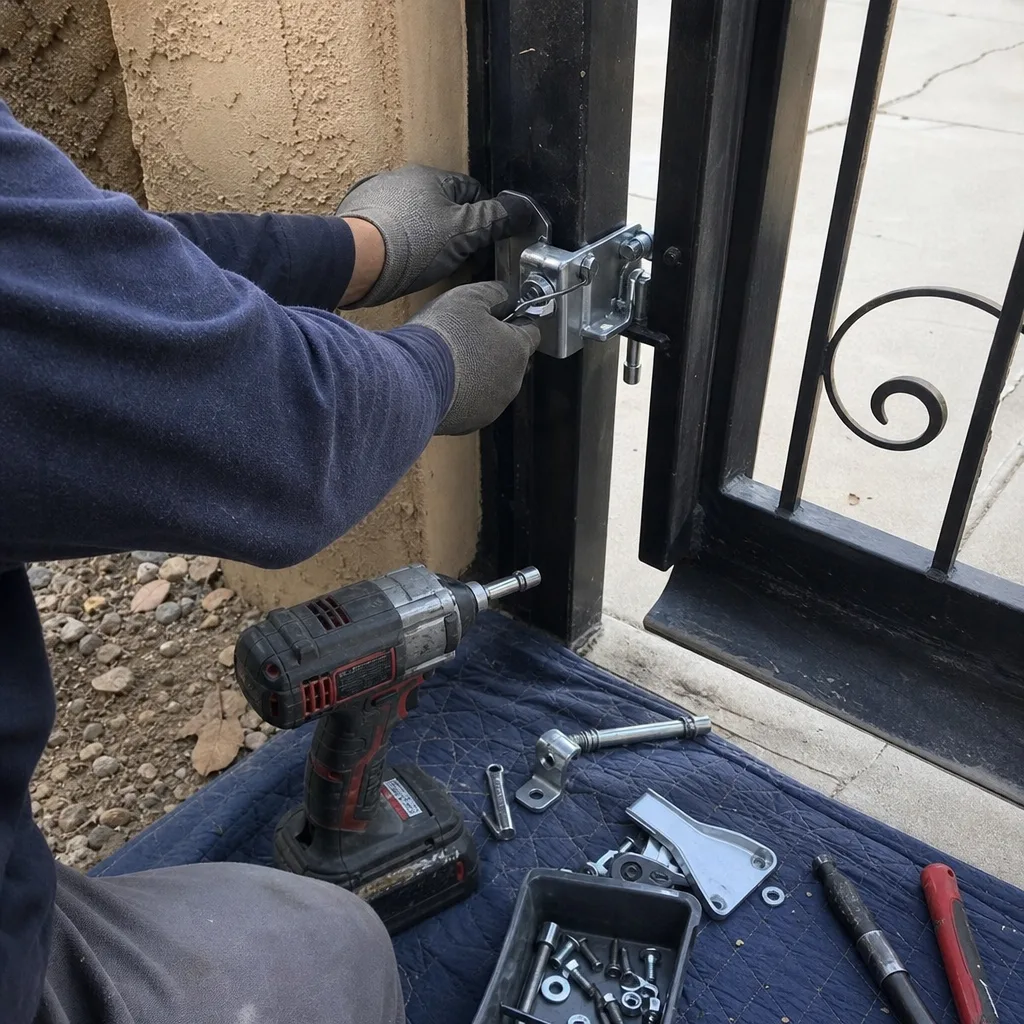
Photo-eyes, safety edges, and loop detectors exist to prevent entrapment. UL 325 and ASTM F2200 govern their function. A misaligned photo-eye may appear to work during your test because you waved your hand at waist height, but fail to detect a child at ankle height. Or it may work in morning cool but fail in afternoon heat when thermal expansion shifts the bracket.
Professional service includes a force test and a documented photo record of the alignment measurement. Under Vance Gate Repair Tempe Haven Standard Clause 4, we photograph the photo-eye bracket position, the LED status on both sender and receiver, and the force gauge reading at the leading edge. If there is ever a question about whether the gate was properly maintained, that record exists.
120V Electrical Work
Gate operators require dedicated 120V circuits in most Tempe installations. Any work on the supply side, outlet replacement, conduit repair, or grounding verification requires a licensed electrician in Arizona. Even on the low-voltage control side, mistakes can energize components unexpectedly. We have found homeowner-wired auxiliary controls that backfed 120V into what should have been a 24V circuit.
Spring and Counterbalance Work on Vertical Lift or Swing Gates
Some industrial-style gates in Tempe’s light commercial zones use torsion or extension springs. These store lethal energy. A spring rated for a 1,200-pound gate can break bones or worse. This is not analogous to garage door springs; gate spring geometry varies by installation and there is no standard winding procedure.
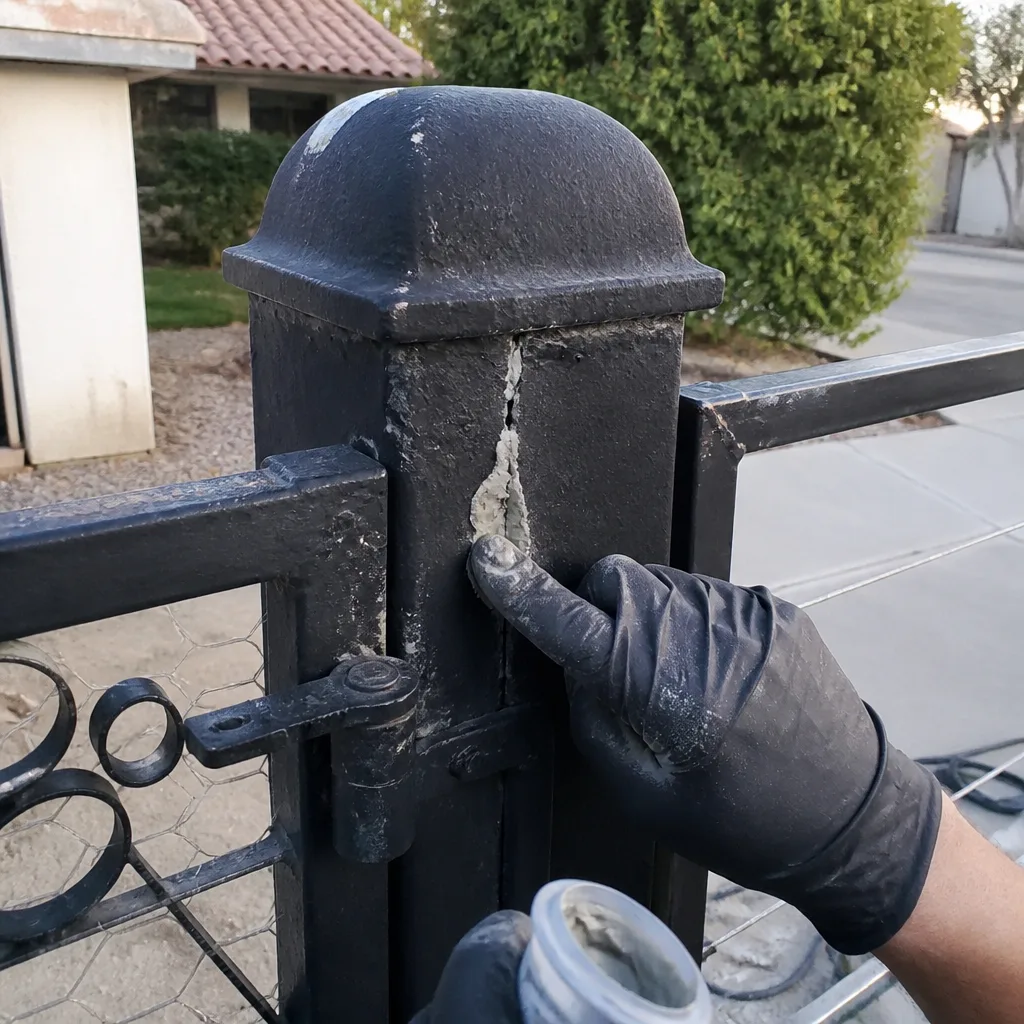
Structural Welding and Post Repair
Gate posts bear dynamic loads. A weld that looks sound to a homeowner may lack penetration or proper prep. When a 400-pound slide gate puts cyclic load on a post with a bad weld, failure comes suddenly and without warning. In Tempe, where caliche soil and expansive clay create unusual lateral stress on posts, structural integrity matters even more.
Motor Replacement and Brand-Specific Programming
Installing a new FAAC, BFT, or Viking operator requires setting internal dip switches or software parameters for gate weight, travel distance, and obstacle sensitivity. These are not intuitive. The FAAC 415 LS, common in Tempe’s gated communities, has 16 programmable parameters. Three of them control safety functions. Get one wrong and the gate is legally non-compliant.
Gate motor and opener work in Tempe also involves matching the operator to local electrical code, which changed in 2020 to require GFCI protection on all new gate circuits in residential applications.
Arizona Liability Exposure: What DIY Repair Means in Court
This is the point most gate repair guides omit entirely, and it is the most important factor in your decision.
Arizona premises liability law, codified in A.R.S. § 12-341 and interpreted through decades of case law, distinguishes between ordinary maintenance and work that affects the safety of an invitee. An automated gate is a motorized machine with a recognized entrapment hazard. When that machine injures someone, the homeowner’s maintenance history becomes discoverable.
Here is what that means practically:
- Professional service with documentation: Creates a record of due diligence. The technician’s license, the written scope, the photo evidence, these all demonstrate that the homeowner met the standard of care. If the gate fails despite proper maintenance, the claim shifts to product liability or installer error, not homeowner negligence.
- DIY repair without documentation: Leaves the homeowner as the last person who touched the safety system. In deposition, the question becomes: “What training did you have in automated gate safety standards? What equipment did you use to verify compliance? Did you follow the manufacturer’s service bulletin?” The answers are typically: none, none, and I watched a video.
In Tempe’s dense rental market, near Arizona State University and in multi-family developments along Apache Boulevard, this exposure multiplies. A landlord who self-repairs a gate and injures a tenant faces not just premises liability but potential residential landlord-tenant act claims. A homeowner whose DIY repair injures a delivery driver faces a claim that their homeowner’s policy may contest if the repair was unlicensed work on a motorized system.
We are not saying this to frighten anyone. We are saying it because we have been called to testify in two such cases in Maricopa County, and in both, the absence of professional documentation was the decisive factor. For Gate Repair Cost Breakdown: The Tempe Homeowner’s Reference for 2026, see our detailed analysis. The Haven Standard exists specifically to create the documentation that protects the homeowner. Clause 1 gives you the written price. Clause 4 gives you the evidence. Together, they give you a defensible record.
The Tempe Parts Reality: What You Can Actually Buy Locally
DIY feasibility depends heavily on parts access. Here is the actual market in Tempe as of 2024.
What You Can Buy Retail
Big-box hardware stores in Tempe stock generic gate hardware: hinges, latches, chain, some welding supplies. They carry replacement remotes for common brands, though often not the specific frequency or rolling-code version your operator requires. They do not stock:
- FAAC or BFT control boards
- Viking or Linear limit switch assemblies
- UL-listed safety edges with the correct resistance profile
- Gate-specific photo-eyes (the residential garage door versions have different beam patterns and response times)
What Requires a Dealer Account
Major automation brands restrict parts sales to authorized dealers. FAAC and BFT both require account verification and minimum orders. Viking sells some components direct but requires serial number verification for control boards to prevent incompatible installations. This is not a conspiracy; it is liability management. These companies do not want untrained installers creating hazard conditions with their products.
The Used and Gray Market
eBay and Amazon list “compatible” control boards and photo-eyes. We have replaced dozens of these in Tempe. The typical failure pattern: the component works for two to eight weeks, then fails in a way that damages the operator or disables a safety function. The $38 photo-eye that saves you a service call costs you a $400 control board when its output drifts and the board’s safety input burns out.
Specialty Suppliers
There are electrical supply houses in Phoenix that will sell to walk-in customers with cash. They do not provide application support. Buy a 24V transformer for a gate operator and you may get an HVAC transformer with the wrong thermal curve. The part number matches, the application does not.
For gate installation in Tempe, this parts reality means that even capable DIYers often end up calling us after spending more on incorrect parts and freight shipping than a professional repair would have cost. We stock nine major brands specifically so we can repair what is already on the property rather than steering customers toward replacement.
Undoing Homeowner Fixes: Three Repairs That Hide the Real Problem
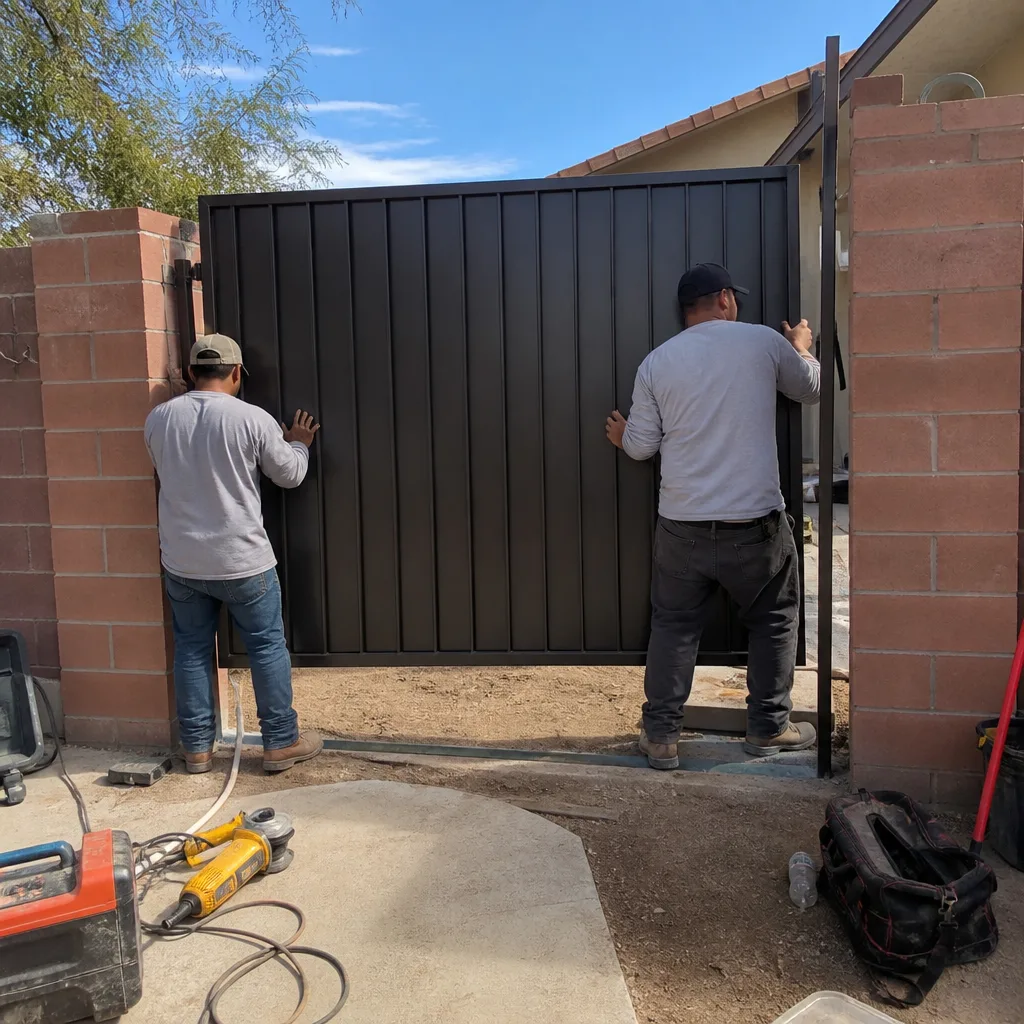
When a DIY repair precedes our visit, we often spend the first portion of the call reversing what was done so we can diagnose what is actually wrong. These three are the most common in Tempe.
1. The Bypassed Safety Edge
A safety edge on a slide gate stops and reverses the gate if it contacts an obstruction. When these fail, usually from UV degradation of the rubber housing in Tempe’s sun, some homeowners jumper the control board to bypass the edge. The gate works again. The problem is solved, except it is not solved; the safety function is eliminated. When we arrive, we have to remove the jumper, replace the edge, and then explain why the gate “worked fine” before but was actually dangerous. The homeowner has paid for a service call plus parts that could have been addressed in one visit if they had called first.
2. The Reprogrammed Remote as Diagnosis
An intermittent remote is often a symptom of failing receiver sensitivity or antenna damage, not a remote problem. Homeowners who buy new remotes and program them may get temporary function, but the underlying receiver issue worsens. By the time we see it, the receiver has failed completely and the homeowner has two new remotes that will not work with the replacement receiver we install. We document the actual antenna impedance and receiver sensitivity in our photo record so the homeowner has a baseline.
3. The Adjusted-Into-Failure Hinge
A sagging gate is often a sign of post settlement or hinge pin wear. Homeowners sometimes add washers, shim with scrap metal, or overtighten the hinge bolt to pull the gate back into alignment. This transfers load to the wrong part of the post or hinge, accelerates wear, and can distort the gate frame. We have cut apart hinges in Tempe’s historic neighborhoods where three generations of shimming have created a hinge assembly that no longer resembles anything in a catalog. The documented photo record we leave shows the corrected geometry and the specific hinge specification for future reference.
The Four-Question Decision Framework
Use this at the moment you are deciding whether to attempt a repair yourself. Answer honestly. Any “yes” means professional service is the right choice.
| Question | What to Check | If Yes |
|---|---|---|
| 1. Is the repair in a safety-critical system? | Does this component stop, reverse, or detect obstacles in the gate path? | Call a professional. Document the service. |
| 2. Does it require disabling a safety sensor to perform? | Will you need to jumper, tape over, or unplug a photo-eye, edge, or loop during the repair? | Call a professional. The risk of forgetting to re-enable is too high. |
| 3. Will it affect how the gate behaves with people in the travel path? | Could a mistake cause the gate to close on someone, open unexpectedly, or move faster than before? | Call a professional. This is the core liability exposure. |
| 4. Does it involve 120V wiring? | Are you opening junction boxes, replacing outlets, or working on supply-side conductors? | Call a licensed electrician or gate professional. Arizona requires licensure. |
Four “no” answers mean DIY is reasonable. You are adjusting a mechanical stop, lubricating a hinge, clearing debris, or painting surface rust. The failure modes are obvious and non-injurious.
Any “yes” means the repair carries consequences you cannot fully test for. This is not a comment on your skill. It is a comment on the nature of the system. We have seen master electricians create gate hazards because they understood electrical code but not UL 325 entrapment requirements. We have seen mechanical engineers misprogram limit switches because they understood kinematics but not the specific firmware behavior of a BFT operator. Expertise in one domain does not transfer automatically to gate safety systems.
Cost Comparison: DIY Expense vs. Professional Pricing in Tempe
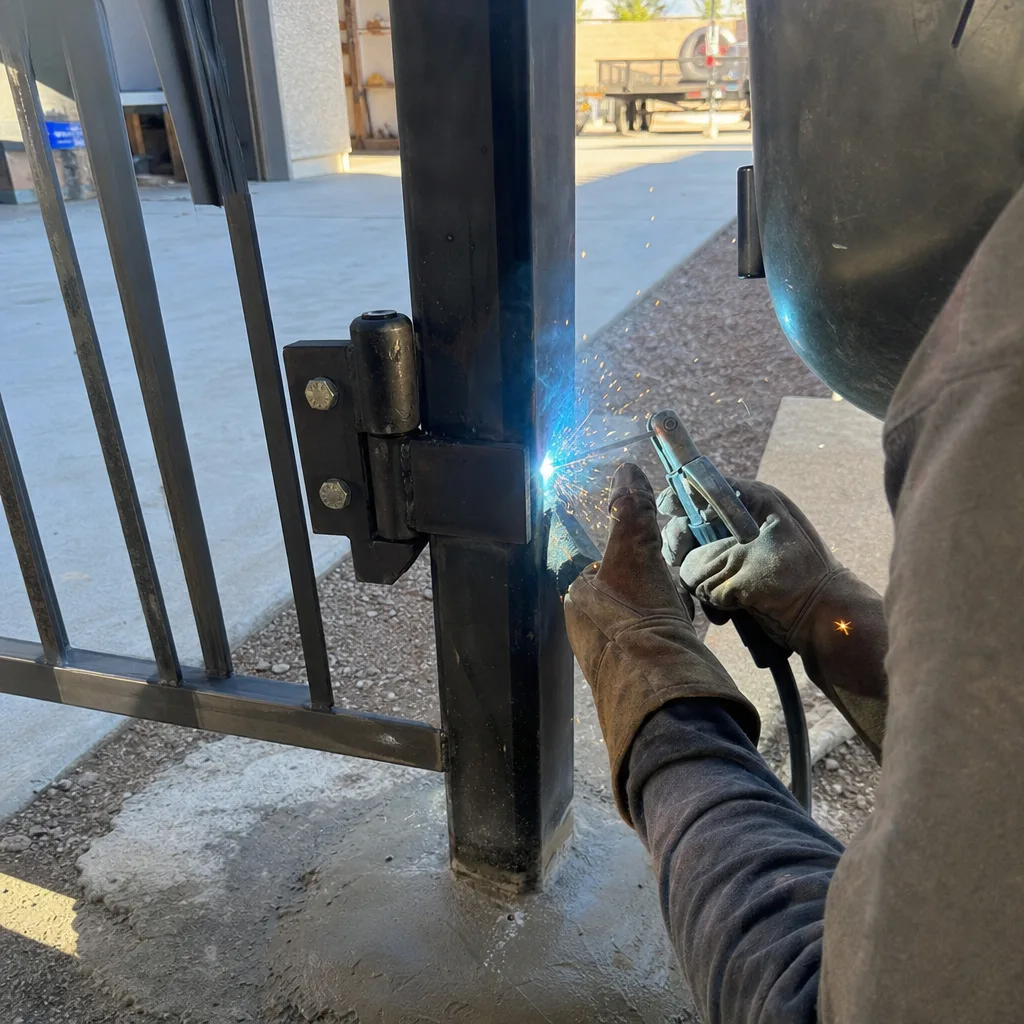
Cost is a real factor. Here is how the math actually works for common scenarios in the Tempe market. For ongoing care, check our Gate Repair Maintenance Checklist for Tempe Homeowners.
Scenario 1: Photo-Eye Realignment
DIY: $0 if you have a screwdriver and a level. $45-$80 if you need to buy a laser level to do it properly. $0 for verification because you cannot force-test without equipment.
Professional: Most Tempe gate companies charge $125-$195 for a service call that includes photo-eye alignment, force testing, and documentation. At Vance Gate Repair Tempe, the written price before work starts includes the full alignment, force verification, and the photo record under Haven Standard Clause 4. Browse our more guides & resources for additional homeowner guidance. If the photo-eye is failed rather than misaligned, replacement adds $65-$140 for the part depending on brand.
Scenario 2: Control Board Replacement (FAAC, BFT, Linear, Viking)
DIY: $180-$340 for a gray-market or used board with no warranty support. $0-$50 for shipping. Risk of incorrect part number or incompatible firmware revision. No application support if parameters do not match your gate geometry.
Professional: $450-$780 installed with brand-authorized parts, programmed to your gate’s weight and travel, force-tested, and documented. The 365-Day Done Right Promise covers any parameter drift or component failure. For a FAAC 780D board in a typical Tempe residential installation, we quote $595-$680 depending on whether the existing enclosure needs modification.
Scenario 3: Hinge Replacement on Ornamental Iron Gate
DIY: $30-$80 for generic hinges that may not match the load rating. $40 for a grinder if you do not own one. Risk of welding if the pin bore is damaged. No documentation of the repair.
Professional: $280-$450 for matched hinges, proper pin fit, post assessment for settlement, and documented torque spec on the fasteners. If welding is needed, $180-$320 additional for portable welding with proper prep and coating.
The Hidden Cost of DIY Failure
These numbers omit the most expensive outcome: a repair that fails and causes damage or injury. We are not suggesting this is likely for every DIY attempt. We are stating that it is possible, that the probability is not zero, and that the financial exposure is unbounded in a liability scenario. Professional service with documentation caps that exposure at the service cost.
Common Mistakes to Avoid
- Assuming a YouTube video matches your installation. Gate operators have model-year variations, regional voltage differences, and firmware revisions. A video for a 2019 LiftMaster may mislead you on a 2023 unit with updated safety logic.
- Using garage door parts on a gate. Photo-eyes and safety edges are application-specific. Garage door components have different response times, beam widths, and environmental ratings. Tempe’s UV exposure degrades garage-door-rated rubber faster than gate-rated housings.
- Ignoring the manual’s torque specifications. Hinge bolts and bracket fasteners on gates carry cyclic load. Overtightening stretches the bolt and creates a fatigue point. Undertightening allows movement that wallows out the hole. The manual gives a spec for a reason.
- Testing safety function with a stick instead of a body. A broom handle is not a person. The UL 325 force test uses a calibrated gauge at specific points on the gate. Waving a stick tells you nothing about whether the gate will stop on a child’s arm.
- Repairing after dark without proper light. Tempe’s summer heat pushes repair work into evening hours. Working on electrical components under a flashlight, when you are tired and the gate’s automatic timer may activate unexpectedly, is how accidents happen. If you cannot see clearly and work uninterrupted, stop and resume in daylight.
- Not photographing the before state. Even for DIY repairs, a photo of the original wiring, bracket position, and component labels lets you reverse course if something goes wrong. We include this in our documented record because we have learned its value from 22,000+ jobs since 2014.
When to Call a Professional
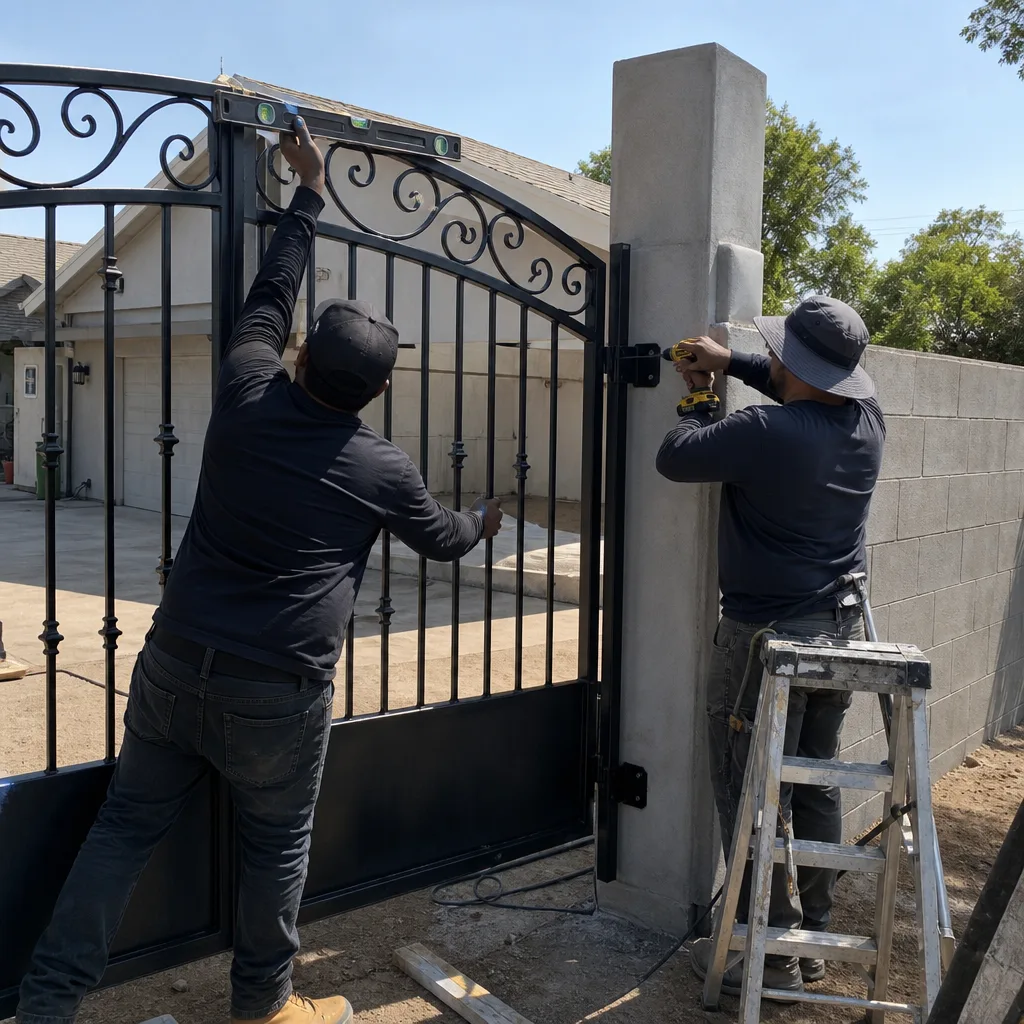
Call a professional when any of the four framework questions yields a “yes.” Call a professional when the repair involves a component you cannot source with confidence from an authorized dealer. Call a professional when the gate serves a multi-family property, a rental, or any situation where the user is not the person who performed the repair.
In Tempe, where gate density is high near ASU, along the light rail corridor, and in the gated communities south of US-60, the liability exposure is real and the documentation standard matters. Vance Gate Repair Tempe offers free estimates in Tempe. We will review your situation, give you a written price before any work starts under Haven Standard Clause 1, and leave you with a documented photo record under Clause 4. Call (623) 323-3849.
Frequently Asked Questions
Yes, if your gate uses mechanical limit switches and you follow the manufacturer’s procedure exactly. The risk is low because misadjustment fails obviously, the gate stops too soon or tries to overtravel. Photograph the original cam positions before you change anything. If your operator uses electronic position sensing instead of mechanical cams, the adjustment requires the manufacturer’s programming tool and should be left to a technician. Call (623) 323-3849 if you are unsure which type you have.
Most residential service calls in Tempe run $125-$195 for diagnosis and minor adjustment. Photo-eye replacement with force testing is $190-$335. Control board replacement on major brands like FAAC, BFT, Linear, or Viking is $450-$780 installed and programmed. Hinge and mechanical work ranges $280-$680 depending on whether welding is required. We provide a written, itemized price before any work starts. Estimates are free.
Electrical work on the 120V supply side requires a licensed electrician under Arizona Registrar of Contractors rules. Low-voltage gate control work does not require a contractor’s license for residential service, but a properly licensed and insured gate specialist provides documentation that matters in liability exposure. We carry general liability and workers’ compensation coverage, and our license number is provided on every written estimate.
We service and repair nine major automation brands: LiftMaster, FAAC, BFT, Linear, Viking, Ghost Controls, DoorKing, Elite, and Mighty Mule. Most failures in these systems are repairable. Motors last 10-15 years in Tempe’s climate with proper maintenance. Control boards fail from power surge or heat but are replaceable. We do not steer customers toward replacement when repair is viable and documented.
Look for three warning signs: jumper wires on the control board where a component should connect, non-original fasteners or hardware that does not match the gate’s finish, and safety components that appear to function but behave inconsistently (the photo-eye LED flickers, the edge reverses the gate only at certain temperatures). These are all reasons to call for a professional assessment. We have seen all three in Tempe’s older housing stock, particularly in the 1970s-1980s neighborhoods north of Broadway.
Keep the written scope and price, the invoice with part numbers, and any photo record provided. Under Haven Standard Clause 4, we leave a photo log of every adjustment, every part installed with its serial number, and every safety test result. This documentation is your record of due diligence if the gate’s maintenance history is ever questioned. Store it with your homeowner’s insurance records.
The Bottom Line
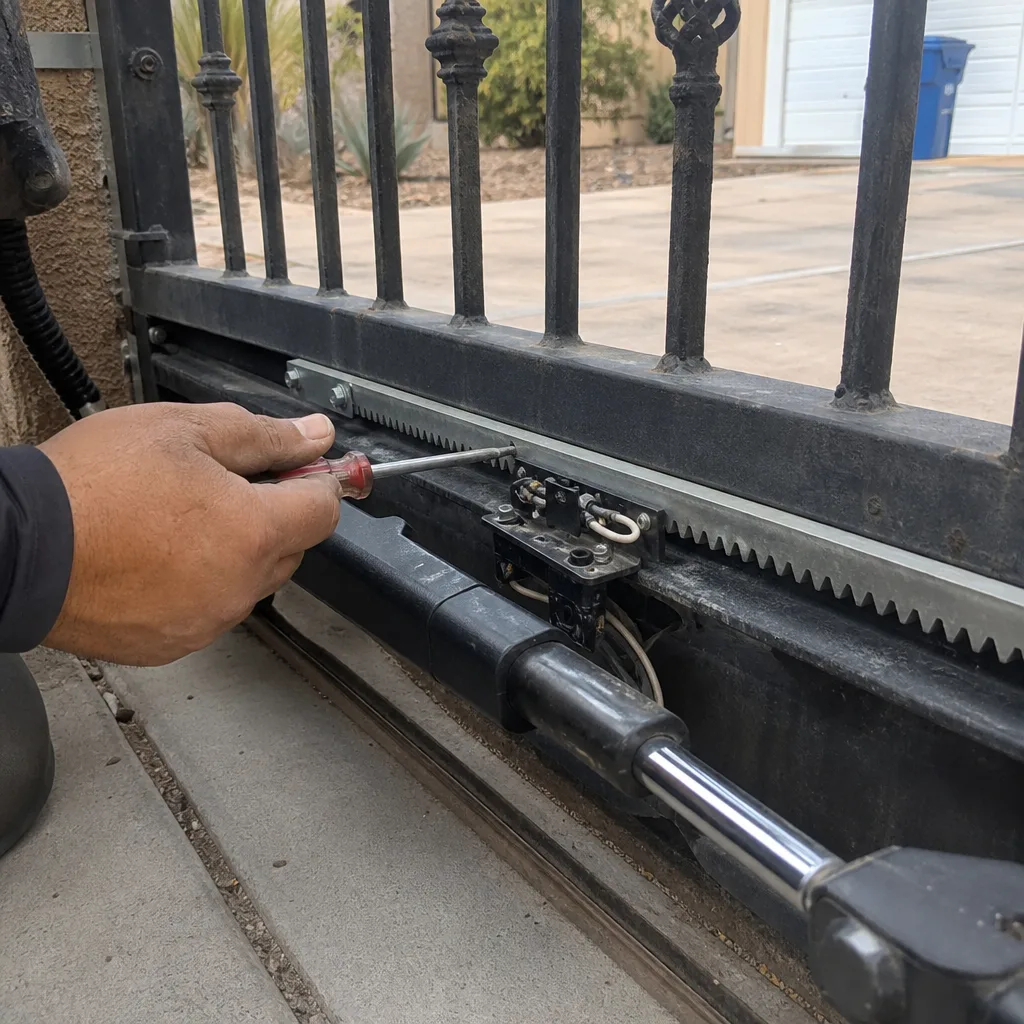
The DIY versus professional question for gate repair is not about whether you are capable. It is about whether the repair creates downstream liability if it fails. Mechanical adjustments, lubrication, and debris clearing are genuinely appropriate for homeowner maintenance. Anything involving safety sensors, 120V electrical work, structural load, or force-sensitive programming carries consequences that extend beyond the repair itself. In Tempe’s legal and climatic environment, professional documentation is not an upsell. It is protection. Know the four questions. Answer them honestly. Spend your money where it actually protects you.
Written by Adrian Vance, Owner at Vance Gate Repair Tempe, serving Tempe since 2014.