
Last updated September 22, 2026
Free on-site gate assessment - hinges, posts, and your LiftMaster or Nice gate operator checked before anything is quoted
The assessment is free and the quote is the invoice.

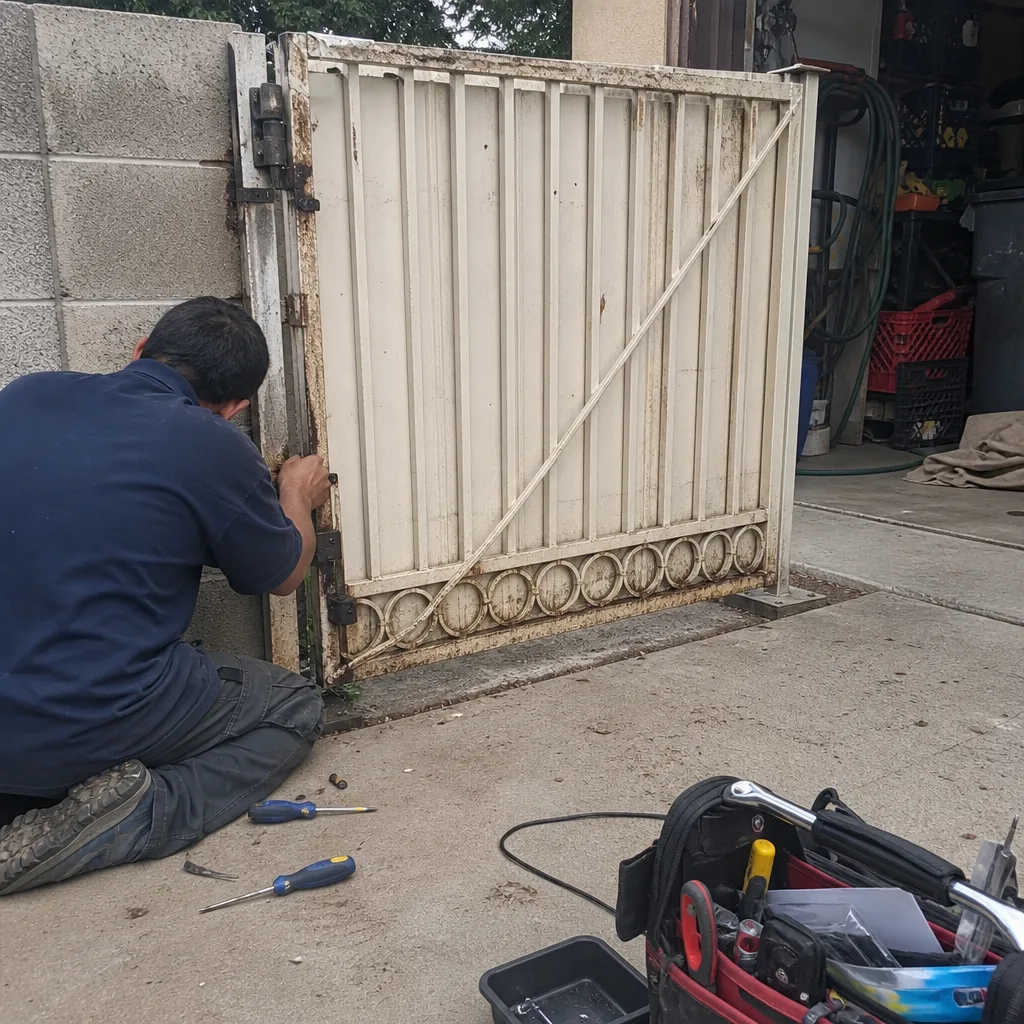 Before
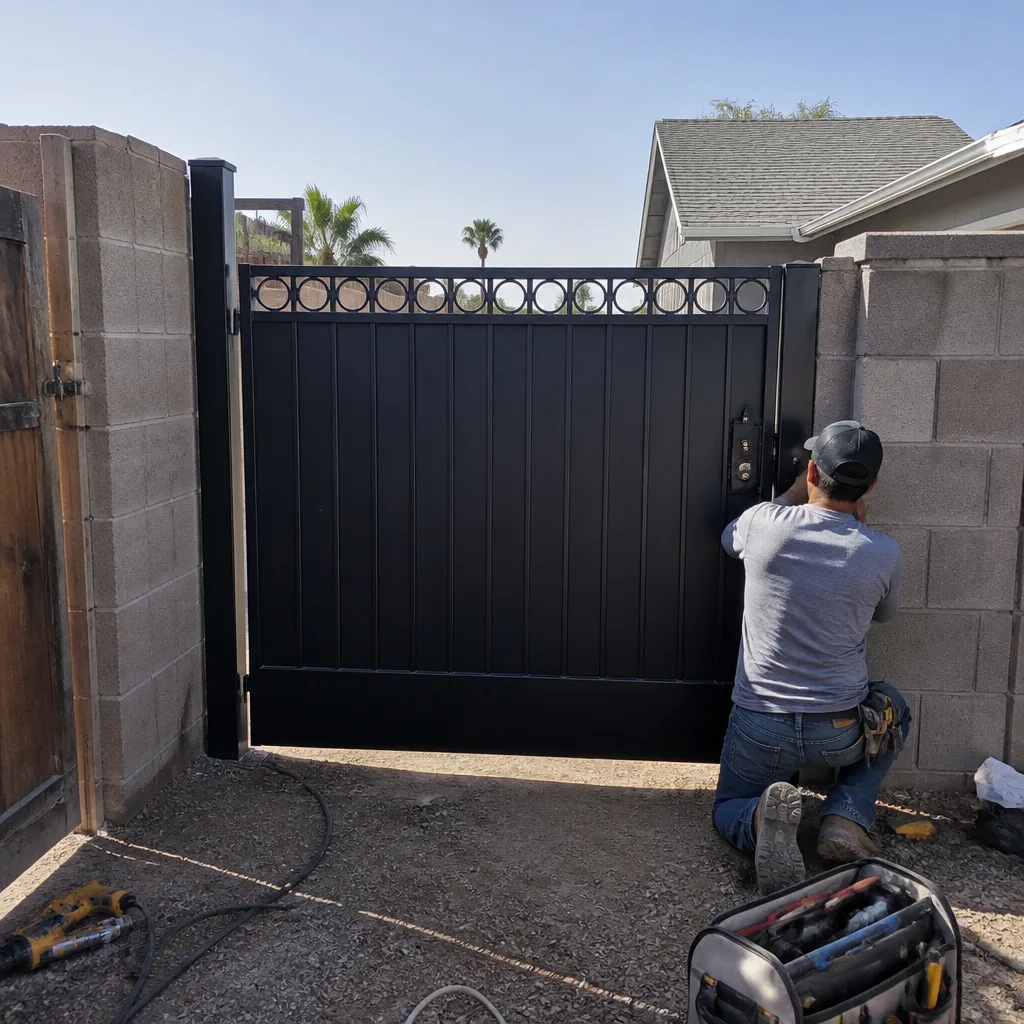 After
After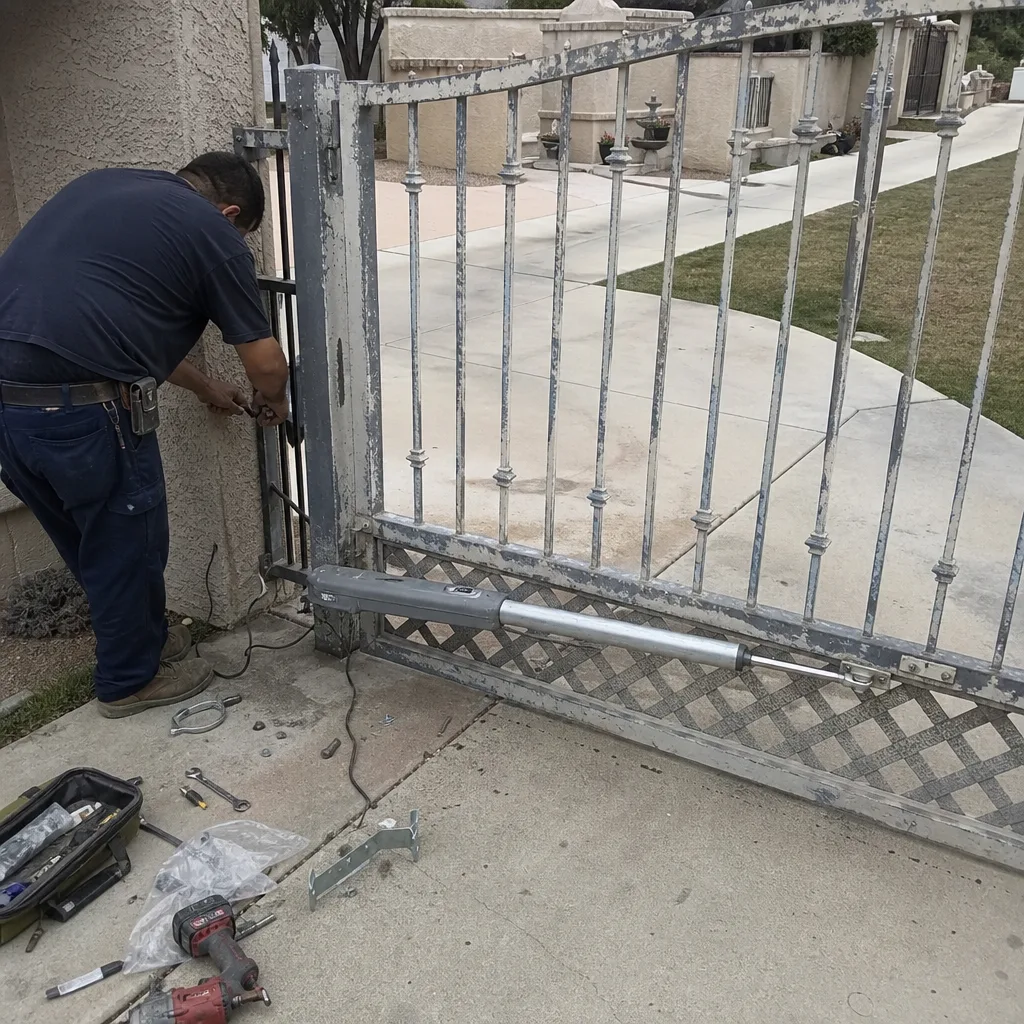 Before
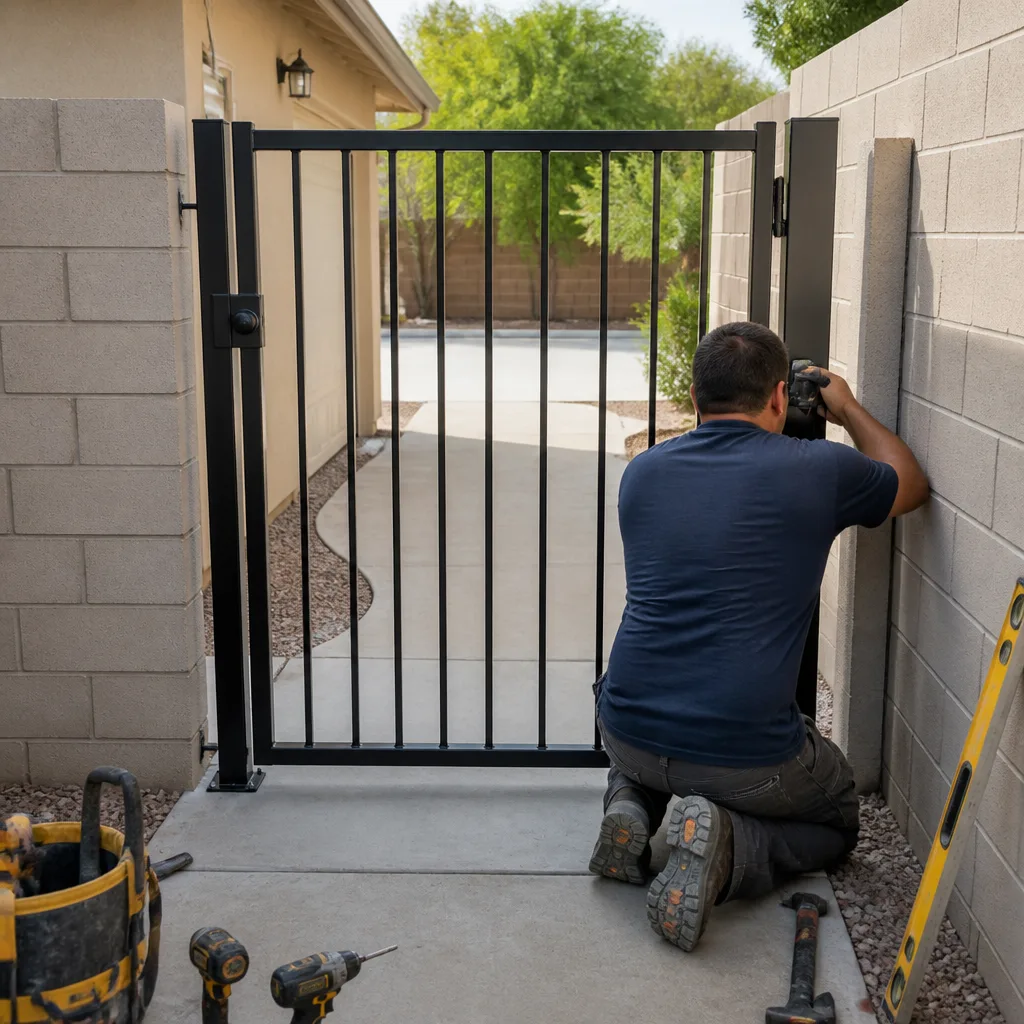 After
After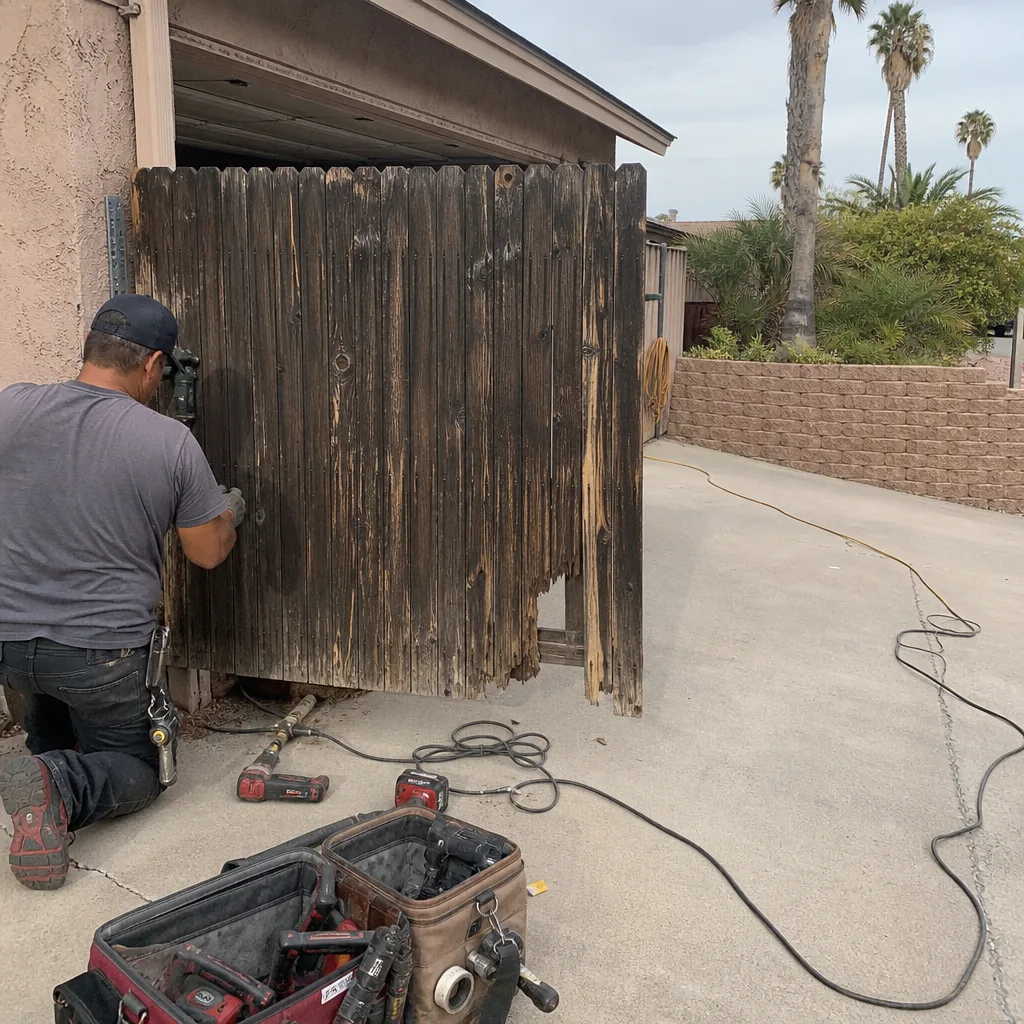 Before
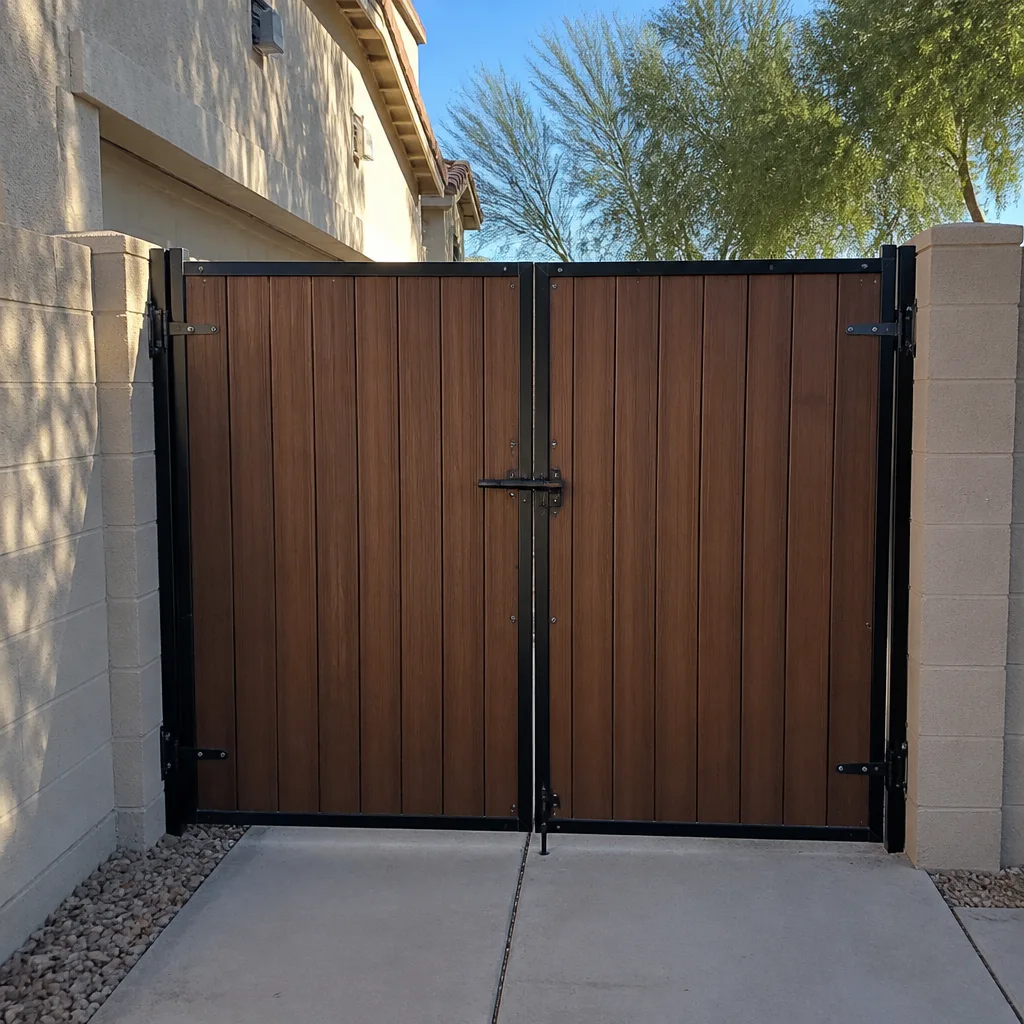 After
AfterGate Repair Warning Signs: A Tempe Homeowner’s Reference Guide
A gate that reverses unexpectedly halfway through its travel isn’t malfunctioning - its obstacle-detection system is working exactly as designed. Treating it as a nuisance and cranking the sensitivity down is how a gate stops detecting a child in its path. In Tempe, where summer concrete reaches 140°F and monsoon debris fills track systems every July, gate problems announce themselves early to homeowners who know what to listen for. This guide assigns every common warning sign to a specific urgency tier, teaches you to read sounds as diagnostics, and shows you what to document before you call for Gate Repair services - so the technician who arrives already knows where to look.
Quick Answer
Gate repair warning signs fall into three urgency tiers: Tier 1 symptoms (slight sagging, minor rust spots, occasional beeping) should be logged and monitored; Tier 2 symptoms (intermittent reversal, grinding noises, slow operation) need service within 30 days; Tier 3 symptoms (gate leaning, exposed wiring, complete failure to close, or any sudden reversal with no obstruction) mean stop using the gate immediately and call for same-day repair. In Tempe’s climate, heat-related electrical failures and monsoon debris damage progress faster than in milder regions, so Tier 2 symptoms here often escalate to Tier 3 within one season - see our Seasonal Gate Repair Care for Tempe: Year-Round Homeowner’s Guide for prevention steps.
Table of Contents
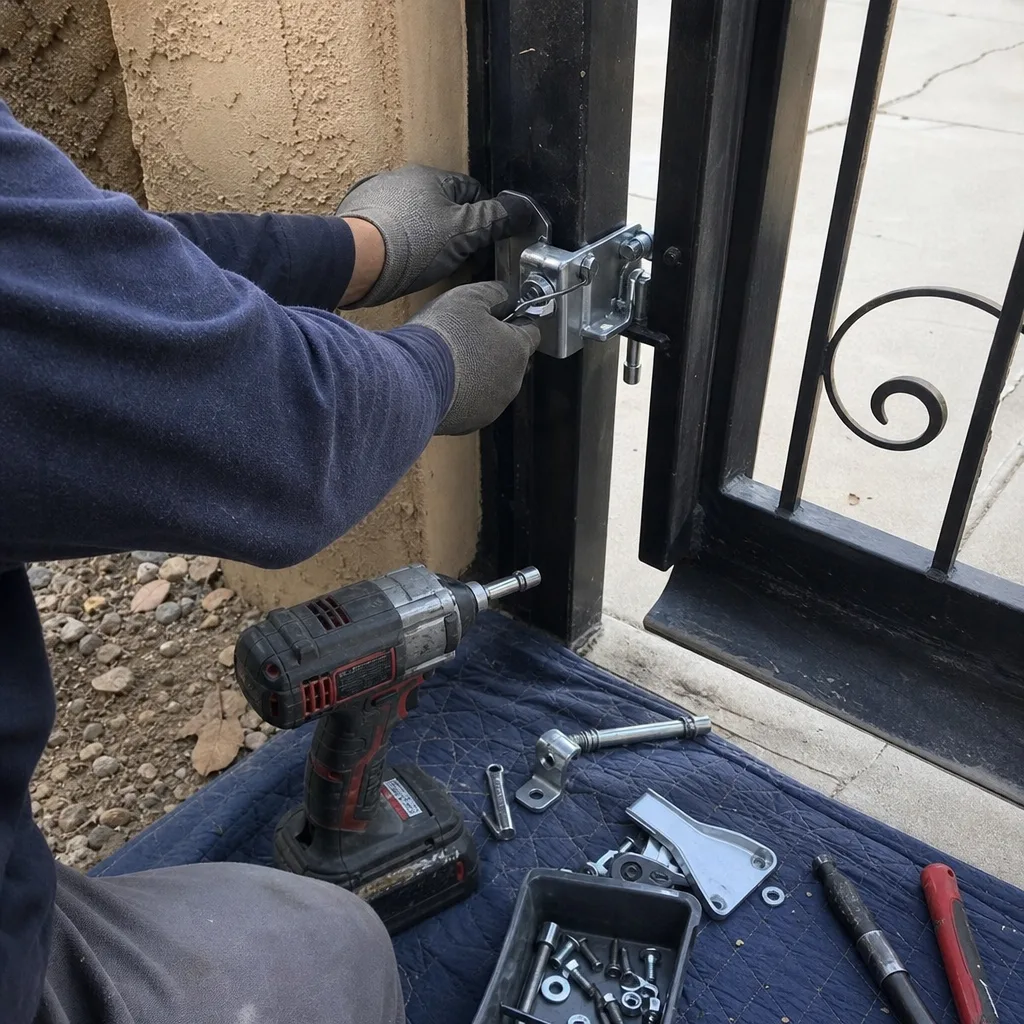
- The Three-Tier Warning System: From Monitor to Stop Using Now
- Reading Sounds as Diagnostics: Where the Noise Happens Matters
- Electrical Warning Signs Specific to Tempe’s Heat
- Decoding Reversing Behavior: Sensor Drift vs. Obstruction vs. Limit-Switch Creep
- What to Document Before Calling: Four Facts That Cut Your Bill
- Common Mistakes to Avoid
- When to Call a Professional
- Frequently Asked Questions
 Before
 After
AfterThe Three-Tier Warning System: From Monitor to Stop Using Now
Most more guides & resources treat every symptom as equally urgent. That wastes money on unnecessary emergency calls and creates dangerous delays when a symptom actually demands immediate attention. We’ve sorted every warning sign we’ve encountered across 22,000+ gates since 2014 into three tiers, with the reasoning behind each classification.
Tier 1: Log and Monitor
These symptoms indicate wear that should be tracked but don’t yet compromise safety or function. Check them monthly and photograph any changes.
- Surface rust on hinges or latch hardware - Common in Tempe where irrigation overspray hits metal daily. Rust becomes urgent only when it flakes or the hinge pin binds. We see this most in the Gate Repair in Tempe calls from neighborhoods near the Salt River bed, where soil salinity accelerates surface oxidation.
- Occasional beep from the motor housing - Many FAAC and LiftMaster units beep during normal battery backup self-tests. Note the time and frequency. Beeping every 30 seconds during operation is different from beeping once at 2 AM.
- Slight gate sag (less than 1/2 inch at the latch end) - Measure with a level when the gate is manually released. Track monthly. Sag beyond 3/4 inch stresses the motor and becomes Tier 2.
- Remote requires two presses occasionally - Often a weak battery or interference from new WiFi equipment. Replace the remote battery and monitor for two weeks before calling.
- Minor paint or powder-coat flaking - Cosmetic until bare metal is exposed. Tempe’s UV index is among the highest in the nation; expect 7-10 year coating life on south-facing gates.
Tier 2: Schedule Service Within 30 Days
These symptoms indicate active degradation that will worsen and may cause secondary damage. The gate still functions, but something is out of specification.
- Grinding noise during any phase of travel - See the sound-diagnostics section below for location-specific causes. All grinding indicates metal-on-metal contact or debris intrusion that will destroy components if continued.
- Gate operates slowly (more than 50% slower than when installed) - On a typical 16-foot swing gate, open time should be 12-16 seconds. Beyond 24 seconds suggests motor strain, low voltage, or mechanical binding.
- Intermittent reversal with no visible obstruction - The gate closes partway, stops, and returns. This is different from a complete refusal to close (Tier 3). Intermittent problems are harder to diagnose than consistent ones, so documentation matters.
- Visible gap between gate and ground that changes seasonally - In Tempe’s clay-heavy soils, especially in the Escalante and Kiwanis Park areas, seasonal moisture changes shift post footings. A gap that grows from 1 inch to 3 inches indicates post movement that will eventually bind the gate.
- Remote works only from certain angles or distances - Antenna damage or receiver degradation. The receiver board in a Linear or Viking operator is replaceable; continuing to use a degraded receiver risks complete failure.
- Control box humming when gate is stationary - Indicates a relay stuck partially closed or transformer loading. Draws power continuously and generates heat, which accelerates board failure in Tempe’s summer temperatures.
Tier 3: Stop Using the Gate Immediately
These symptoms indicate imminent safety hazard or complete functional failure. Do not operate the gate. Disconnect power if you can do so safely.
- Gate leaning visibly (any angle beyond plumb) - The post footing has failed or the gate frame has cracked. Continued operation will tear the gate from its supports, potentially onto a vehicle or person. We’ve replaced three gates in Tempe’s Maple-Ash neighborhood after exactly this failure mode.
- Exposed wiring, especially low-voltage control wiring - Tempe’s ground squirrels and roof rats chew insulation. Exposed conductors can energize the gate frame or create a fire risk if they short against 120V supply wiring.
- Gate reverses suddenly and forcefully with no obstruction - The force setting may be out of specification. A gate that hits a person or pet at full motor force causes serious injury. This is not a sensitivity adjustment you should attempt yourself.
- Gate fails to close completely and cannot be secured manually - Leaves property exposed. In Tempe’s rental-heavy areas near ASU, an unsecured gate is a liability issue within hours.
- Smoke, burning smell, or visible scorching from control box - Electrical fire risk. Turn off the breaker if accessible. Do not attempt to reset.
- Broken spring or cable on a slide gate (if visible) - The counterbalance system is compromised. Manual operation risks uncontrolled gate drop. On cantilever slide gates, the gate may appear to function normally until the remaining spring fails catastrophically.
Reading Sounds as Diagnostics: Where the Noise Happens Matters
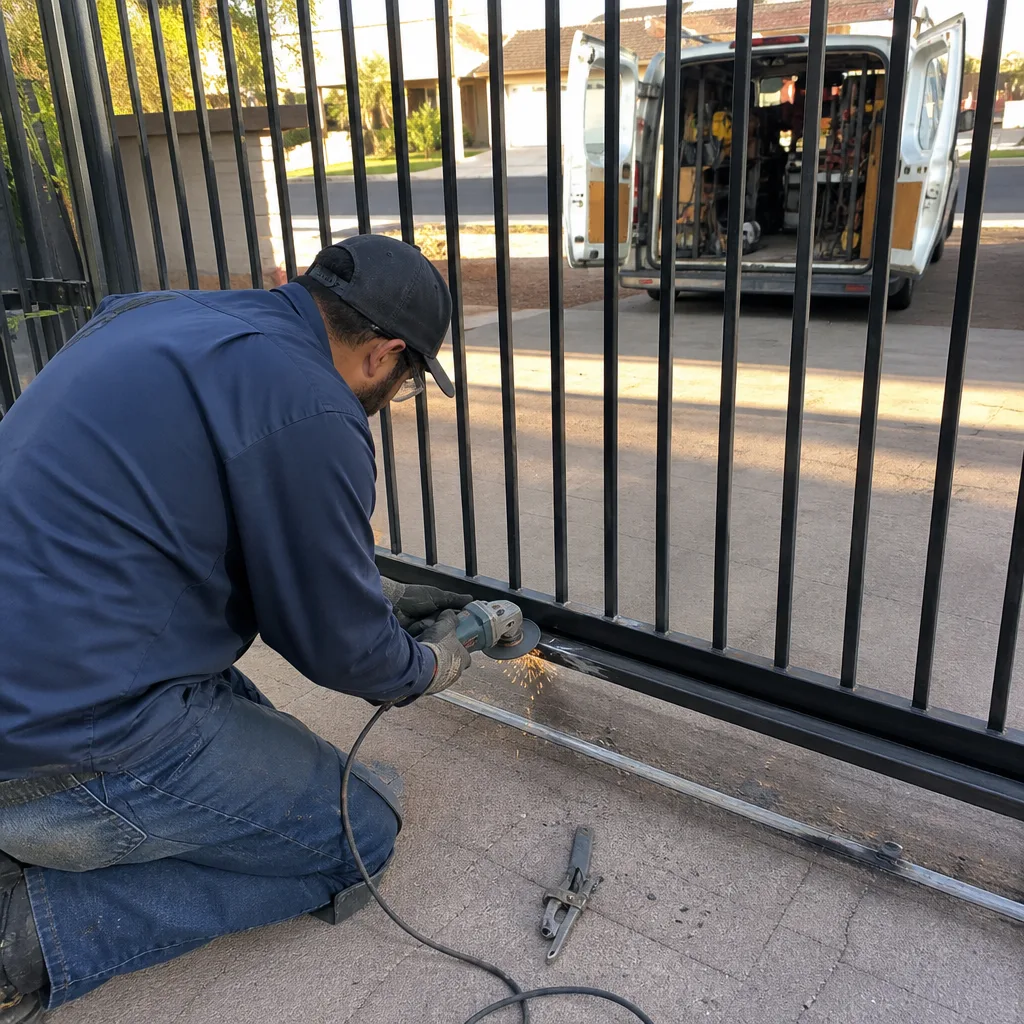
Homeowners describe “grinding” to us constantly. The repair for grinding at the start of travel is completely different from grinding at the end. Here’s how to locate the sound and what it means for your repair scope.
Grinding at Start of Travel
The gate begins moving, then you hear metal-on-metal contact for 2-3 seconds before it smooths out. This is almost always a wheel bearing or roller failure on a slide gate, or a hinge pin binding on a swing gate.
On slide gates, the trolley wheels (usually four, riding in an aluminum or steel track) have sealed bearings that fail when dust intrudes. Tempe’s dust storms, particularly the haboob events of July and August, force fine particulate past bearing seals. Once the grease is contaminated, the bearing races pit. The grinding you hear is rollers skipping over damaged race surfaces until the gate’s weight settles onto intact rollers.
What we do: Replace the wheel set, clean the track with solvent, and photograph the new wheel part numbers for your record. Most slide gates use 4-inch or 6-inch V-groove steel wheels; a set of four runs $180-$340 installed, depending on whether the axle bolts have seized and require extraction.
Grinding Mid-Travel
The gate moves smoothly at first, then grinds for a portion of the travel, then smooths again. This is debris in the track on slide gates, or intermittent binding in the gate frame on swing gates.
After Tempe’s monsoon storms, we find gravel, palm frond segments, and even roof tiles in slide gate tracks. The debris lifts the gate momentarily, causing the operator to strain and the wheels to lose contact. On swing gates, a cracked frame member can flex closed at rest, then bind when the gate’s weight shifts during travel.
What we do: Track cleaning is straightforward; frame cracks require welding. We document both with photos before and after. A track cleaning and inspection runs $140-$190; frame welding starts at $280 and requires the gate to be removed to the shop.
Grinding at End of Travel
The gate approaches fully open or fully closed, then grinds for the final 6-12 inches. This is limit-switch overrun - the motor doesn’t know where to stop and is driving against mechanical limits.
Every automated gate has limit switches (physical switches or electronic position sensors) that tell the motor when to stop. On a LiftMaster LA500 or FAAC 422, these are magnetic or optical sensors reading a cam position. When the switch drifts or the cam loosens, the motor runs past the intended stop point. The grinding is the motor straining against the gate’s physical stops.
Continued operation strips the operator’s internal gears. We’ve replaced $800 gearboxes that would have needed a $45 limit-switch adjustment if caught earlier.
What we do: Reset limit switches to factory travel specs, verify with a tape measure, and photograph the cam position. Under Haven Standard Clause 4, you get the photo. This repair runs $160-$220, depending on access.
Electrical Warning Signs Specific to Tempe’s Heat
Tempe averages 108 days above 100°F annually. Gate electronics are rated for ambient temperatures most of the country never reaches. Here’s what heat damage looks like and why it masquerades as other problems.
The Midday Failure Pattern
A gate that works at 7 AM and 9 PM but fails at 2 PM is not experiencing a sensor issue. It’s thermal shutdown of the control board.
Control boards in operators like the BFT Deimos and Linear SWD contain capacitors and voltage regulators with temperature-dependent performance. At 110°F ambient, the inside of a dark-colored operator housing reaches 140-155°F. Electrolytic capacitors lose capacitance exponentially with temperature. The board’s 24V output sags, logic circuits reset, and the gate stops responding. When evening temperatures drop, capacitors recover and the gate works again.
Homeowners who replace sensors or remotes based on this pattern waste money. The correct diagnosis requires logging failure times against temperature.
What we do: Test the board under load at operating temperature using a heat gun and thermal camera. If the 24V rail drops below 22.5V at 140°F, we recommend board replacement or, for some Linear and Mighty Mule units, relocation of the control box to a shaded position. Board replacement runs $340-$680 depending on brand and whether the motor’s encoder is integrated.
Transformer Humming and Heat Discoloration
The transformer steps 120V down to 24V for control circuits. In continuous heat, transformer varnish degrades. A transformer that hums audibly and shows brown discoloration on the case is failing. It will eventually short, potentially taking the board with it.
What we do: Replace the transformer and inspect the board for voltage-spike damage. Document the input and output voltages under load. Transformer replacement is $140-$220; board damage from transformer failure adds $280-$560.
Battery Backup Failure in Summer
Gate operator batteries are lead-acid or lithium-ion, rated for 77°F optimal performance. At Tempe summer temperatures, lead-acid batteries sulfate faster and lithium cells degrade through SEI layer breakdown. A battery that tested “good” in March may fail completely by August.
The warning sign: beeping every 30 seconds during power outages, or the gate operating slowly on battery despite a “fully charged” indicator. On FAAC and DoorKing systems, the battery health LED is not a reliable indicator of actual capacity under load.
What we do: Load-test the battery at 25-amp discharge (simulating motor starting current). Replace if voltage drops below 10.5V within 30 seconds. Battery replacement runs $120-$280 depending on capacity and whether the charging circuit is integrated into the board.
Decoding Reversing Behavior: Sensor Drift vs. Obstruction vs. Limit-Switch Creep
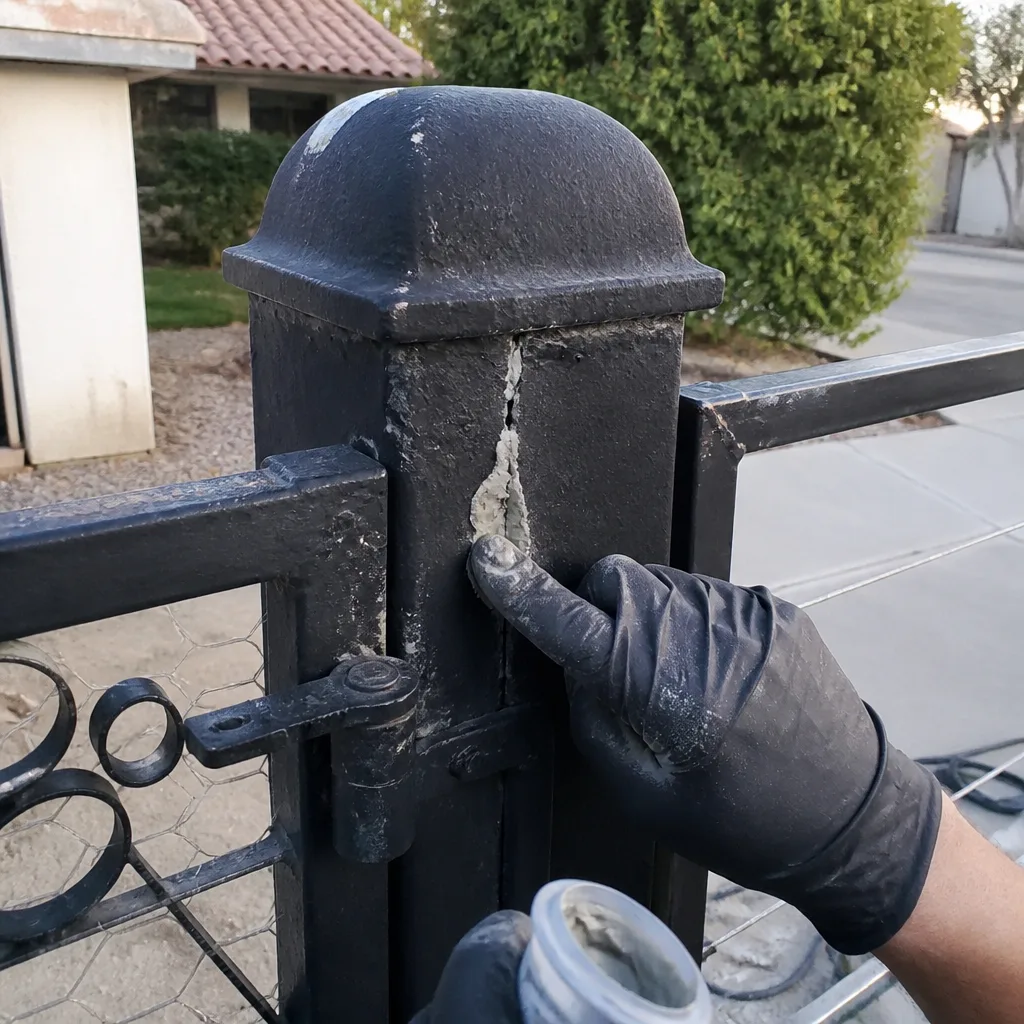
Unexpected reversal is the most common symptom we field calls about. The repair differs by $200-$600 depending on the actual cause. Here’s how to tell them apart before the technician arrives.
Sensor Drift (Photo-Eye Misalignment)
Photo-eyes (infrared beam pairs) mount on posts or gate sections and create an invisible line the gate monitors during closing. If the beam breaks, the gate reverses.
What sensor drift looks like: The gate reverses at the same point in travel every time, typically 3-6 feet from fully closed. The reversal is smooth, not abrupt. Sunlight at certain angles can trigger false beam breaks, so the problem may be time-of-day specific. In Tempe, low winter sun angles (November through February) hit photo-eyes directly east-west, causing more drift-related calls during those months.
What causes it: Post settling, gate flex, or vibration loosens the eye mounting. A 2-degree shift is enough to break the beam at 20 feet.
What we do: Realign eyes with a laser level, tighten mounts with thread-locking compound, and install sun shields if needed. Document the alignment with photos. Repair runs $140-$190.
Actual Obstruction
What obstruction looks like: Reversal at variable points, often with visible debris. The gate may reverse, retry, reverse again - a “hunting” pattern. Some operators beep during reversal.
Common Tempe obstructions: Palo verde twigs after wind events, soccer balls from adjacent yards, landscaping fabric pulled into the track by monsoon runoff, and packrat nests built overnight in the operator housing. We’ve found full cholla cactus segments wedged in slide gate tracks after March windstorms.
What we do: Clear and inspect. If the obstruction damaged a photo-eye or limit switch, replace and document. Simple clearing runs $120-$160; damage repair adds parts.
Limit-Switch Creep
What limit-switch creep looks like: The gate closes fully, then immediately reopens 6-18 inches, or opens fully then partially recloses. The reversal happens at the mechanical end of travel, not mid-travel. The gate may “chatter” against the stop point.
This is the limit switch failing to hold its position. On mechanical switches (common in older Elite and Viking operators), the cam wears or the set screw loosens. On electronic encoders (LiftMaster, newer FAAC), the reference position drifts due to electrical noise or capacitor degradation.
What we do: For mechanical switches, replace the cam and switch assembly. For encoder systems, recalibrate and verify with 50-cycle endurance testing. Mechanical repair: $160-$220. Encoder recalibration: $140-$190 unless board replacement is needed.
What to Document Before Calling: Four Facts That Cut Your Bill
Diagnostic time is billable time. The more precise your description, the faster we find the problem. Before calling Vance Gate Repair Tempe home, gather these four items:
- Behavior description in sequence - Not “it doesn’t work.” Instead: “I press the remote, the gate starts opening, grinds for 3 seconds at the halfway point, then stops and beeps four times.” Sequence matters. “Grinds then beeps” suggests a different failure than “beeps then grinds.”
- When it started and what changed - “Started Tuesday after the storm” tells us to look for debris or water intrusion. “Started gradually over three weeks” suggests wear, not damage. “Started after my landscaper trimmed the hedges” suggests cable or sensor disturbance.
- Intermittent or consistent - Intermittent faults require different diagnostic approaches and often take longer. If the problem is intermittent, note the time of day, temperature, and how many attempts between failures. “Fails 1 in 4 times, only between 1 PM and 4 PM” is a thermal issue. “Fails every third cycle regardless of time” is mechanical wear.
- Last known service date and what was done - If you have paperwork from a previous company, have it ready. We offer free second opinions on any written estimate - bring the paperwork and we’ll review it at no cost. Knowing that a “new motor” was installed 18 months ago tells us to check installation quality before condemning the motor.
Under Haven Standard Clause 4, every visit includes a documented photo record of what we find, what we adjust, and what we replace. The documentation you provide before arrival and the documentation we create during the visit together eliminate guesswork and prevent paying twice for the same diagnosis.
Common Mistakes to Avoid
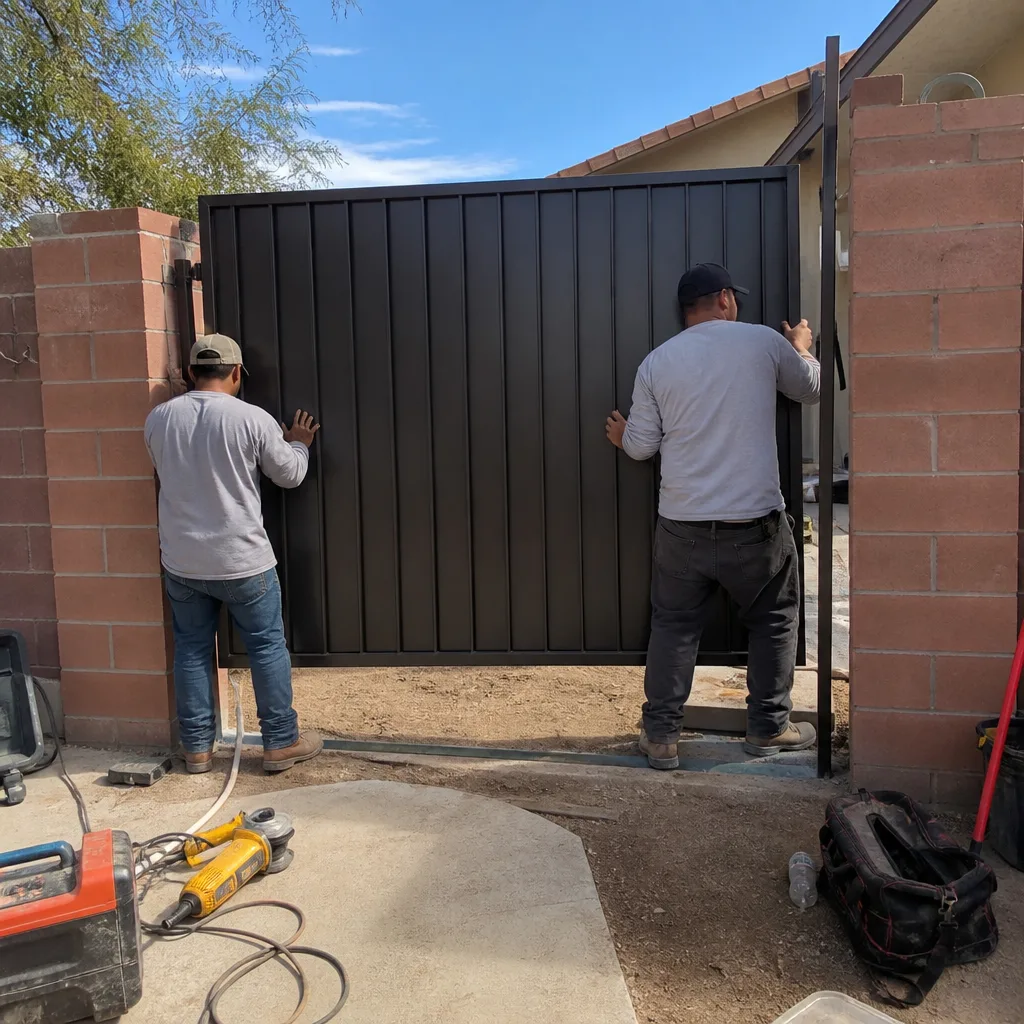
- Adjusting force settings to “fix” reversal problems - The force adjustment on a gate operator controls how hard the motor pushes before deciding an obstruction exists. Turning it up masks sensor or limit-switch problems and creates a crushing hazard. In Tempe, where children and pets use gates constantly near ASU rental properties, this is a liability issue. The force setting should be verified with a force gauge, not adjusted by ear.
- WD-40 on gate hinges or track - WD-40 is a solvent, not a lubricant. It displaces existing grease and attracts dust. Within two weeks in Tempe’s dust, a WD-40’d hinge is worse than an unlubricated one. Use lithium-based grease or silicone spray specified for outdoor hardware.
- Ignoring seasonal patterns - A gate that “always acts up in summer” has a heat-related electrical issue, not a mechanical one. Describing it as “random” sends the technician down the wrong diagnostic path. Track the pattern; it saves you money.
- Attempting DIY spring or cable replacement on slide gates - Slide gate counterbalance springs store significant energy. A broken spring under tension can cause serious injury or death. We do not provide step-by-step spring replacement instructions for this reason. If you see a broken spring, stop using the gate and call for service.
- Replacing the remote before testing the wall button - If the wall button works and the remote doesn’t, the problem is the remote or receiver, not the gate. A $15 battery fixes most “remote failures.” Test the wall button first to avoid an unnecessary service call.
- Accepting verbal estimates for gate work - A verbal estimate cannot be compared, disputed, or held to. Under Haven Standard Clause 1, we provide a written price before any work starts. If another company won’t put the price in writing, that is information about their business practices.
- Waiting for “total failure” before calling - A gate that operates slowly or reverses intermittently is already damaging its operator. Motor strain from mechanical binding overheats windings and degrades insulation. The $220 adjustment you delay becomes a $680 motor replacement.
When to Call a Professional
Call today if your gate shows any Tier 3 symptom: visible lean, exposed wiring, forceful unexplained reversal, complete failure to secure, burning smell, or broken spring. Not sure who to trust? Read How to Hire a Gate Repair Contractor in Tempe: A Step-by-Step Guide first. These are safety hazards, not convenience issues.
For Tier 2 symptoms, schedule within 30 days - but in Tempe’s climate, be aware that heat accelerates electrical degradation and monsoon debris accelerates mechanical wear. A Tier 2 symptom in March may become Tier 3 by July.
Vance Gate Repair Tempe offers free estimates in Tempe. We’ll review your documentation, inspect the gate, and provide a written price before any work starts - no call-for-a-quote runaround, no surprise invoice. Call (623) 323-3849. A live person answers 24 hours a day, seven days a week. If you have a written estimate from another company, bring it for a free second opinion.
Frequently Asked Questions
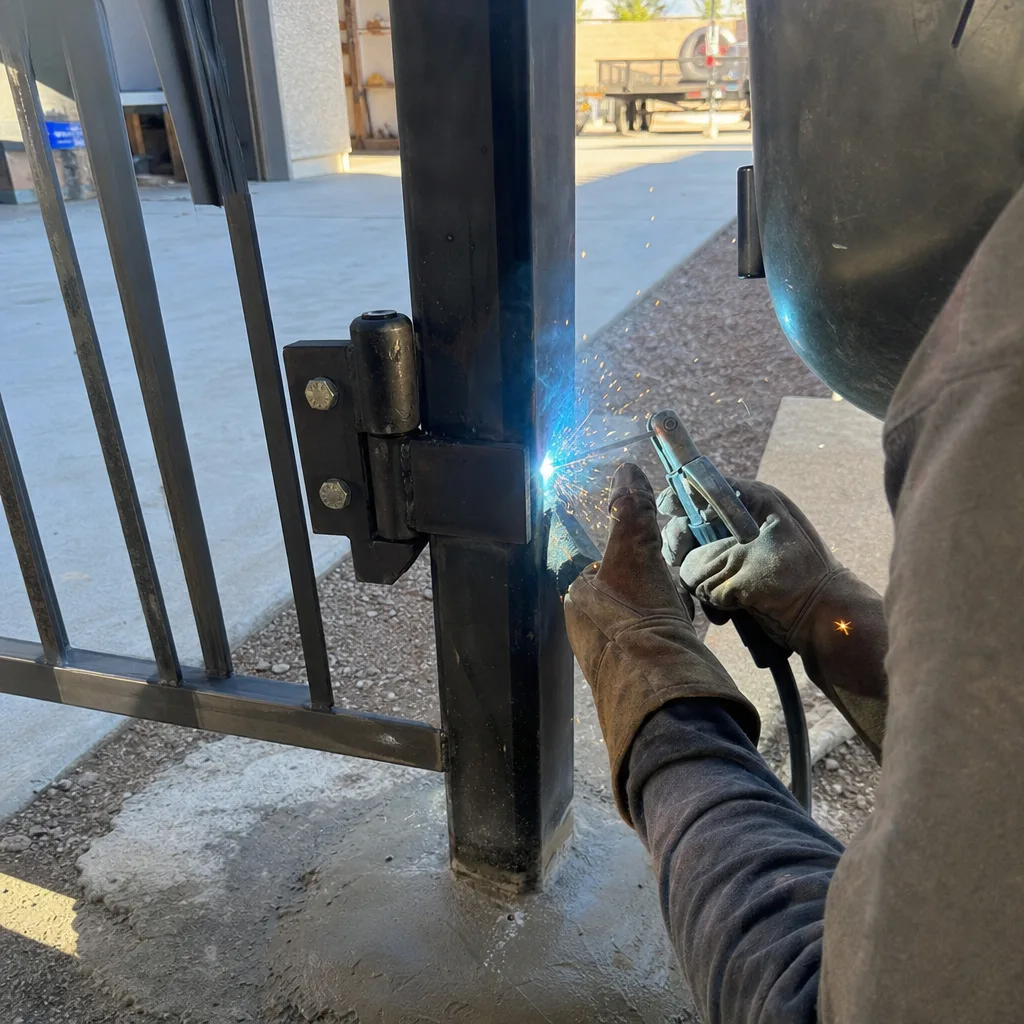
Most gate repairs in Tempe run $140-$680, with the majority falling between $180 and $420. Track cleaning and sensor realignment are at the lower end; control board replacement on a multi-brand system is at the higher end. We provide a written price before any work starts under Haven Standard Clause 1. Call (623) 323-3849 for an exact quote - estimates are free.
This is almost always thermal shutdown of the control board, not a sensor problem. Tempe’s summer temperatures exceed the design ambient for most gate electronics. Capacitors inside the operator housing lose performance above 140°F internal temperature. The board recovers when temperatures drop. We test boards under thermal load to confirm before recommending replacement. This pattern is so common in Tempe that we specifically ask about time-of-day failure in every summer call.
You can clear visible debris from a slide gate track safely. Do not attempt hinge pin replacement, wheel bearing replacement, or any work that requires releasing the gate from the operator arm - the gate’s weight can cause uncontrolled movement. For grinding at end of travel (limit-switch overrun), do not adjust limit switches yourself; incorrect setting causes the motor to drive against mechanical stops and destroys internal gears. We document the correct setting with photos so future technicians know what was done.
A properly maintained gate motor in Tempe’s climate typically lasts 10-15 years. Heat is the primary accelerator of failure; motors in unshaded housings with poor ventilation fail at the shorter end. We service nine major brands - LiftMaster, FAAC, BFT, Linear, Viking, Ghost Controls, DoorKing, Elite, and Mighty Mule - and can repair most rather than replace if caught before catastrophic failure. A motor that runs slowly due to binding can be saved; a motor with seized bearings from continued operation usually cannot.
We service and repair all nine major automation brands: LiftMaster, FAAC, BFT, Linear, Viking, Ghost Controls, DoorKing, Elite, and Mighty Mule. We do not steer customers toward replacement with a “preferred” brand. If your existing operator can be repaired economically, we document the repair and warranty it under our 365-Day Done Right Promise. If replacement is genuinely more cost-effective, we provide written comparison of repair vs. replacement costs.
Yes. A live person answers our phone 24 hours a day, seven days a week - no voicemail, no callback queue. For Tier 3 symptoms (safety hazards, complete failure to secure), we dispatch same day. For Gate Installation in Tempe or planned Gate Motor & Opener in Tempe work, we schedule a free measure and provide a written price before ordering parts.
Every visit under Haven Standard Clause 4 includes a photographed record of what was found, what was adjusted, what was set, and what was installed. You receive a copy; we file a copy in the job record. For example: “Photo-eye realigned from 2.3 degrees off horizontal to plumb; limit switch reset from 87 degrees to 90 degrees; cam position photographed.” This documentation means no future technician has to rediscover the same problem, and you have evidence of what was done if a warranty issue arises.
The Bottom Line
Gate problems in Tempe don’t appear suddenly - they progress through recognizable stages if you know what to watch for. Use the three-tier system to decide when to monitor, when to schedule, and when to stop using the gate entirely. Listen for where a grinding noise occurs; it tells you whether you’re facing a $180 wheel replacement or a $680 board failure. Document the four facts before you call, and insist on a written price before anyone picks up a tool. Heat and monsoon debris make Tempe harder on gates than most climates, but that same harshness makes early symptoms more obvious to the homeowner who knows how to read them.
Written by Adrian Vance, Owner at Vance Gate Repair Tempe, serving Tempe since 2014.