
Last updated September 22, 2026
Free on-site gate assessment - hinges, posts, and your LiftMaster or Nice gate operator checked before anything is quoted
The assessment is free and the quote is the invoice.


 Before
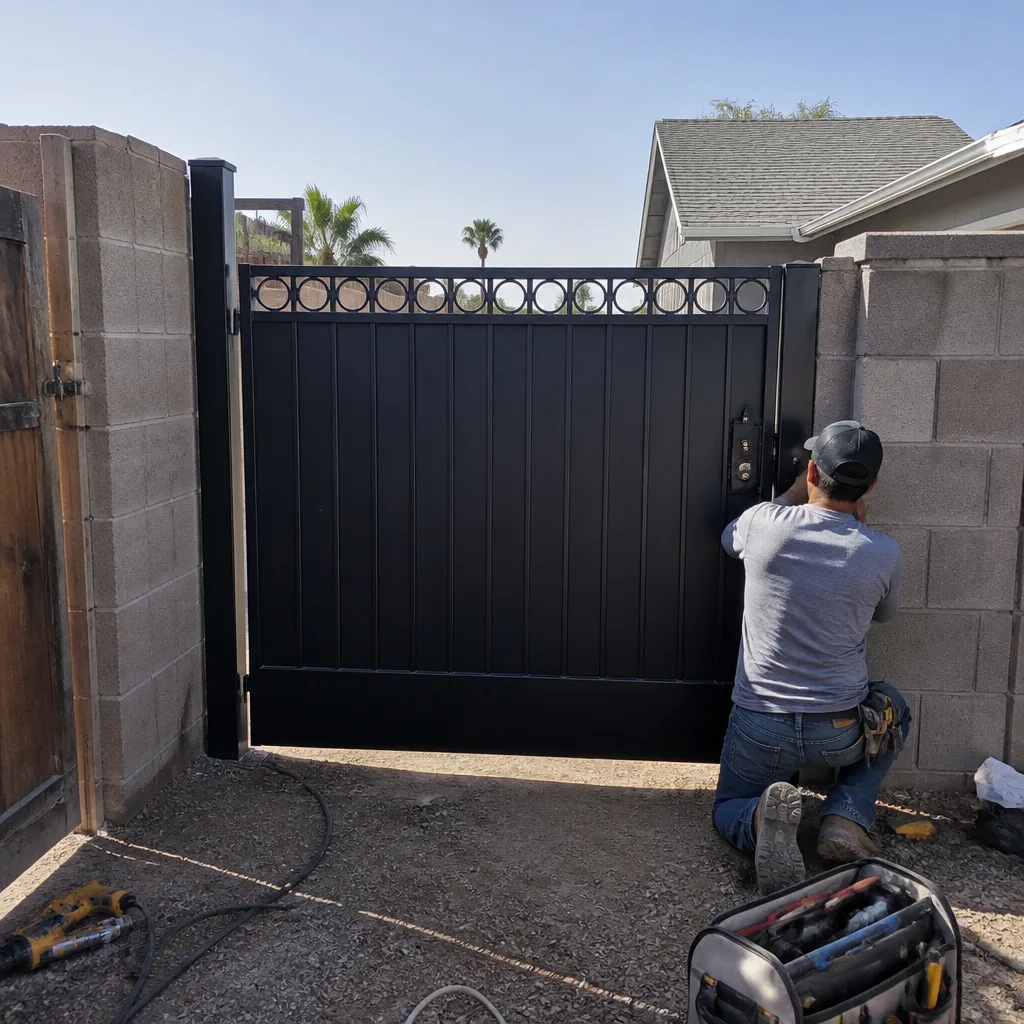 After
After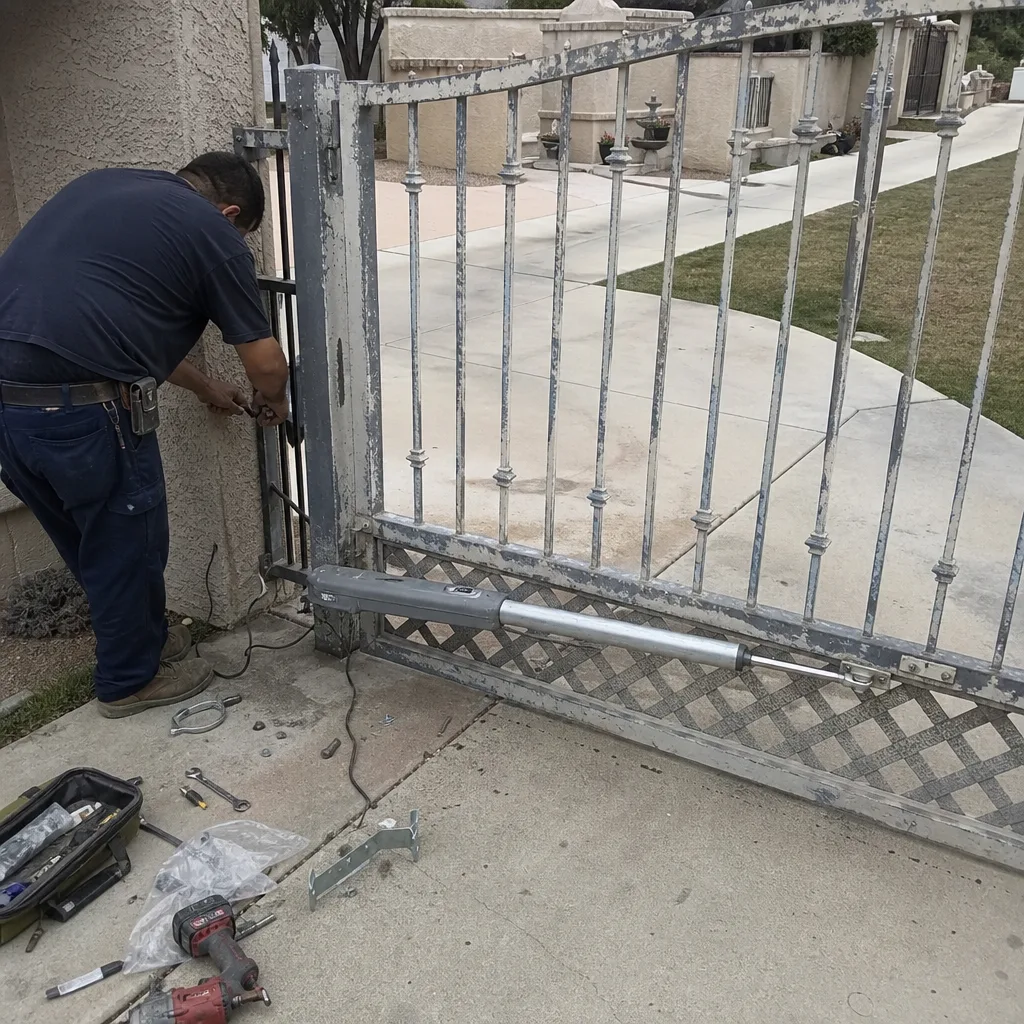 Before
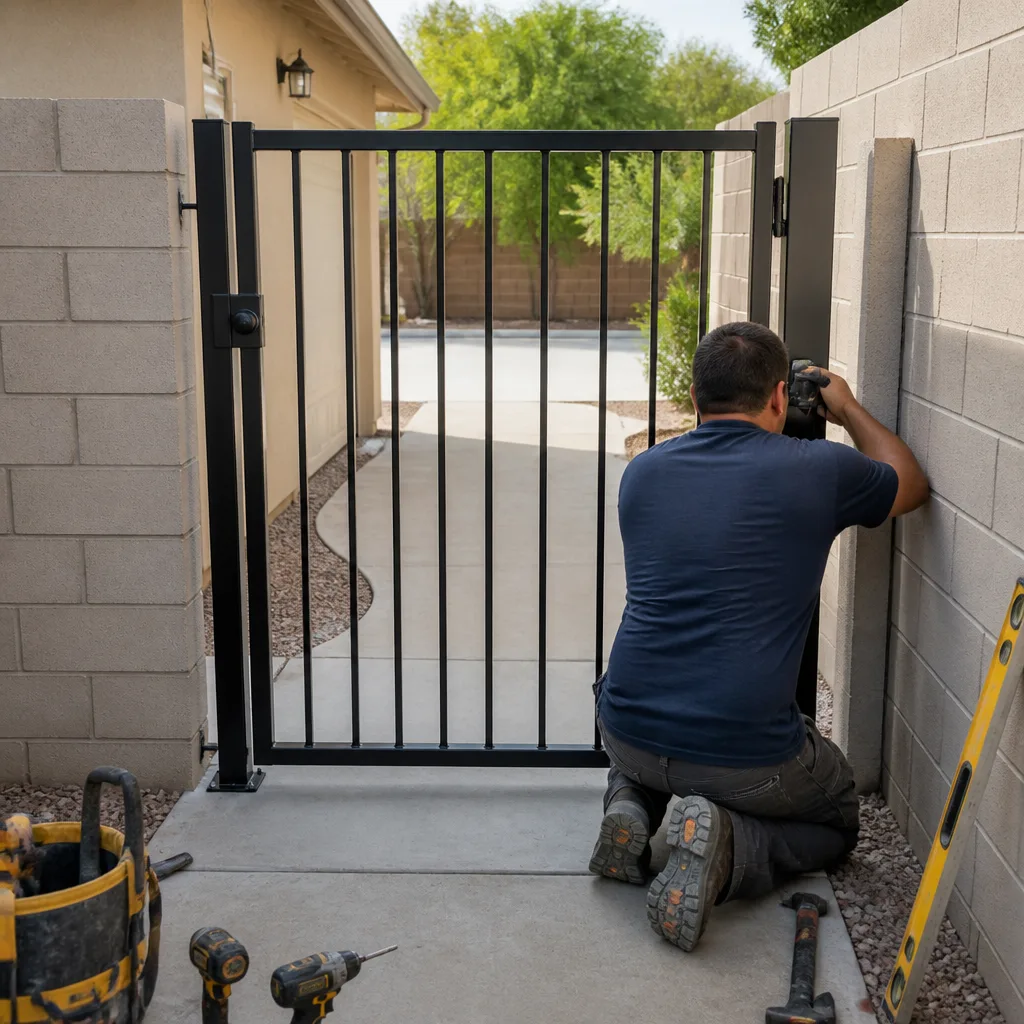 After
After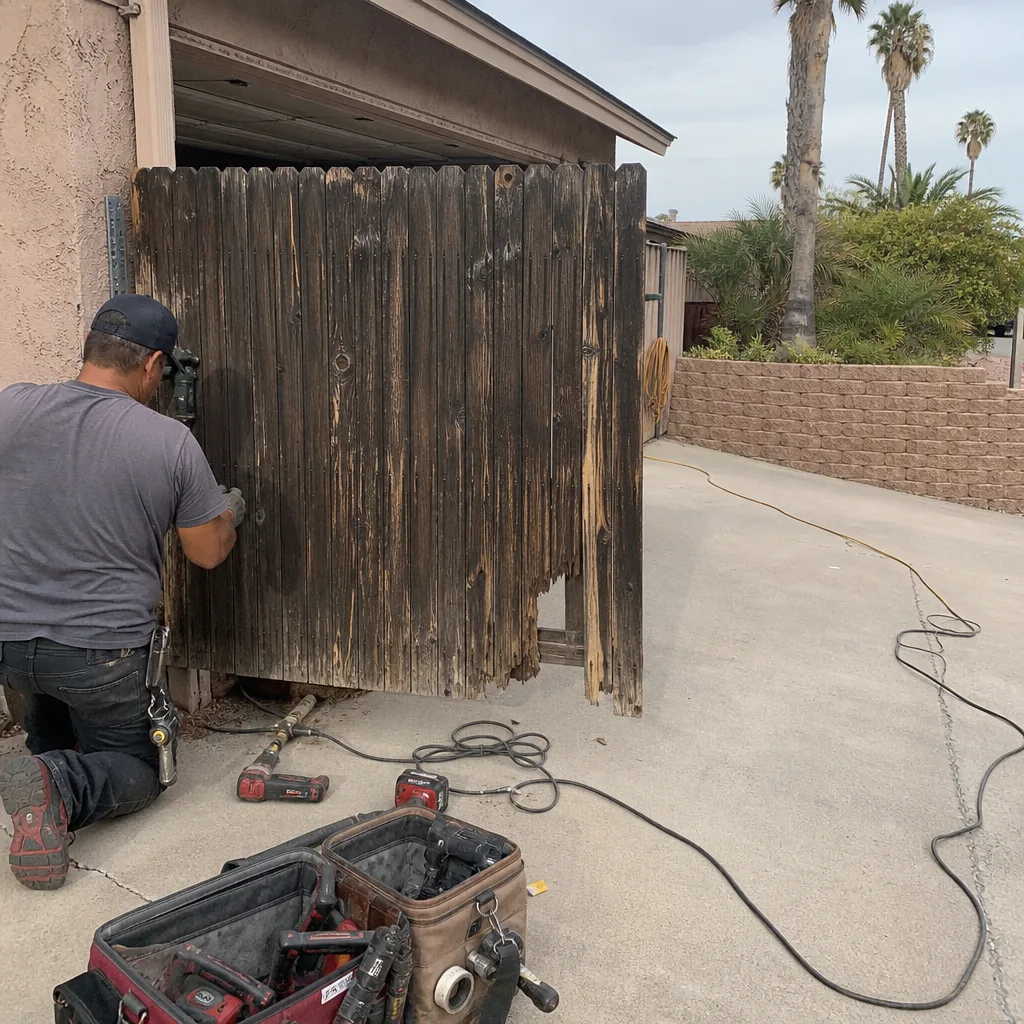 Before
 After
AfterSeasonal Gate Repair Care for Tempe: Year-Round Homeowner’s Guide
Most gate maintenance guides are written for homeowners in Ohio or Pennsylvania, where the enemy is ice and salt. In Tempe, the destructive season starts in late May, when metal expands, UV degrades plastic housings, and dust infiltration peaks simultaneously. We’ve documented over 22,000 gate jobs since 2014, and the pattern is clear: gates that fail in July were already showing stress signals in April that went unaddressed. This guide maps the four stress periods specific to Tempe’s desert climate and assigns concrete tasks to each window; for hands-on help, see our Gate Repair services.
Quick Answer
Seasonal gate care in Tempe means four distinct maintenance windows: April-May pre-heat inspection before temperatures exceed 100°F, June-July behavioral monitoring for heat stress signals, July-September monsoon electrical protection and post-storm inspection, and December-February lubricant adjustment for cooler morning temperatures. Each period targets the specific failure mode that dominates that window. For deeper reading, see The Complete Guide to Gate Repair in Tempe.
Table of Contents
- April-May: The Pre-Heat Inspection Window
- June-July: Reading Gate Behavior in Peak Heat
- Monsoon Season: Electrical Exposure and Storm Recovery
- October-November: The Post-Monsoon Debris Audit
- December-February: Winter Lubricant and Viscosity Management
- Year-Round Habits That Prevent Emergency Calls
- Common Mistakes to Avoid
- When to Call a Professional
- Frequently Asked Questions
 Before
 After
AfterApril-May: The Pre-Heat Inspection Window
In Tempe, the critical maintenance window closes when daytime highs start holding above 100°F consistently, typically by late May. Before that threshold, metal components are still near their neutral size. Once summer expansion begins, limit switches set in April will read differently in July. We recalibrate hundreds of gates in this window, and the ones that skip it account for a disproportionate share of mid-summer emergency calls.
The pre-heat inspection has three specific targets:
- Limit-switch verification. The limit switch tells the motor when to stop opening and closing. In cooler April temperatures, we set and photograph the stop positions. When the gate arm expands 1/16 to 1/8 inch in summer heat, a switch set too close to travel will either fail to close fully or over-travel and stress the bracket. We document the baseline setting under Haven Standard Clause 4 so any future technician can compare against it.
- Photo-eye alignment and shielding. The photo-eye (the infrared beam that stops the gate if something crosses the path) is vulnerable to direct summer sun. In April, we check alignment to within 1/8 inch and verify that the hood or shield hasn’t cracked in winter UV. A misaligned photo-eye in June doesn’t beep or flash; it simply refuses the close command intermittently, which homeowners often misdiagnose as motor failure.
- Control box seal inspection. Dust infiltration is the slow killer of Tempe gate electronics. We inspect the gasket around the control box lid and the cable entry points. A gasket that passes in April will fail under thermal cycling by August. We photograph the seal condition and note any compression set in the rubber.
Neighborhoods near Papago Buttes and the McClintock corridor see accelerated UV exposure due to reflected light off the desert terrain. Gates in these areas often need photo-eye hood replacement a year earlier than comparable installations in shaded Tempe yards.
Cost context: a pre-heat inspection and recalibration in Tempe typically runs $140-$220, depending on whether the gate is single or dual swing, or sliding. A mid-July emergency call for an over-travel jam starts at $280 and often requires same-day parts. The April window is cheaper because the gate is still working.
June-July: Reading Gate Behavior in Peak Heat
Once temperatures in Tempe are regularly above 105°F, opening the control board for inspection becomes risky. Capacitors hold charge, and plastic housings are thermally stressed. The technician’s approach shifts from hands-on to observational. Homeowners can learn to read the same behavioral signals we watch for during this period.
These are the specific stress behaviors to track:
- Delayed start after the remote press. A gate that waits 2-4 seconds before moving, then operates normally, often indicates a capacitor in the power supply section that is thermally degraded. The capacitor (a cylindrical component that stores startup current) loses efficiency above 110°F internal temperature. This is not an emergency, but it is a predictable failure within 6-12 months.
- Mid-travel hesitation on a previously smooth gate. If the gate stops briefly at the same point in its arc, then resumes, the motor is hitting thermal overload protection. The motor windings are too hot for the rated duty cycle. This happens most on south-facing gates in Tempe’s Escalante and Riverside neighborhoods, where afternoon sun adds radiant load to the motor housing. The fix is not a larger motor; it’s improving ventilation or adjusting the duty cycle timer.
- Inconsistent close force. A gate that closes firmly in morning cool but bounces off the post in afternoon heat has an operator with a temperature-sensitive clutch setting. Some FAAC and BFT models show this pattern. The clutch is a mechanical slip point that protects against entrapment; when the grease in the gearbox thins in heat, the effective clutch point drops. We note this behavior and schedule a September adjustment when temperatures moderate.
What not to do in June and July: do not spray water on a hot motor to cool it. Thermal shock can warp the rotor. Do not adjust the force settings upward without a force-testing gauge; federal entrapment standards (UL 325) set maximum allowable force, and a homeowner adjustment can exceed them without any visible warning.
If your gate shows any of these three behaviors, document the time of day and temperature. That pattern data is valuable when a technician arrives. Under Haven Standard Clause 4, we log behavioral reports alongside our physical findings.
Monsoon Season: Electrical Exposure and Storm Recovery
Tempe’s monsoon season, roughly July through mid-September, brings the highest electrical failure rate of any period. The risk is not rain on the gate itself; it is ground-fault current finding path into the control system through compromised insulation, flooded conduit, or wind-driven water at the junction box.
The mechanism is specific. Gate operators run on low-voltage control circuits (typically 24V AC or DC) that reference ground. When moisture creates an unintended path between a live conductor and ground, the control board detects the imbalance and shuts down or behaves erratically. The homeowner sees a gate that opens but won’t close, or a motor that hums without moving. The actual fault may be 30 feet away in a buried junction box.
Pre-Monsoon Electrical Check (Late June)
- Inspect the conduit entry into the control box. The seal should be intact and the conduit should slope downward away from the box so water drains out, not in.
- Check the ground-rod connection at the operator. The clamp should be tight and the wire unbroken. A loose ground rod is the single biggest predictor of monsoon erratic behavior.
- Verify that the photo-eye cable has drip loops - a downward curve before it enters the housing - so water follows gravity away from the connection.
Post-Storm Inspection Protocol
After any storm with sustained winds above 40 mph or visible water pooling, perform this visual check before operating the gate:
- Look inside the control box through the clear lid (do not open it if you see condensation or standing water). Visible moisture means the box needs drying time. A fan directed at the exterior for 4-6 hours is safer than opening a live box.
- Check the photo-eye lenses for dust film or water spots. A single droplet on the receiver lens can scatter the infrared beam and trigger a safety stop.
- Walk the gate path for displaced rocks or debris. Monsoon runoff in Tempe carries gravel and landscaping material that can jam a sliding gate track or block a swing gate’s arc.
- Listen to the first cycle. A grinding noise that wasn’t present before the storm suggests debris in the chain or rack, or water in a gearbox that normally runs dry.
When water infiltration requires immediate action: if the control box was submerged or if you smell ozone or see burn marks at the conduit entry, disconnect power at the breaker and call for service. Do not attempt to dry or restart the system. Capacitors can retain lethal charge even with the breaker off.
In Tempe’s Hardy Drive and University Park neighborhoods, older properties often have original PVC conduit that has become brittle in UV. Monsoon wind can fracture this conduit and create the exact water path described above. We replace brittle conduit with UV-rated rigid PVC or metal-clad cable depending on the exposure.
October-November: The Post-Monsoon Debris Audit
Monsoon particulate is not ordinary dust. It is a mixture of fine desert soil, pollen, and oxidized plant material that compacts when damp and hardens when dry. Over three months of storms, this material accumulates in gate mechanisms where it functions as a grinding compound. By October, the damage is done but not yet visible as failure.
The post-monsoon audit targets five specific accumulation points:
- Sliding gate track and rollers. Remove the bottom guide cover if present and vacuum the track slot. The debris layer is often 1/4 inch thick and has the consistency of packed coffee grounds. Do not use a pressure washer; it drives material deeper into the roller bearings. A dry brush and vacuum, followed by a light silicone spray on the track surface, is the correct sequence.
- Chain or rack lubrication state. Check whether the existing lubricant has turned gray or gritty. Monsoon dust suspended in grease creates abrasive paste. Wipe the chain or rack clean and reapply manufacturer-specified lubricant. For Linear and Viking operators, we use a lithium-based grease; for FAAC and BFT, a synthetic open-gear lubricant. Using the wrong product voids warranty coverage on wear items.
- Control box ventilation screens. Most operators have a screened vent near the motor housing. In Tempe, this screen is often completely occluded by October. Clean it with a soft brush. Restricted airflow extends motor run temperature and accelerates capacitor aging.
- Photo-eye mounting and alignment. Monsoon wind can shift photo-eye brackets by small degrees. The gate may still operate if the beam barely catches the receiver, but the safety margin is gone. We realign to specification and lock the bracket with thread-locking compound.
- Gate leaf balance (swing gates). Water absorption in wood gates, or debris load in the gate structure, changes the center of gravity. A gate that was balanced in April may strain the motor by November. We check the manual release operation; if the gate won’t stay where placed when disconnected from the operator, the balance is off.
This audit is also the right time to review the documentation from April. Under Haven Standard Clause 4, we compare the October photo-eye alignment against the April baseline. A shift of more than 1/4 inch indicates either structural movement or repeated wind load that may require bracket reinforcement.
Cost context: a post-monsoon audit and cleaning in Tempe runs $160-$240. If the chain requires full degreasing and relubrication, add $80-$120. This is preventive spending; a motor that runs in abrasive paste for another year typically fails in March, when the accumulated wear meets the spring load increase.
December-February: Winter Lubricant and Viscosity Management
Tempe winters are mild by national standards, but the temperature swing matters. Overnight lows in the mid-30s to low 40s are common, with daytime highs reaching the upper 60s. A gate operator that starts cold in the morning operates differently than the same unit in afternoon warmth. The variable is lubricant viscosity.
Most gate operators ship with a medium-weight grease suitable for 40°F to 90°F operation. In Tempe’s winter mornings, that grease is at its lower functional limit. The motor draws higher amperage to overcome the resistance, which can trip thermal protection or simply cause sluggish operation that homeowners interpret as motor weakness.
The correct winter protocol:
- Switch to a lighter winter grease for December through February. We use a synthetic low-temperature grease (typically NLGI #1 rather than #2) on chain drives and rack systems. The pour point is lower, so morning starts are smoother. The tradeoff is slightly faster consumption; we inspect and touch up in March before the heat returns.
- Verify battery backup function on solar-equipped gates. Tempe has high solar irradiance year-round, but winter days are shorter and the battery cycle is deeper. A battery that tested at 12.4V in October may drop to 11.8V in January, below the threshold for reliable operator function. We load-test and document voltage under Haven Standard Clause 4.
- Check heater function in control boxes with thermostatic heaters. Some higher-end operators (certain Viking and DoorKing models) include a small heater to prevent condensation. The heater should cycle on below 45°F. A failed heater allows condensation that corrodes terminal blocks.
The most common misdiagnosis in Tempe winters is calling for motor replacement when the actual issue is grease viscosity. We’ve documented cases where a $2,800 motor replacement quote from another company was resolved with a $180 seasonal lubricant service. This is why Haven Standard Clause 1 requires a written scope before work starts; it forces the technician to name the actual problem rather than the most expensive component.
Neighborhoods at slightly higher elevation in Tempe, near the Butte or along the Salt River corridor, see more pronounced winter temperature swings. Gates in these areas benefit most from the seasonal grease change.
Year-Round Habits That Prevent Emergency Calls
The seasonal windows address predictable stress. Between them, three habits catch problems before they become failures:
- Monthly manual release test. Every gate operator has a manual release (typically a key switch or lever) that disconnects the motor. Operate it once a month and move the gate by hand. If it binds, drags, or won’t stay put, the mechanical problem is separate from the motor. Fixing it early prevents the motor from fighting a mechanical fault.
- Listen to the motor current draw. Most operators have a consistent sound. A change in pitch, or a “working harder” sound at the same load, indicates increased resistance somewhere in the system. Note when it started and whether it correlates with temperature or time of day.
- Keep the documentation accessible. Under Haven Standard Clause 4, every Vance visit produces a photo log and written record. Store it where you can find it. When you call for service, referencing the last visit’s findings (the part number installed, the limit switch setting, the photo-eye baseline) saves diagnostic time and reduces the chance of paying twice for the same discovery.
These habits are especially valuable in Tempe’s rental market. Properties near Arizona State University turn over frequently, and maintenance history is often lost between tenants. A documented record stays with the property, not the occupant.
Common Mistakes to Avoid
- Pressure-washing the control box or motor housing. Water at pressure forces past seals that hand-washing wouldn’t breach. We’ve replaced control boards in Tempe’s Maple-Ash neighborhood specifically because of this practice.
- Applying WD-40 to chains or racks. WD-40 is a solvent and light penetrant, not a lubricant. It displaces the existing grease and leaves a residue that attracts dust. Within two weeks in Tempe dust, the chain runs dry.
- Ignoring the first hesitation. A gate that hesitates once and then works normally is telling you something. The failure mode is already present; the full failure is simply not yet scheduled. Document it and schedule inspection.
- Adjusting force settings without measurement. UL 325 entrapment standards limit gate force to 40 pounds of pressure. A homeowner adjustment to “make it close harder” can exceed this with no visible indicator. The liability exposure is significant, and the safety risk is real.
- Waiting for “annual maintenance” in a single visit. A single November service call misses the April limit-switch window, the June behavioral monitoring, and the monsoon electrical exposure. Tempe gates need distributed attention, not concentrated neglect.
- Using non-OEM replacement parts for critical safety components. Photo-eyes and edge sensors are paired to the operator’s safety circuit. Generic substitutes may function but fail to meet the original response-time specification. We use manufacturer-specified components for all safety-related repairs.
When to Call a Professional
Call for service when the gate shows electrical erratic behavior after any storm, when manual operation reveals binding or imbalance, when the motor sound changes persistently, or when any safety device (photo-eye, edge sensor, loop detector) is not testing properly. Do not attempt internal control board repair; capacitors retain lethal charge and the fault diagnosis requires specialized equipment.
Vance Gate Repair Tempe offers free estimates in Tempe. A technician will inspect, document findings under Haven Standard Clause 4, and provide a written price before any work begins. Call (623) 323-3849. A live person answers 24 hours a day.
Frequently Asked Questions
A seasonal inspection and adjustment typically runs $140-$240, depending on gate type and the specific tasks required. A full post-monsoon audit with chain degreasing runs $240-$360. We provide a written price before any work starts under Haven Standard Clause 1. Call (623) 323-3849 for an exact quote - estimates are free.
Homeowners can safely perform visual checks, debris removal from tracks, and photo-eye lens cleaning. Do not open the control box, adjust force settings, or attempt electrical repair. Capacitors in gate operators retain lethal charge even with the breaker off. If you find moisture inside the control box, disconnect power at the breaker and call a professional.
This pattern indicates thermal expansion or lubricant viscosity change. Metal components expand in heat, which can shift limit-switch timing or increase mechanical resistance. Afternoon sluggishness that resolves overnight is almost never motor failure; it’s a lubricant or alignment issue that responds to seasonal adjustment. We document the temperature correlation under Haven Standard Clause 4 to confirm the diagnosis.
Twice yearly is the minimum: once in April-May before heat peaks, and once in October-November after monsoon season. Gates with high cycle counts (more than 15 cycles daily), south-facing exposure, or older operators benefit from quarterly checks. The cost of two scheduled inspections is typically less than one emergency call with after-hours rates.
We service nine major automation brands: LiftMaster, FAAC, BFT, Linear, Viking, Ghost Controls, DoorKing, Elite, and Mighty Mule. We do not steer customers toward replacement with a different brand when repair is viable. Our technicians carry parts and programming tools for all nine lines. Gate Motor & Opener in Tempe covers our full service scope.
Every visit includes a photographed record of findings, adjustments, and installed parts, provided to the homeowner and filed in our job record. This is Haven Standard Clause 4: Evidence on every job. The documentation includes wiring diagrams where relevant, limit-switch settings, and part numbers. It is provided at no additional charge.
The Bottom Line
Tempe’s climate creates four distinct stress periods for gate hardware, not one uniform annual cycle. The April-May window is for calibration before expansion. June-July is for reading behavioral signals without invasive inspection. Monsoon season demands electrical vigilance and post-storm protocol. Winter requires lubricant adaptation to temperature swing. Treating these as separate tasks, each with specific actions, prevents the emergency calls that dominate our summer schedule. Browse our more guides & resources for year-round gate care. The homeowners who spend $300-$500 on distributed seasonal care avoid the $800-$2,500 repairs that result from concentrated neglect.
Vance Gate Repair Tempe provides Gate Repair in Tempe, Gate Installation in Tempe, and full automation service under The Haven Standard: written price before work starts, documented photo record on every visit, and the 365-Day Done Right Promise. Call (623) 323-3849 for a free estimate. A live person answers 24 hours a day.
Written by Adrian Vance, Owner at Vance Gate Repair Tempe, serving Tempe since 2014.