
Last updated September 22, 2026
Free on-site gate assessment - hinges, posts, and your LiftMaster or Nice gate operator checked before anything is quoted
The assessment is free and the quote is the invoice.

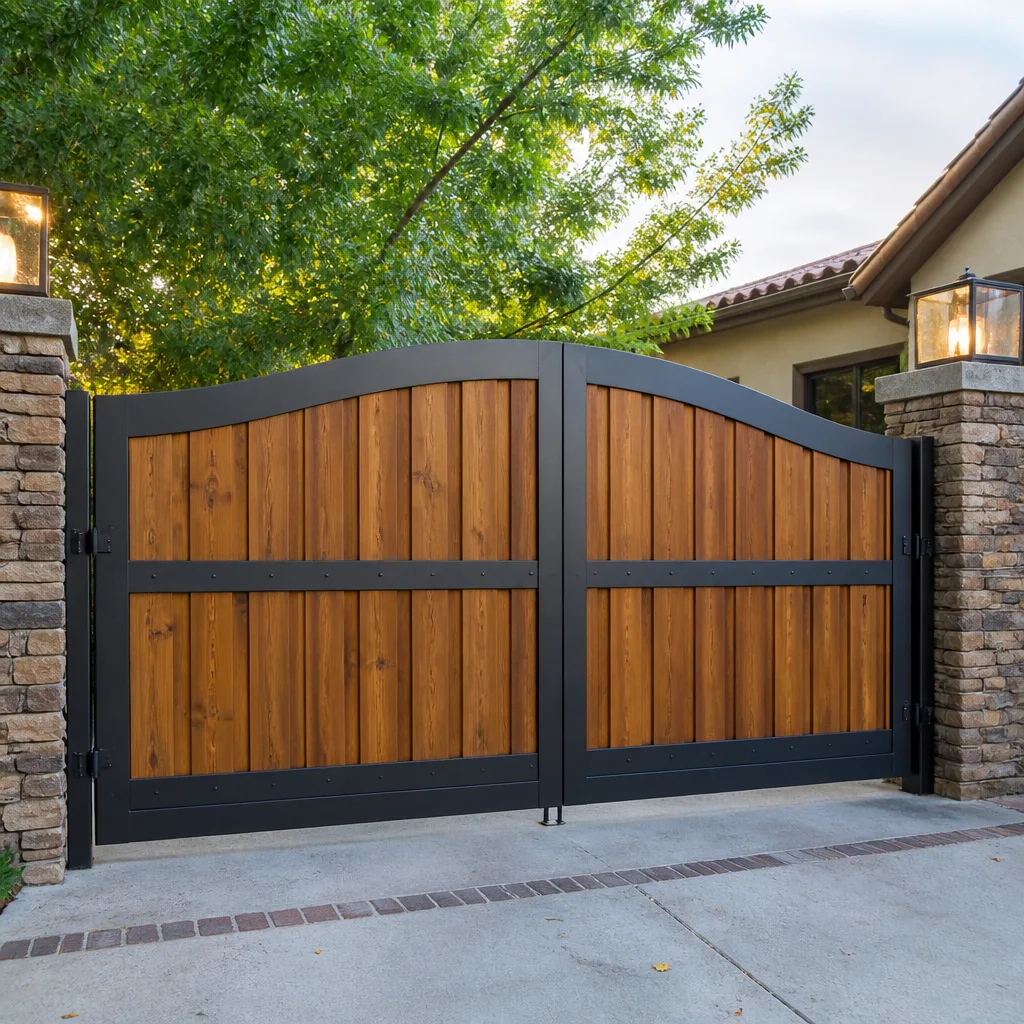

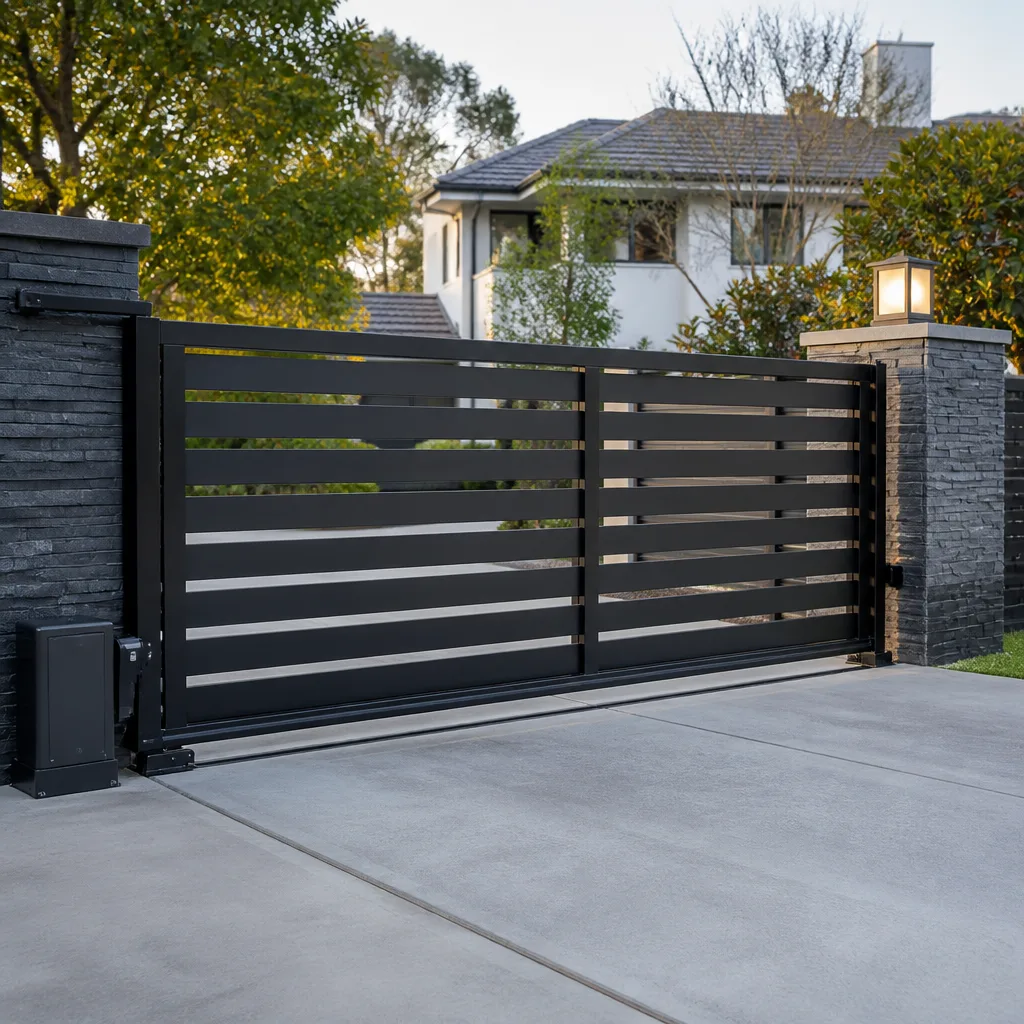
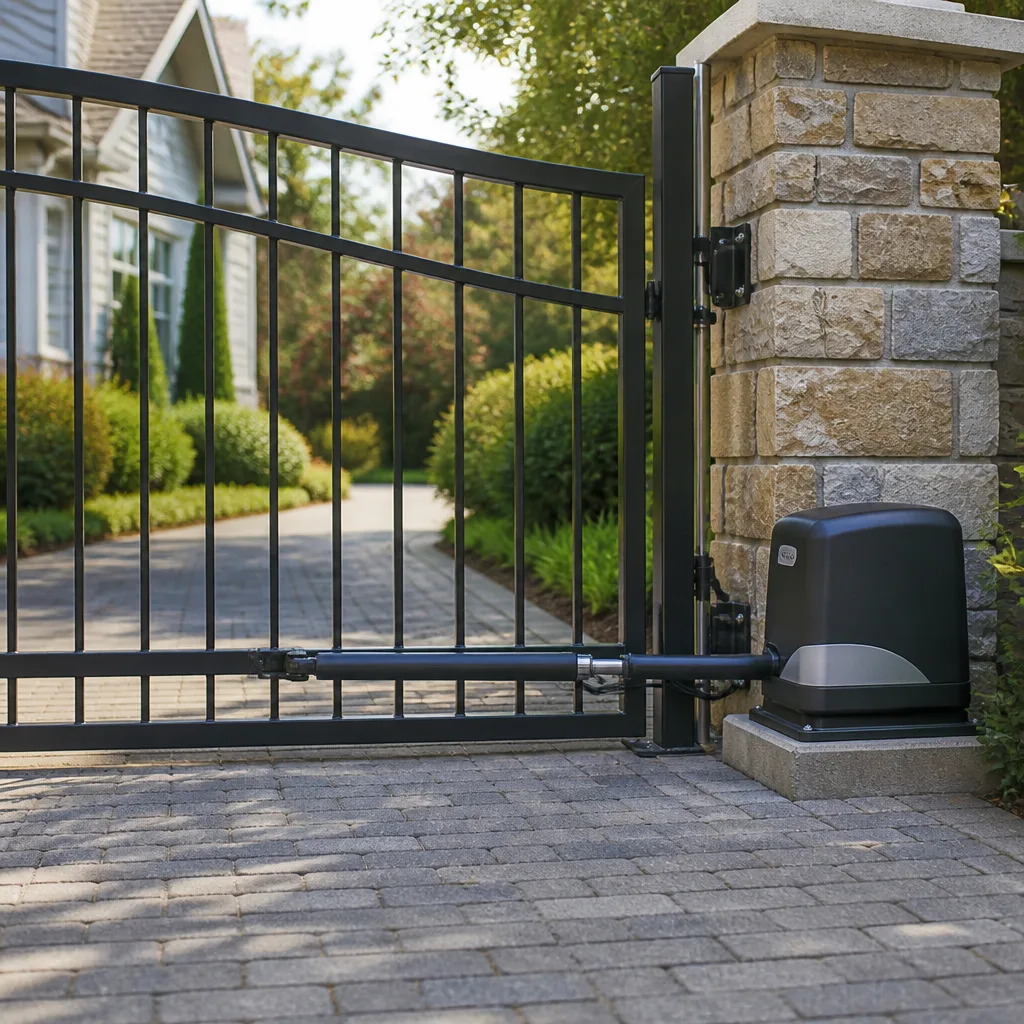
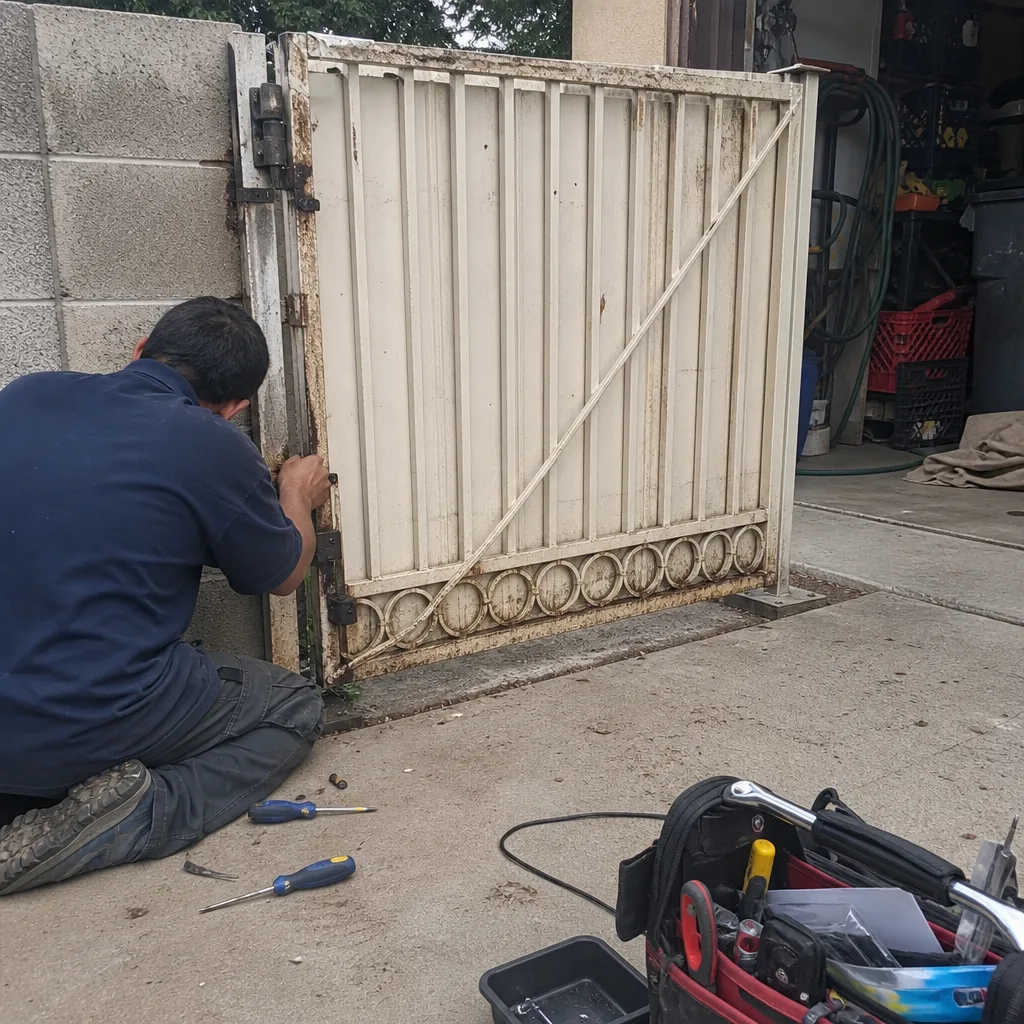 Before
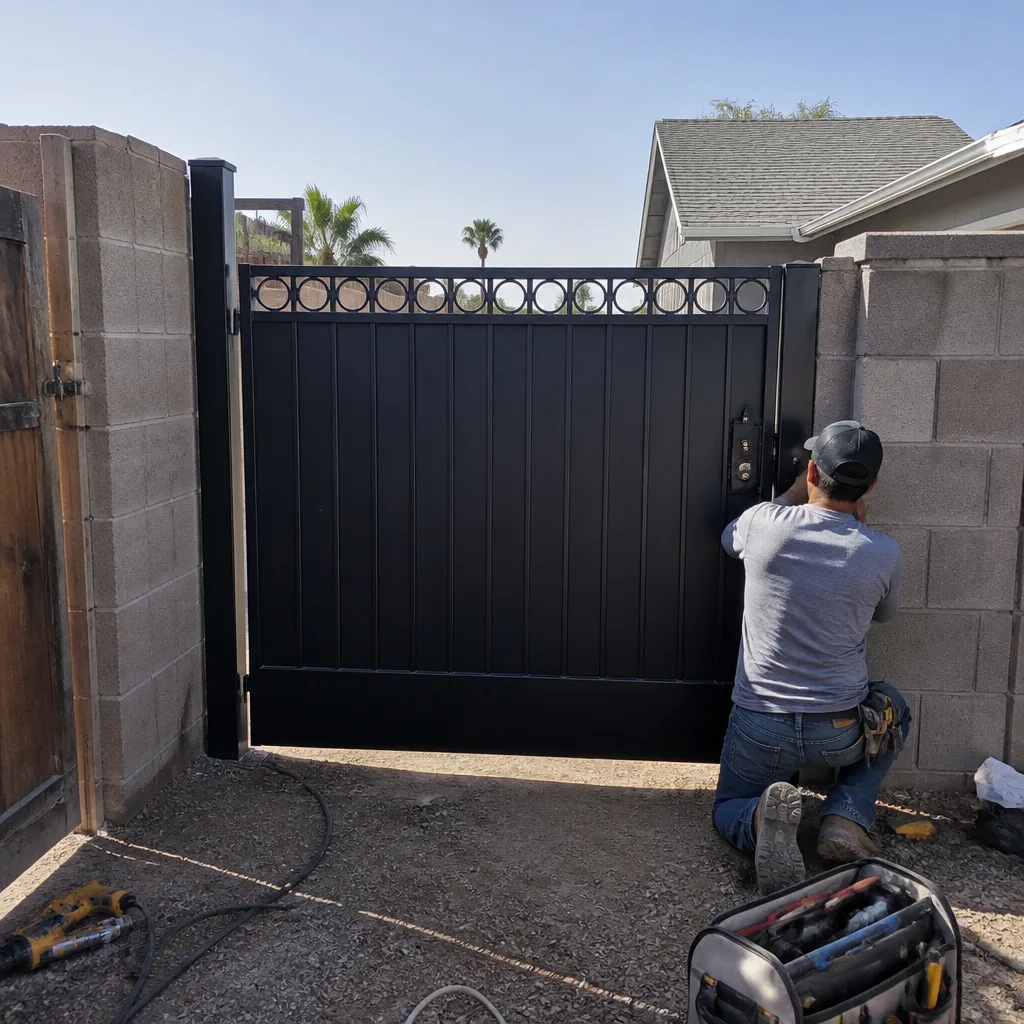 After
After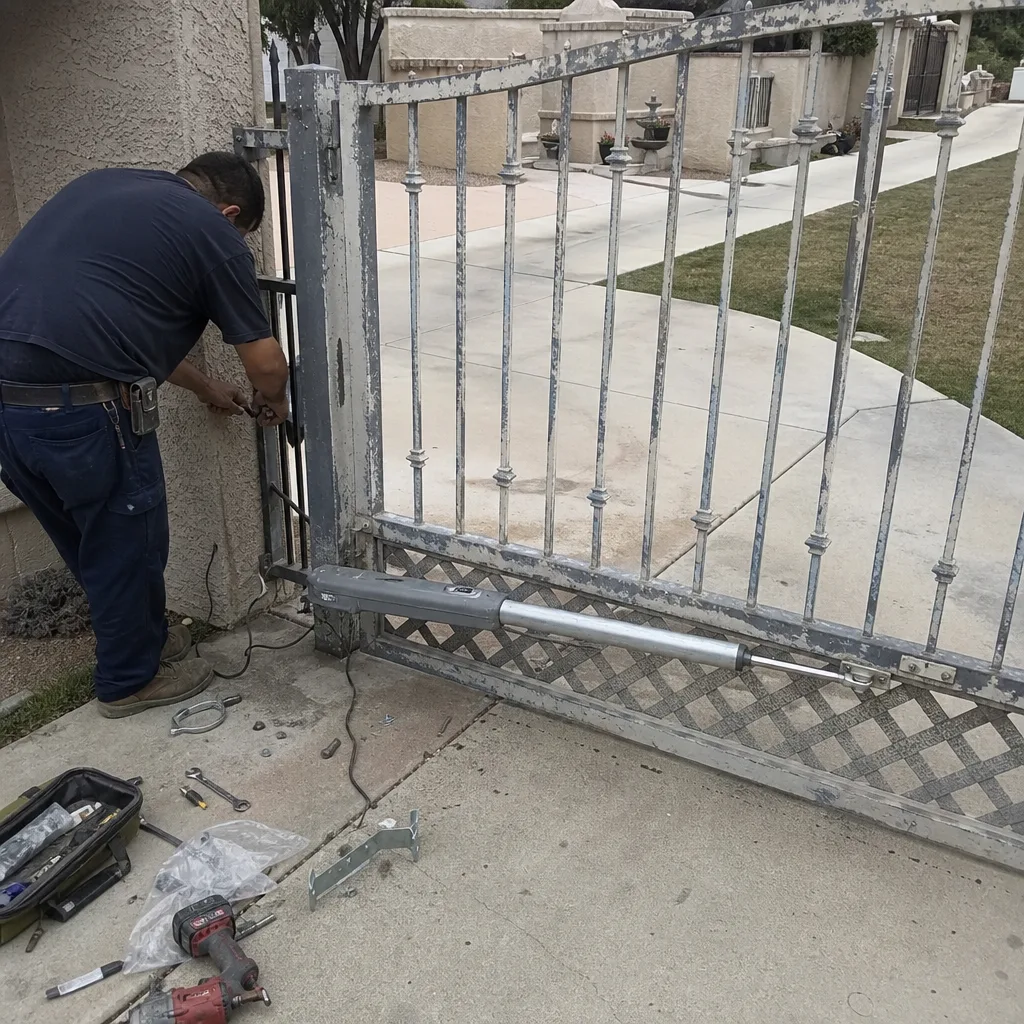 Before
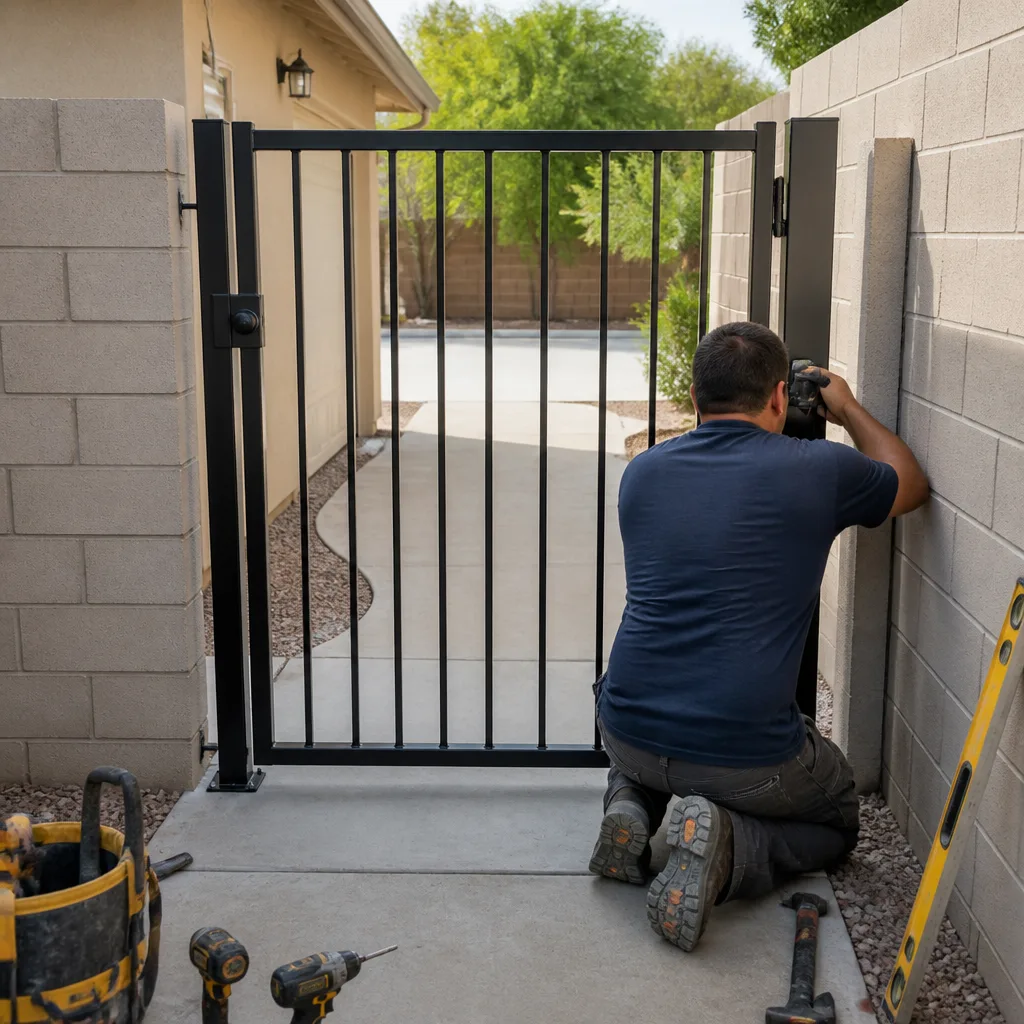 After
After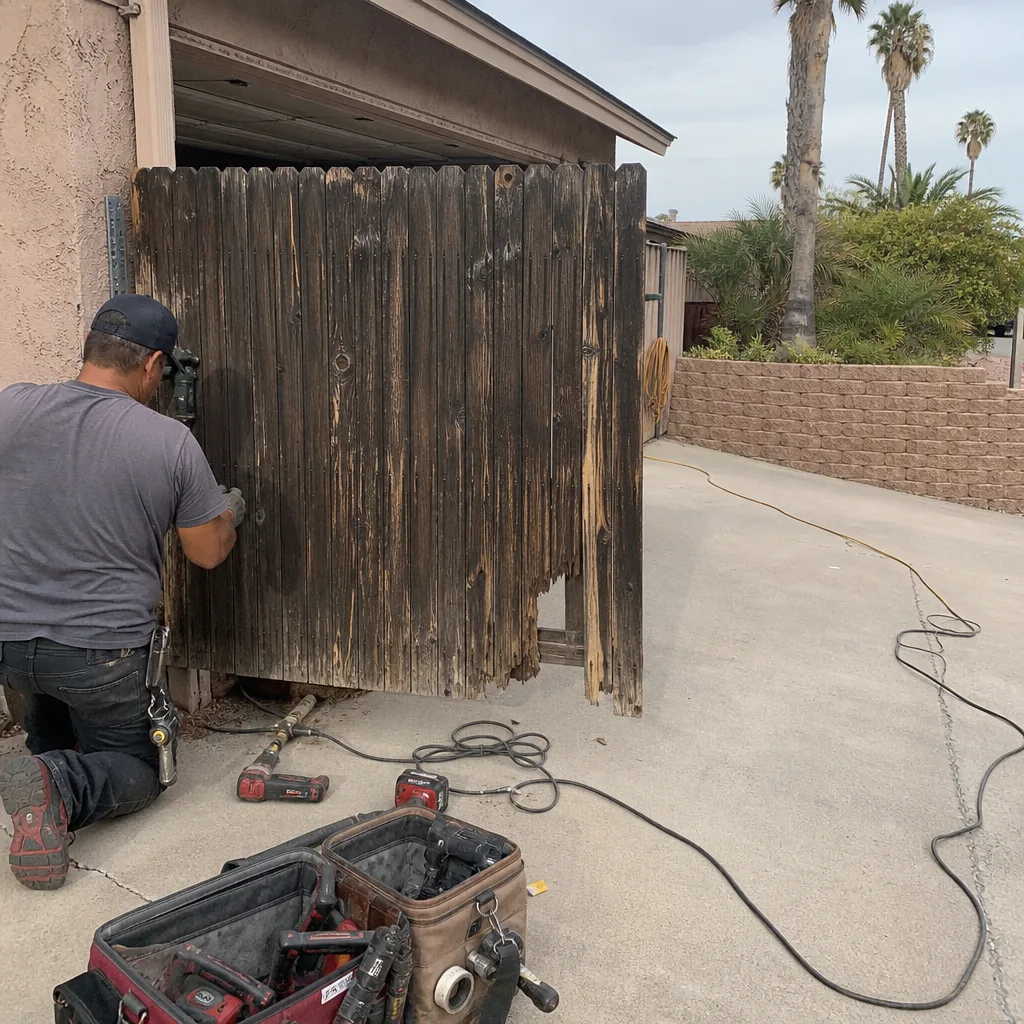 Before
 After
AfterGate Repair Permits, Codes & Inspections in AZ: What You Need to Know
Most gate repairs in Arizona don’t require a permit. That’s the advice you’ll find on every contractor blog in the state, and it’s technically true. What nobody explains is what “usually” excludes - and one of those exclusions covers any gate motor replacement on a fence over six feet, which describes the majority of privacy gates we service in neighborhoods like North Tempe, the Maple-Ash area, and along the southern slope of Papago Buttes. We’ve been called to jobs in Tempe where a straightforward motor swap turned into a two-week delay because the previous technician didn’t pull a permit the city required. This guide draws the exact line between permit-required and permit-exempt work, explains how Tempe’s inspection process actually functions, and shows you how to protect yourself during a home sale.
Quick Answer
Gate repair in Arizona generally does not require a building permit when the work involves maintenance, component replacement, or motor board repair on an existing gate. You need a permit in Tempe when the project includes structural post replacement, new electrical service to the gate location, or any motor installation on a fence exceeding six feet in height. Homeowners should also secure HOA architectural approval separately, since it does not substitute for city permitting.
Table of Contents
- When Permits Are Required in Tempe
- Repairs That Are Categorically Exempt
- HOA Architectural Review vs. City Permits
- Unpermitted Work and Home Sale Liability
- The Tempe Permit Process: Timeline and Inspection
- What the Inspector Actually Checks
- Common Mistakes to Avoid
- When to Call a Professional
- Frequently Asked Questions
 Before
 After
AfterWhen Permits Are Required in Tempe
Tempe follows the 2018 International Building Code with local amendments, and the city’s Development Services Department applies three specific thresholds to gate and fence work. Understanding these thresholds before you sign a contract prevents the most expensive mistake in residential gate service: discovering mid-project that the work must stop until a permit is pulled. For Gate Repair Warning Signs: A Tempe Homeowner’s Reference Guide, see our dedicated resource.
Height threshold: Any gate motor installed on a fence or wall exceeding six feet in height triggers a permit requirement. This is not intuitive. The motor itself is small, but Tempe classifies this as “electrical equipment appurtenant to a structure over six feet,” which falls under building permit jurisdiction rather than simple electrical permitting. In practice, this means most privacy gates along Rio Salado Parkway corridor properties, the taller block-wall enclosures in Escalante, and the six-foot-plus wrought iron common in the Mitchell Park neighborhood require permits for motor replacement.
Voltage threshold: New 240-volt service to a gate location requires an electrical permit separate from any building permit. Most residential gate motors in Tempe run on 120 volts, but commercial-grade operators - particularly larger swing-gate arms for dual-leaf systems - sometimes need 240-volt circuits. If your project includes running new conduit and breaker space from the panel to the gate, that’s electrical permit territory regardless of fence height.
Structural threshold: Replacement of a gate post set in concrete, especially load-bearing posts for sliding gates or cantilever systems, requires a building permit in Tempe when the post supports a gate weighing over 150 pounds or spanning more than ten feet. We’ve documented this on jobs in the Broadmor area where a rotted 6×6 post on a ten-foot cedar gate required full permitting, while a simple hinge replacement on the same gate did not.
The Haven Standard application: Under Clause 1, we provide a written scope before any work begins. Part of that scope includes a permit determination. If our technician identifies a permit requirement, we note it in writing, explain the timeline and cost, and proceed only with your explicit authorization. We’ve seen competitors in Tempe begin demolition, discover the permit issue, then present the homeowner with a stop-work choice and a revised timeline. That doesn’t happen under our documentation protocol.
Repairs That Are Categorically Exempt
Not every gate problem sends you to City Hall. Tempe’s code interpretation, consistent with Arizona’s broader approach to residential maintenance, exempts several categories of repair work from permitting when they don’t alter the structure, height, or electrical service of the existing installation.
Here are the exempt categories we document on every qualifying job:
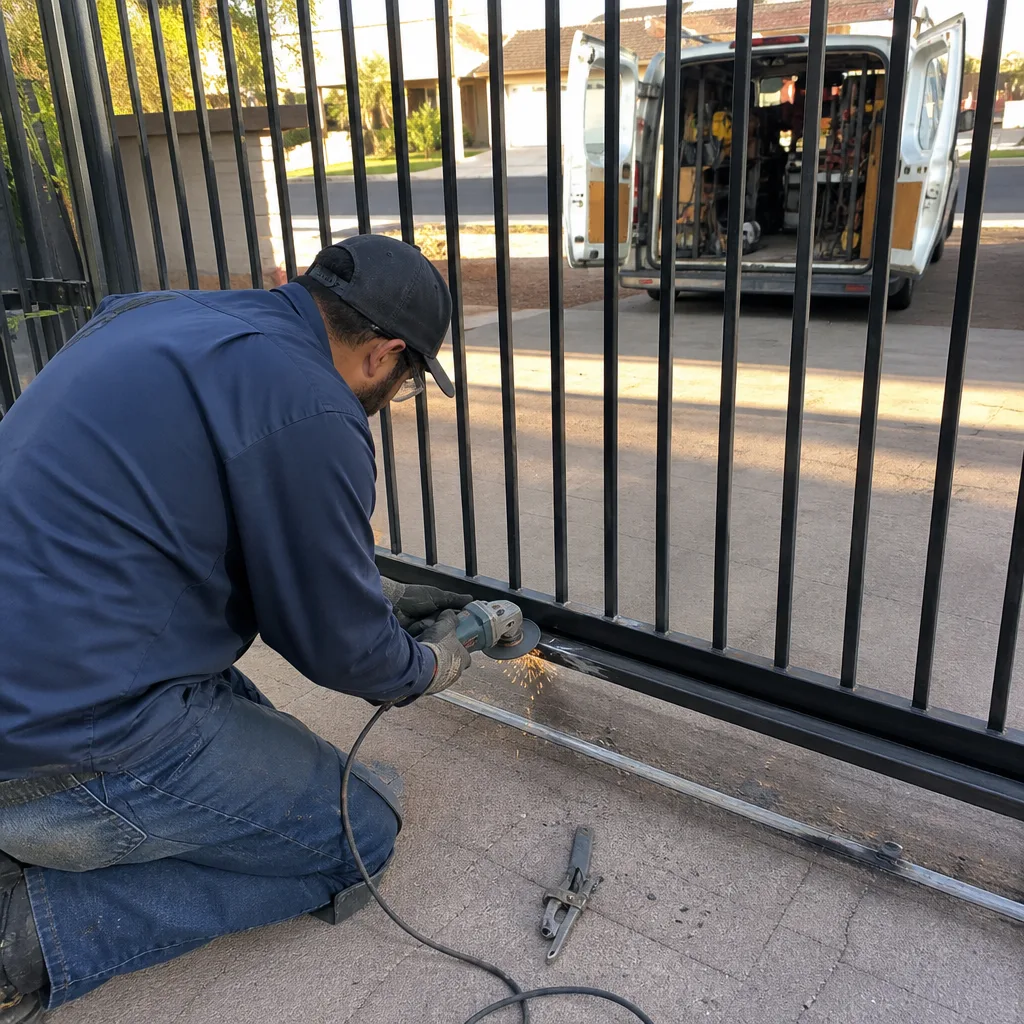
- Motor control board replacement: Swapping a failed circuit board inside an existing operator housing, without modifying the mounting, power supply, or gate attachment points. Common on LiftMaster and DoorKing operators we’ve serviced in Tempe.
- Photo-eye and sensor replacement: Installing new infrared safety eyes, loop detectors, or magnetic locks using existing wiring paths and mounting locations.
- Hinge, roller, and track repair: Replacing worn rollers on a sliding gate, adjusting or replacing hinges on a swing gate, or repairing guide track sections without post replacement.
- Limit switch adjustment and programming: Resetting open/close limits, force settings, or remote coding on existing equipment. This is diagnostic work, not modification.
- Access control component swap: Replacing a keypad, card reader, or telephone entry system using the existing low-voltage wiring and mounting box.
- Welding repair to existing gate frame: Crack repair and reinforcement of the gate leaf itself, provided the gate dimensions and weight don’t change.
We document exempt work with a specific notation on our job record: “Permit exemption per Tempe DSD maintenance/repair interpretation, [date].” This creates a paper trail if questions arise later, particularly during property sale. Under Clause 4 of the Haven Standard, that documentation includes photographs of the existing conditions and the completed repair, stored in your job file and provided to you before we leave.
The distinction matters because some Tempe homeowners, cautious by nature, over-permit simple maintenance. We’ve had customers in the Daley Park area ask whether a photo-eye alignment requires a permit. It doesn’t. The city doesn’t want to review every sensor adjustment any more than you want to pay for that review. The exemption list above represents work we’ve performed thousands of times across 22,000+ jobs since 2014 without permit requirements.
HOA Architectural Review vs. City Permits
This is where even careful homeowners stumble. HOA architectural approval and city permitting are separate systems with separate timelines, and securing one does not substitute for the other. We’ve arrived at Tempe jobs where the homeowner proudly displayed HOA approval for a new gate style, only to learn the city required a building permit the HOA never mentioned.
HOA scope: Homeowners associations in Tempe typically review aesthetics, materials, and color. The HOA for a community like Tally Ho Farms, for instance, may specify that replacement gates match the existing wrought-iron pattern or that wood gates use a particular stain grade. Their concern is visual uniformity, not structural engineering or electrical code compliance.
City scope: Tempe’s Development Services Department reviews structural adequacy, electrical safety, and height compliance with the zoning ordinance. The city doesn’t care whether your gate matches the neighbor’s. It cares whether the post footing meets wind-load requirements, whether the electrical disconnect is accessible, and whether the installation meets the six-foot height threshold we described earlier.
The practical sequence:
- Submit HOA architectural application if your community requires it. Timeline varies from 10 days to 45 days depending on the association’s review cycle.
- Receive written HOA approval before applying for city permits. Some HOAs require final city inspection as a condition of their approval, creating a dependency.
- Apply for Tempe building and/or electrical permits with HOA approval documentation attached.
- Schedule inspections in the city’s required sequence: typically rough electrical, then final building.
- Obtain certificate of completion from the city before requesting HOA final sign-off if required.
We’ve navigated this sequence for customers in HOA-governed areas of Tempe where the association’s architectural committee meets quarterly. Missing that meeting by a week can add three months to a project that takes two days to build. Our written scope under Clause 1 includes a timeline that accounts for both approval streams when we identify them during site assessment.
Unpermitted Work and Home Sale Liability
This is the scenario that generates the most anxious calls to our office. A Tempe homeowner lists their property, the buyer’s inspector notes a gate motor on a seven-foot wall, and the title company flags a missing permit. Now there’s a closing contingency, a seller disclosure issue, and a technician needed immediately to pull a retroactive permit or remove and reinstall the equipment properly.
Specific liability that transfers: Under Arizona’s seller disclosure requirements (A.R.S. § 32-2156), the seller must disclose known violations of building codes. Unpermitted gate work that the seller knew or should have known about becomes a material fact. If the buyer discovers post-closing that the gate installation lacked required permitting, the seller faces potential claims for repair costs, permit fees, and in some cases the cost to bring the installation into full compliance if the original work doesn’t meet current code.
The Tempe-specific complication: Tempe’s code enforcement division can issue notices of violation that attach to the property record, not the owner. This means the liability doesn’t simply disappear when the property changes hands. We’ve been called to homes in the Gililland neighborhood where a notice issued to a previous owner in 2019 was still active when the new owner tried to refinance in 2024.
Retroactive permitting: Tempe allows retroactive permits for work completed without approval, but the process is more invasive than original permitting. The inspector may require exposure of buried conduit, load testing of posts, or electrical panel inspection. In some cases, work that passed visual inspection must be partially disassembled to verify code compliance. The cost typically runs 1.5 to 2 times the original permit fee, plus contractor time for disassembly and reassembly.
Documentation as defense: This is where our Clause 4 records prove their value. A homeowner with our documented photo record showing that a 2019 motor replacement was performed on a five-foot fence - below the permit threshold - has evidence to present if a subsequent inspector assumes the work was unpermitted. We’ve provided these records to real estate attorneys and title companies on behalf of past customers.
The Tempe Permit Process: Timeline and Inspection
For work that does require permitting, understanding the actual timeline helps you evaluate contractor promises and plan around the process. Tempe’s Development Services Department operates with specific review windows that don’t bend for urgency.
Application submission: Permits for gate-related work fall under “Residential Accessory Structure” or “Residential Electrical” categories, depending on the scope. Applications are submitted through the city’s online portal or in person at 31 East Fifth Street. Required documentation includes:
- Site plan showing gate location relative to property lines and structures
- Elevation drawing of the gate and fence/wall section
- Electrical plan if new service is involved, including load calculations
- Manufacturer specifications for the gate operator
- HOA approval letter if applicable
Review timeline: Tempe’s standard plan review for residential accessory structures is 10 business days. Electrical-only permits typically review in 3 to 5 business days. Complex projects requiring structural engineering - large cantilever gates, for instance - may enter extended review at 15 to 20 business days. The city does not offer expedited review for residential gate work.
Permit issuance and expiration: Once issued, the permit is valid for 180 days with one 180-day extension available. Work must be substantially complete before expiration. We’ve seen Tempe homeowners lose permits because a contractor started demolition, discovered unexpected conditions, and let the permit lapse while negotiating change orders. Our written scope includes a project timeline that accounts for permit validity.
Inspection scheduling: Tempe uses an online inspection request system with next-business-day availability for most residential trades. Inspections occur Monday through Friday, 7:00 AM to 3:30 PM. The homeowner or contractor must be present to provide access. We schedule inspections as part of our project management for permitted work, with our technician on-site to demonstrate operation and answer inspector questions.
What the Inspector Actually Checks
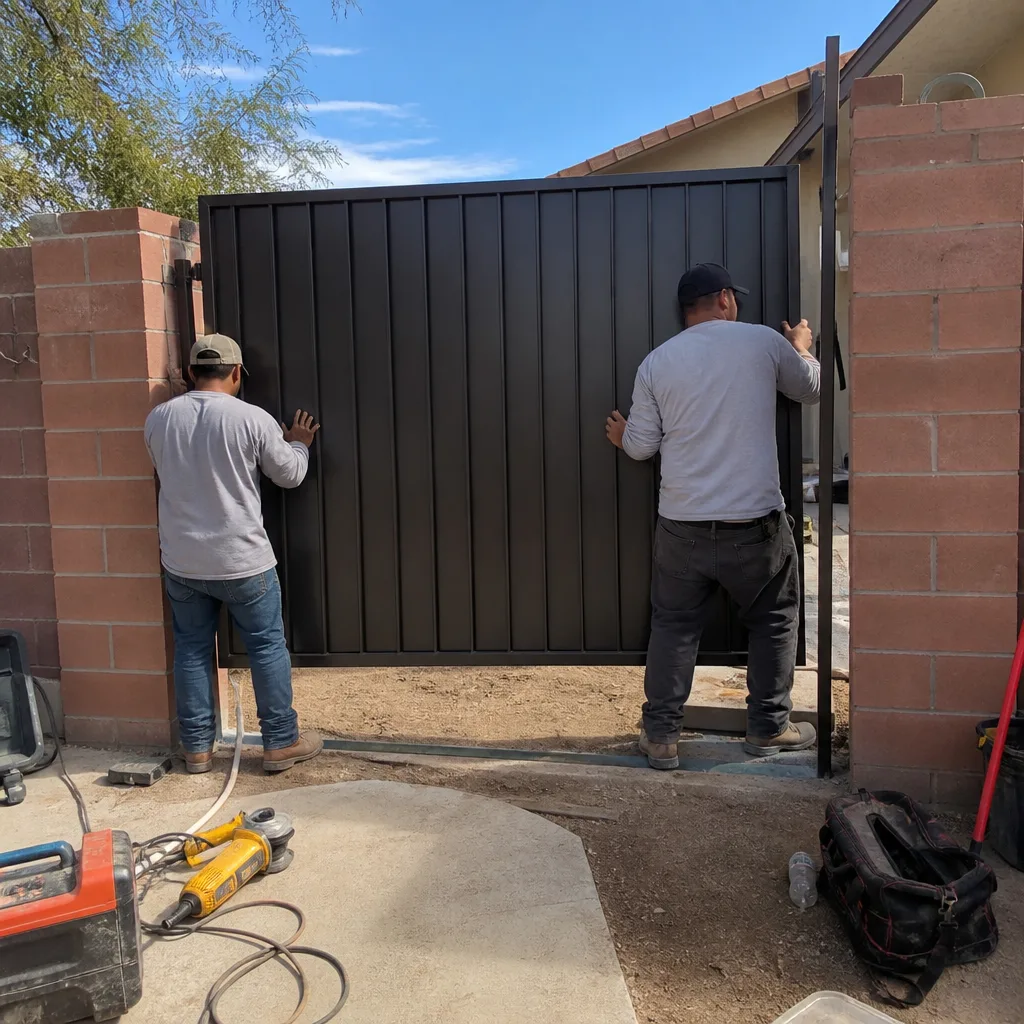
Knowing what the inspector examines helps you prepare and helps you evaluate whether a contractor’s work will pass. We’ve accompanied inspectors on hundreds of Tempe gate inspections since 2014. The checklist is consistent and specific.
Structural inspection items:
- Post footing depth and diameter: typically 24 inches minimum depth in Tempe’s soil conditions, 12-inch diameter for standard loads, larger for cantilever or dual-leaf systems
- Post material and treatment: pressure-treated lumber or galvanized steel per plan specifications; no field substitutions without approved amendment
- Gate clearance: minimum 2 inches above finished grade to prevent ground contact and rot
- Hardware attachment: through-bolted or lag-screwed with proper depth; no surface-mounted hinges on load-bearing gates over 150 pounds
- Wind load compliance: gate must withstand 90 mph design wind speed per Tempe’s amended IBC requirements
Electrical inspection items:
- Ground fault protection: 120-volt gate operators require GFCI protection when installed outdoors; this is a common failure point on older installations
- Disconnect location: within sight of the operator, between 3 and 6 feet above grade, properly labeled
- Conduit and wiring: proper depth (18 inches minimum for direct burial, 24 inches under driveways), correct conductor sizing per manufacturer load data
- Bonding and grounding: operator chassis bonded to equipment grounding conductor; this is frequently missed on DIY installations
- Low-voltage separation: control wiring separated from line voltage by minimum 2 inches or in separate raceways
Safety device verification: The inspector will test photo-eyes, edge sensors, and auto-reverse functions. On a recent inspection in the Kiwanis Park area, an inspector placed a 2×4 on the ground and ran a sliding gate to verify reverse-on-obstruction - a test we perform ourselves before calling for inspection, under our pre-inspection checklist protocol.
Documentation required on-site: The inspector needs the approved permit, the approved plans, and manufacturer installation instructions for the specific operator model. We bring these to every inspection, along with our job record showing serial numbers and limit-switch settings. Under Clause 4, this documentation is already compiled; we’re not scrambling for paperwork while the inspector waits.
Common Mistakes to Avoid
- Assuming repair exemption applies to motor replacement on tall fences. Tempe’s six-foot threshold catches many homeowners by surprise. A motor swap on a seven-foot privacy wall is permit-required work, even if the motor itself is identical in size to one on a four-foot fence.
- Treating HOA approval as permit substitute. We’ve seen sales fall through in Tempe’s HOA communities because this confusion delayed closing by weeks. The two systems run parallel, not in series.
- Failing to document exempt work. Without a dated record showing a 2022 sensor replacement was maintenance, not modification, you have no defense if a future inspector questions the installation’s permit history.
- Starting work before permit issuance. Tempe inspectors can require removal of work performed without permit coverage. The cost to remove and reinstall a gate operator exceeds the permit fee by a factor of ten.
- Ignoring voltage changes during “simple” upgrades. Upgrading from a 120-volt Mighty Mule to a 240-volt Elite operator for heavier gate weight triggers electrical permitting even if the fence is four feet tall.
- Neglecting the 180-day permit expiration. Contractors who juggle multiple jobs sometimes let permits lapse. Our project tracking includes permit expiration alerts; we don’t start work without confirming active permit status.
When to Call a Professional
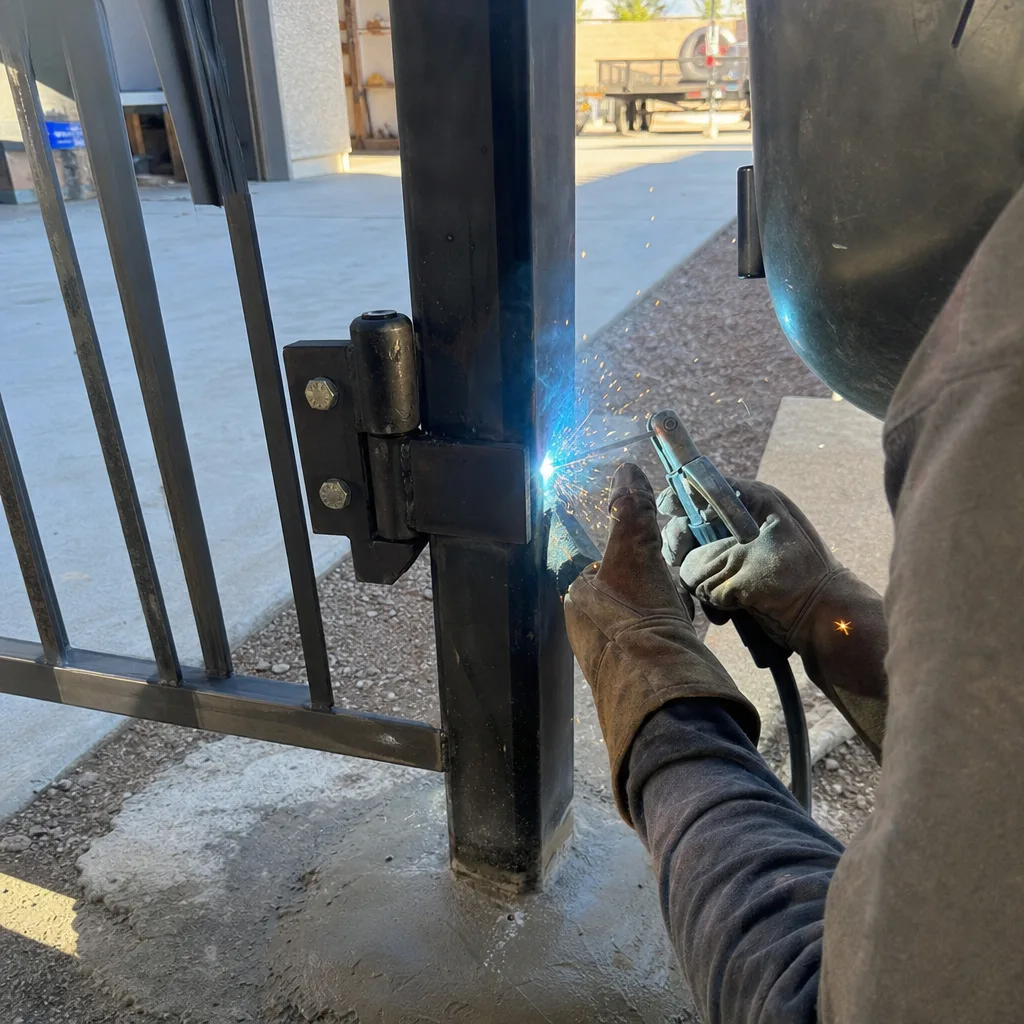
Call a qualified gate technician when your project touches any of the permit thresholds described above, when you’re uncertain about your fence height relative to the six-foot line, or when you’re preparing a property for sale and need to verify compliance. Vance Gate Repair Tempe offers free estimates in Tempe - call (623) 323-3849 - and our written scope includes a permit determination before any work begins. We’ve documented 22,000+ gates since 2014, and our records have resolved title issues, satisfied inspectors, and protected homeowners from retroactive permitting costs.
Frequently Asked Questions
Most gate repairs in Tempe do not require a permit when they involve maintenance, component replacement, or adjustment of existing equipment. You need a permit for structural post replacement, new electrical service, or motor installation on a fence or wall exceeding six feet in height. Call (623) 323-3849 for a free estimate - we’ll assess your specific situation and note any permit requirements in writing before work starts.
Residential accessory structure permits in Tempe typically run based on project valuation, with minimum fees starting around $100 to $150 for simple gate work. Electrical-only permits for new service are separate and typically lower. The exact fee depends on gate size, electrical scope, and whether plan review requires engineering. We include permit cost estimates in our written scope when applicable.
You can replace a gate motor without a permit in Tempe if the existing fence or wall is six feet or shorter and you’re not adding new electrical service. Motor replacement on a seven-foot privacy wall, block wall, or any structure over six feet requires a building permit. This distinction is the most common permit surprise we encounter in Tempe neighborhoods.
Standard plan review for residential gate permits takes 10 business days in Tempe; electrical-only permits review in 3 to 5 business days. After permit issuance, you have 180 days to complete work and schedule inspection. Complex projects requiring structural engineering may extend to 15 to 20 business days for initial review.
Arizona law requires disclosure of known code violations, and unpermitted work that required a permit becomes a material disclosure item. The buyer may demand permit retroactivity, closing cost credits, or price reductions. In Tempe, code violation notices attach to the property and can affect financing for subsequent owners. Documented records of exempt work help defend against mistaken assumptions of unpermitted installation.
No. HOA architectural approval and city permitting are entirely separate processes with different standards and authorities. Some Tempe HOAs actually require city permit final inspection before granting their own approval, creating a dependency rather than a substitution. Always secure both approvals when either system applies to your property.
The Bottom Line
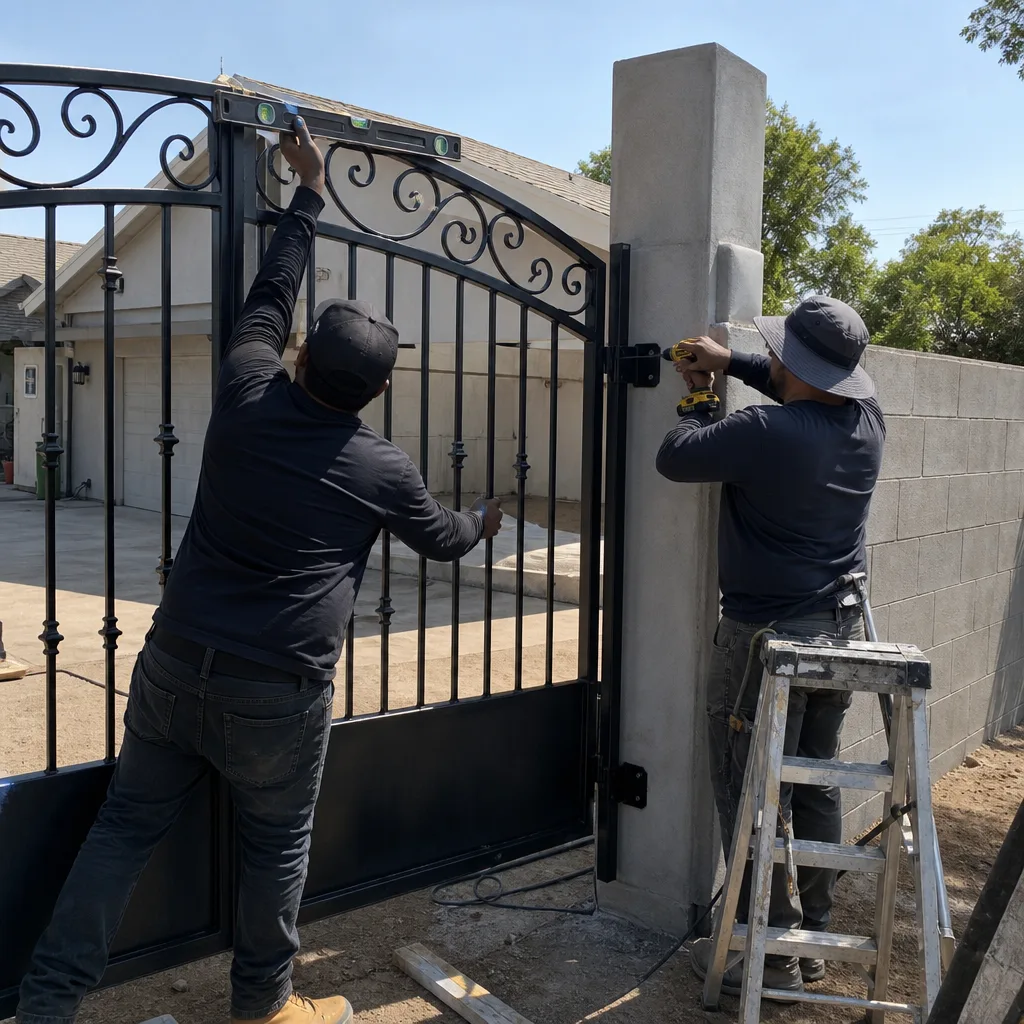
Gate permit requirements in Tempe are narrower than most homeowners fear but more specific than most contractors explain. The six-foot fence height threshold, the distinction between maintenance and modification, and the parallel requirements of HOA and city approval are the three points where mistakes happen. Document what you do, know the thresholds before you start, and get the scope in writing. For more guides & resources, visit our blog. Those habits protect your property value, prevent sale complications, and keep small repairs from becoming bureaucratic ordeals.
Written by Adrian Vance, Owner at Vance Gate Repair Tempe, serving Tempe since 2014.