
Last updated September 22, 2026
Free on-site gate assessment - hinges, posts, and your LiftMaster or Nice gate operator checked before anything is quoted
The assessment is free and the quote is the invoice.

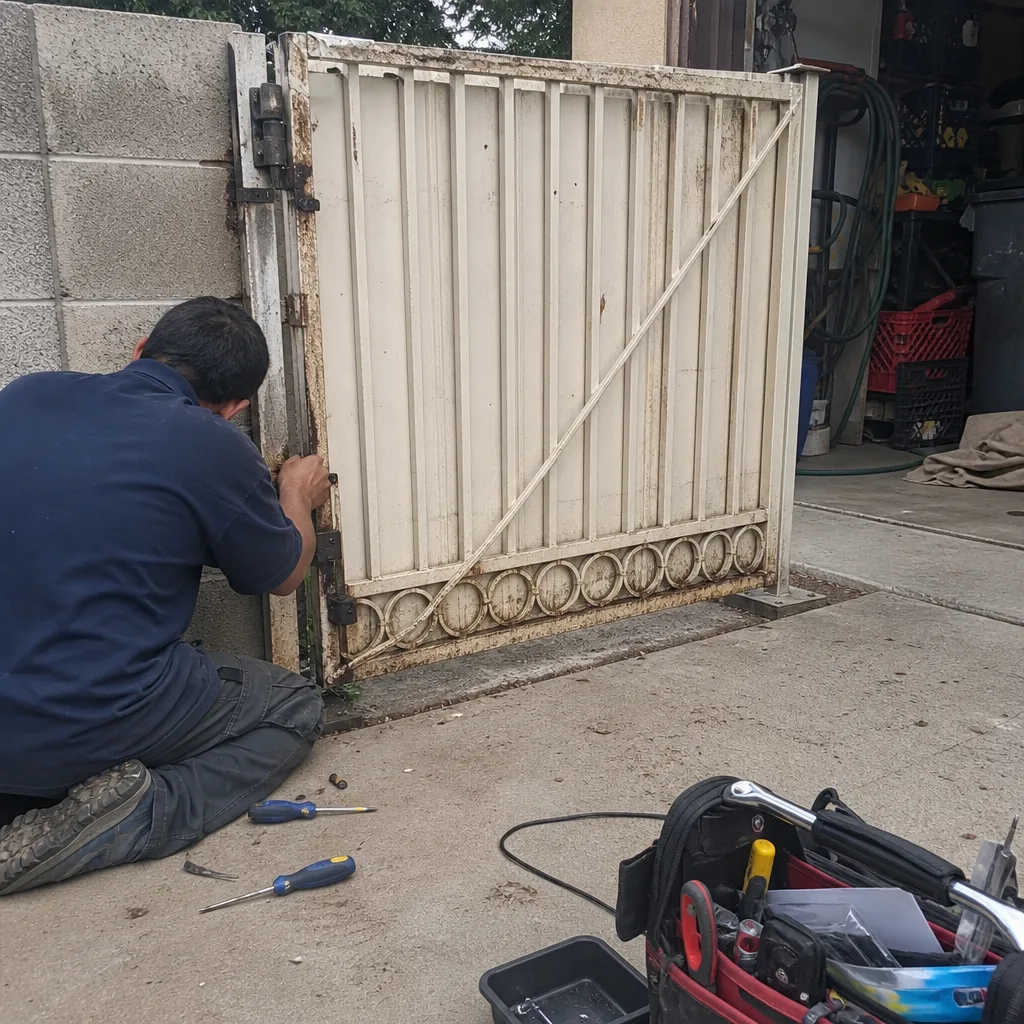 Before
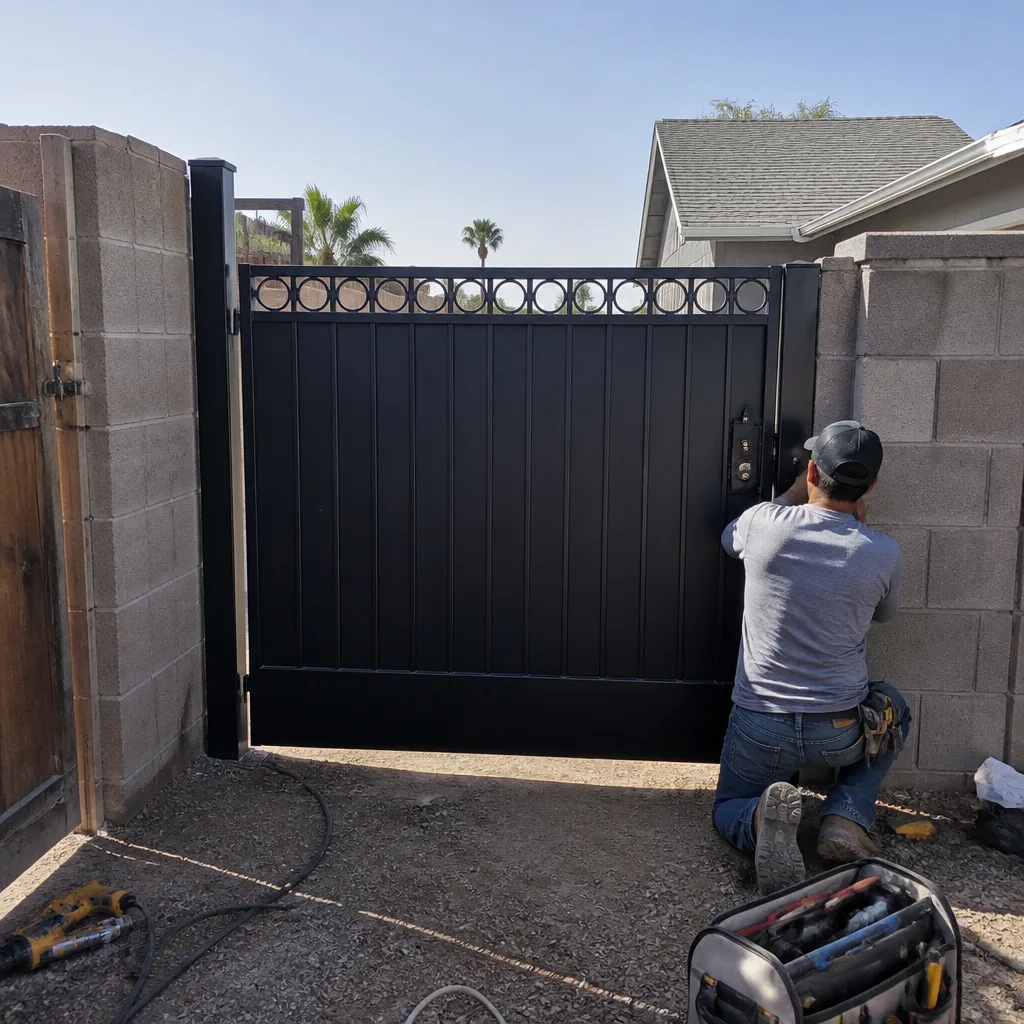 After
After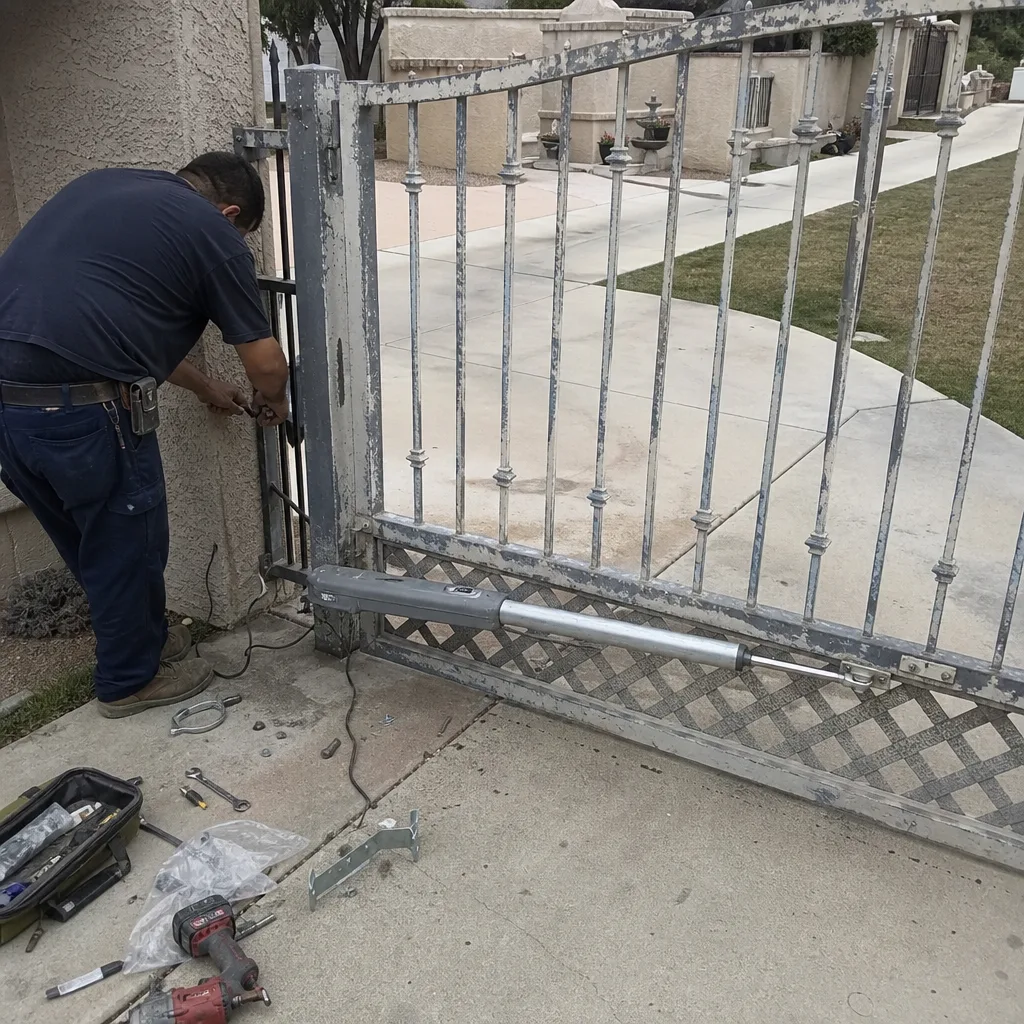 Before
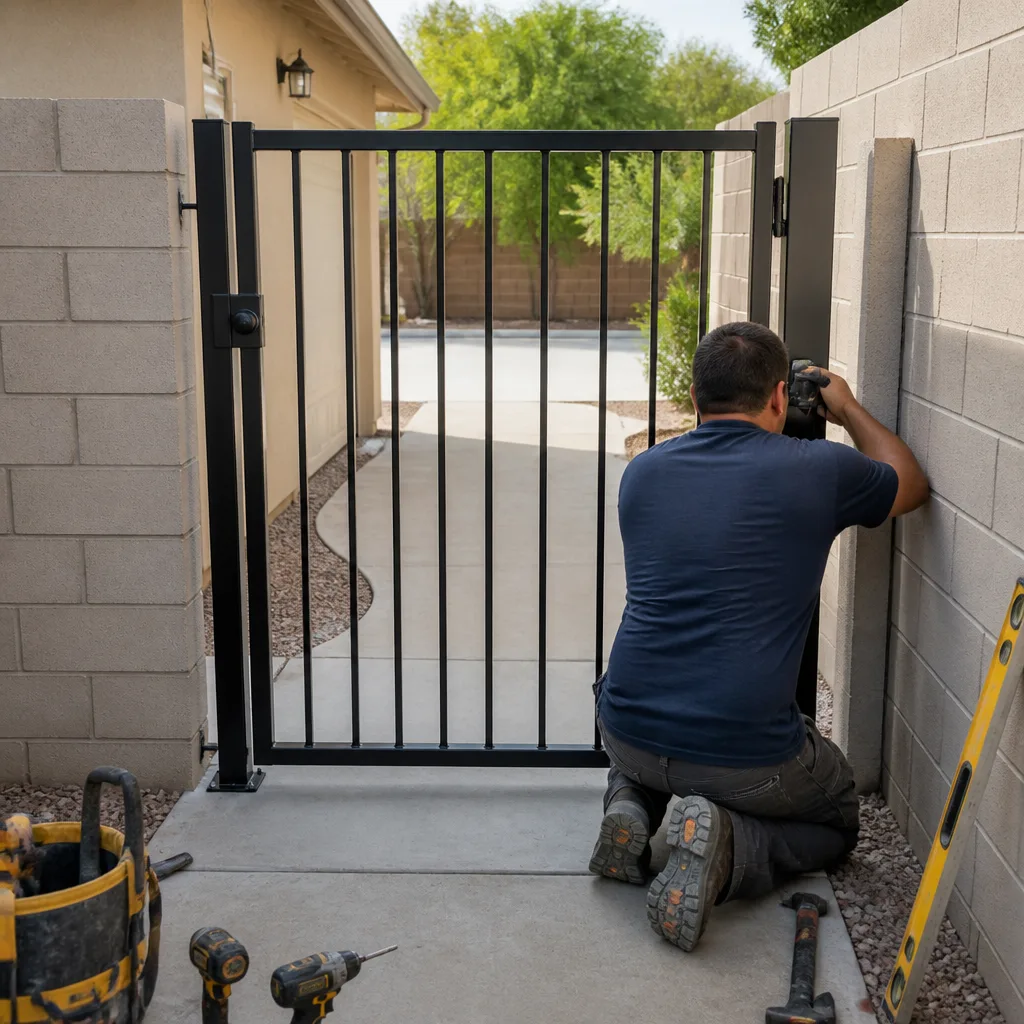 After
After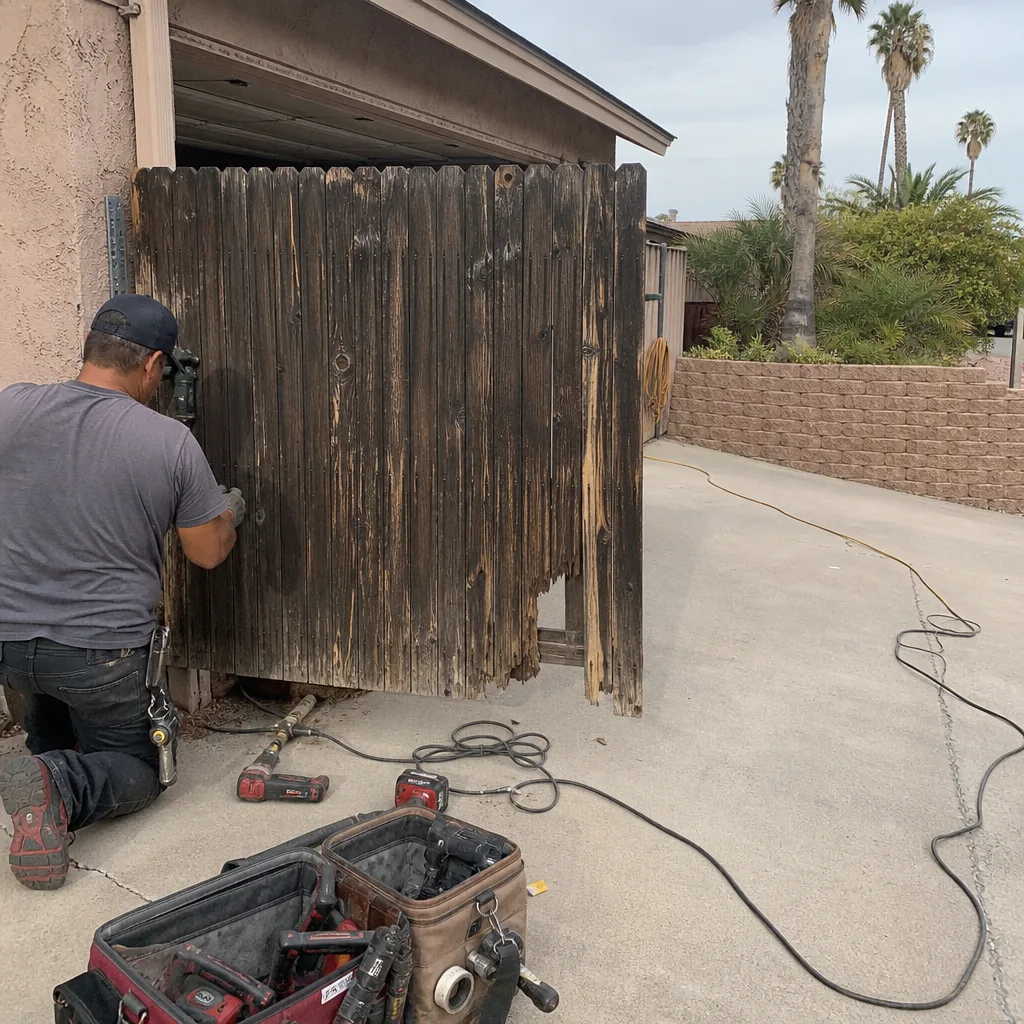 Before
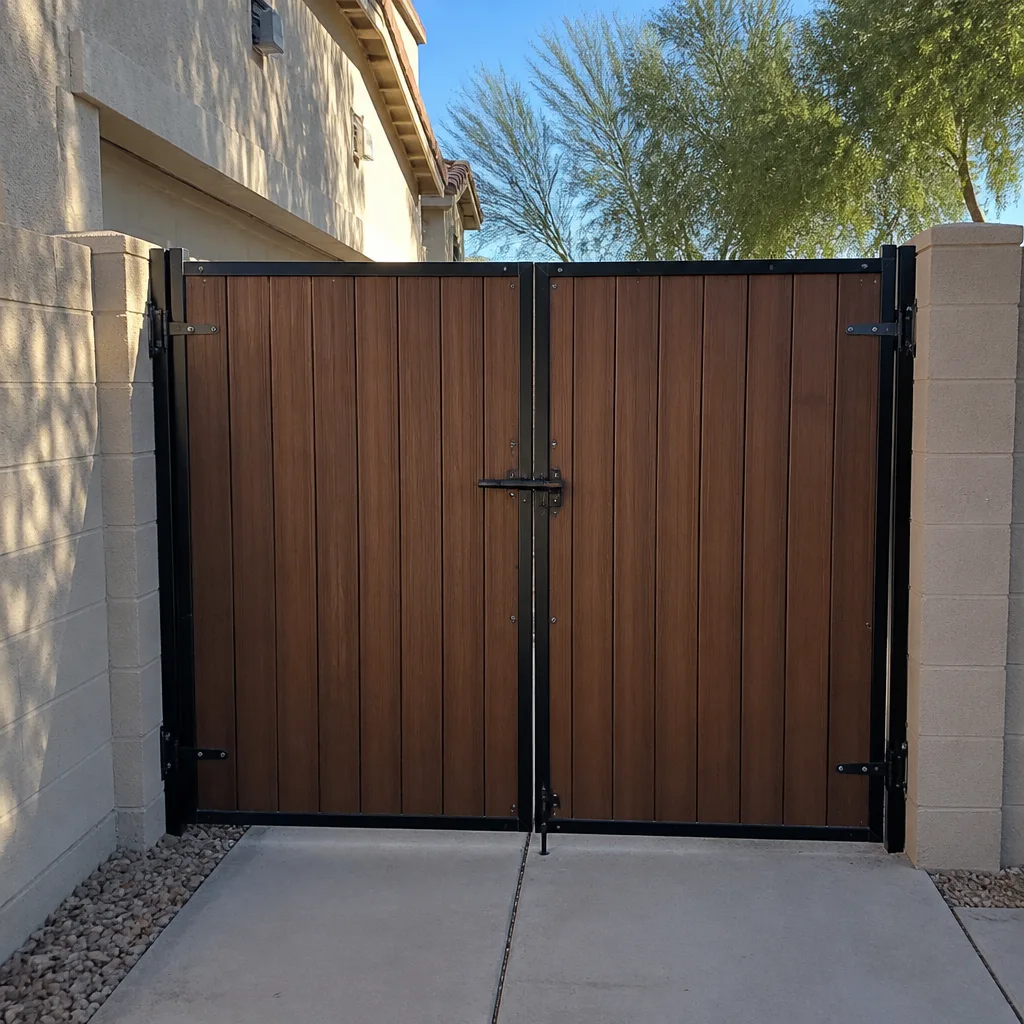 After
AfterGate Repair Maintenance Checklist for Tempe Homeowners
Most gate maintenance checklists fail because they tell you to “inspect” something without telling you what failure looks like. In Tempe, we’ve seen homeowners run through the same vague checklist for three years while their gate posts slowly tilt, their chain drives grind dry, and their limit switches drift until the gate won’t close at all. The difference between an observation and an action item is a number: a measurement, a tolerance, a pass-fail threshold. This guide gives you those numbers. You’ll learn what to check, how often to check it in our desert climate, how to photograph and log what you found so the next technician doesn’t start from zero, and when three consecutive failures means it’s time to call a pro for our Gate Repair services.
Quick Answer
A proper gate maintenance checklist for Tempe homeowners includes monthly checks during dust season (May-July) for photo-eye alignment, chain tension, and battery backup voltage; quarterly checks for hinge play, post-anchor stability, and limit-switch position; and annual checks for motor amp draw, gear wear, and safety edge function. Each item has a measurable pass-fail threshold: photo-eyes aligned within 2 degrees, hinge play under 3mm, chain sag between 12-19mm for standard residential openers. Failures get date-stamped notes, and three consecutive failures on any item trigger a professional evaluation.
Table of Contents
- Why Measurements Matter More Than “Inspections”
- Monthly Checks: Tempe Dust Season (May-July)
- Quarterly Checks: Hinges, Posts, and Limit Switches
- Annual Checks: Motors, Gears, and Safety Systems
- How to Photograph and Log Your Inspections
- The Five Most Skipped Items That Cause Emergency Calls
- The Three-Strike Scoring Method
- Common Mistakes to Avoid
- When to Call a Professional
- Frequently Asked Questions
 Before
 After
AfterWhy Measurements Matter More Than “Inspections”
If your checklist says “inspect hinges for wear,” you’ve already lost. Wear is a conclusion, not a measurement. A hinge with 2mm of lateral play operates fine. A hinge with 5mm of play is binding the gate frame and working the opener motor twice as hard. Without the number, you can’t make the call.
We’ve been documenting gates in Tempe since 2014, and the pattern is consistent: the gates that fail on 110-degree July afternoons are the ones where someone “inspected” the problem for months without measuring it. The post was “looking a little tilted.” The chain was “seeming loose.” The photo-eye was “probably fine.” Our Vance Gate Repair Tempe home records show that roughly 60% of emergency calls in July and August involve problems that were visible and measurable at least two prior checks.
The thresholds in this guide come from manufacturer specifications, adjusted for Tempe’s conditions. Desert dust accelerates wear. Thermal expansion in 115-degree heat changes clearances. Monsoon saturation in July and August shifts post footings that were stable in May. A national maintenance guide written for Cleveland or Seattle won’t account for this.
Here’s what changes and why:
- Dust infiltration: Tempe’s spring dust storms (haboobs) force fine particulate into gearboxes and across photo-eye lenses. Monthly cleaning isn’t cautious; it’s required.
- Thermal cycling: Daily temperature swings of 30-40 degrees between June and September expand and contract metal components faster than in moderate climates. Clearance tolerances tighten.
- Monsoon moisture: Sudden heavy rain after months of dry soil causes expansion and contraction around concrete post footings. Post-anchor checks belong on the quarterly schedule, not annual.
- Hard water and mineral deposits: Tempe’s municipal water supply runs 250-350 ppm total dissolved solids. Spray from irrigation systems leaves mineral film on photo-eye lenses that “cleaning” with a dry cloth just smears.
Every threshold in this guide is a decision point. Pass means log it and move on. Fail means date-stamp the finding and schedule the fix or the re-check.
Monthly Checks: Tempe Dust Season (May-July)
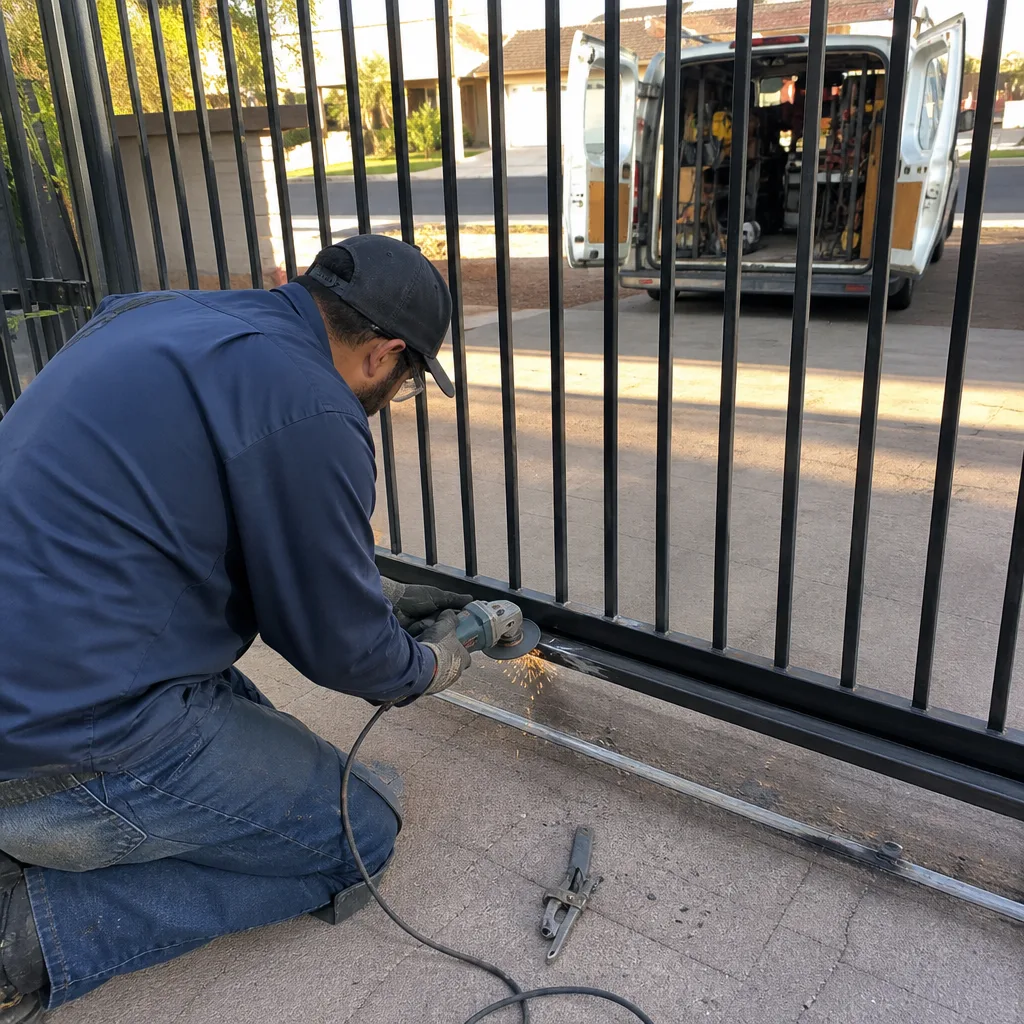
During dust season, three items move to monthly status: photo-eye alignment, chain or belt tension, and battery backup condition. These are the items most affected by particulate load and thermal stress, and they’re the ones most likely to cause sudden failure when you’re trying to leave for work in 108-degree heat.
Photo-Eye (Infrared Safety Beam) Alignment
The photo-eye, or photo cell, is the pair of infrared transmitters and receivers mounted 4-6 inches above ground on either side of the gate path. When the beam breaks, the gate stops or reverses. Dust on the lens, vibration from gate travel, or thermal expansion of the mounting bracket can knock it out of alignment.
Threshold: The receiving eye must show a solid indicator light (typically green or red, depending on brand) with no flicker. On LiftMaster and Elite systems, the diagnostic LED flashes a specific pattern when alignment is off; check your manual for the code. Physical alignment should be within 2 degrees of parallel; use a small torpedo level on the bracket face to verify.
Measurement method: Clean both lenses first with a microfiber cloth dampened with distilled water (not tap water; the mineral film will persist). Check the indicator light. If it flickers during gate travel, the bracket has flex. Tighten mounting hardware to 15-20 ft-lbs. Re-check with the gate in motion. Still flickering? Log it as a fail.
Chain or Belt Tension
Chain drives are common on heavier gates in Tempe’s older neighborhoods like Maple-Ash and University Heights, where solid masonry or wrought-iron gates need the torque. Belt drives run quieter and appear on newer installations in neighborhoods like Riverside and Optimist Park.
Threshold for chain drives: Mid-span sag between 12-19mm (roughly 1/2 to 3/4 inch) when the gate is in the closed position. Less than 12mm means the chain is too tight, loading the motor bearings. More than 19mm means the chain is whipping on startup, accelerating sprocket wear.
Threshold for belt drives: Belt should deflect 6-10mm under moderate finger pressure at mid-span. No visible cracking or fraying at the edges.
Lubrication note: Chain drives get lithium-based grease, applied sparingly to the top run of the chain while the gate is in motion. Belt drives get no lubricant; any spray attracts dust and hardens into abrasive paste. This is the most common lubrication error we see on Mighty Mule belt-drive systems in Tempe.
Battery Backup Condition
Arizona summers strain battery backups. Heat above 105°F accelerates sulfation in lead-acid batteries and reduces lithium-ion cycle life. A battery that tests fine in March can fail to hold a charge by July.
Threshold: With the gate unplugged from AC power, the battery must complete two full open-close cycles without the motor slowing audibly. If the gate slows on the second cycle, or if the battery voltage reads below 12.0V under load (use a multimeter at the battery terminals during operation), log it as a fail.
Replacement interval: In Tempe’s climate, lead-acid backup batteries typically last 18-24 months. If yours is over two years old and tests marginal, replace it before it fails during a summer power outage.
Quarterly Checks: Hinges, Posts, and Limit Switches
These items don’t change as fast as dust-sensitive components, but they drift. The goal of quarterly checking is to catch drift before it becomes damage.
Hinge Play Measurement
Gate hinges take the full weight of the gate every cycle. In Tempe, dust works into the pin-and-barrel joint, and the grease that should protect it dries out or gets washed away by irrigation overspray.
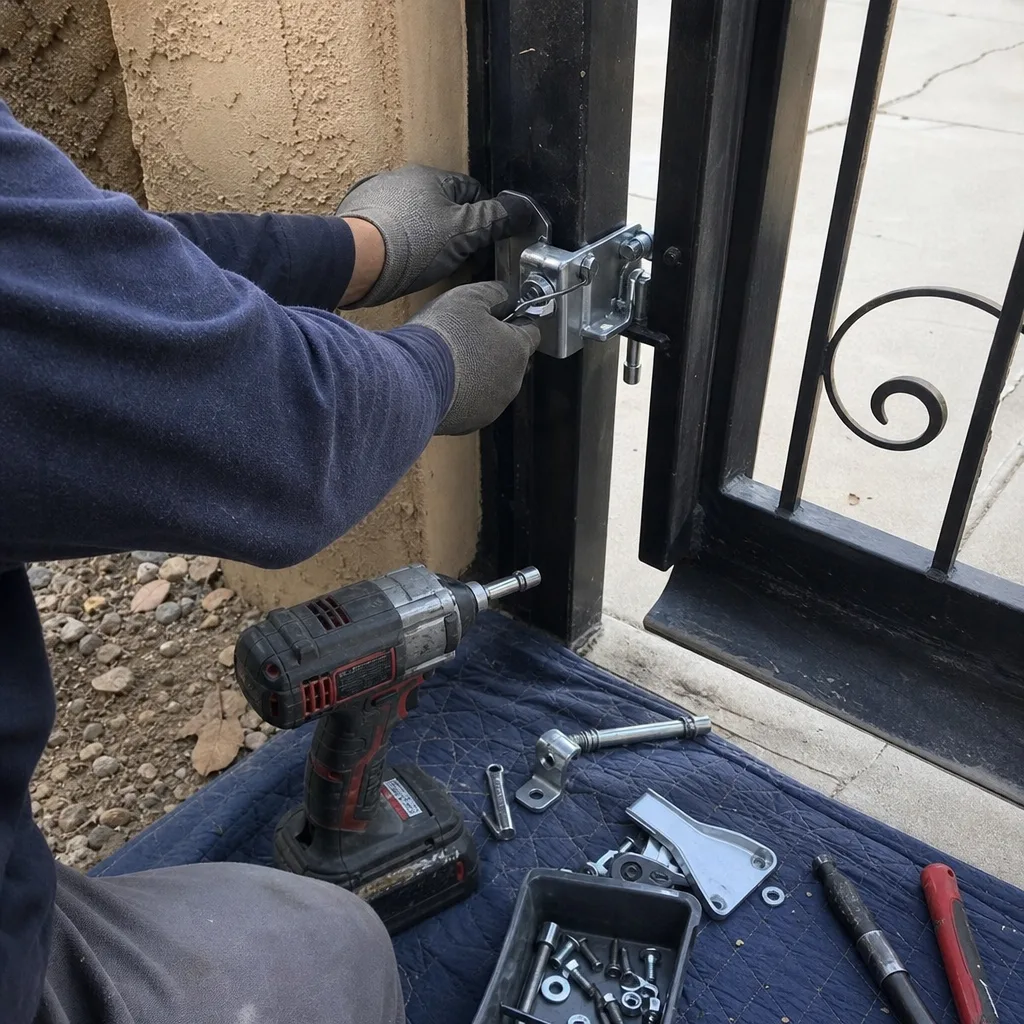
Threshold: Lateral play at the hinge barrel must be under 3mm. Measure with the gate closed and latched: place the tip of a dial indicator or the blade of a digital caliper against the gate frame near the hinge, and push the frame perpendicular to the hinge axis. Movement over 3mm means the pin is worn or the barrel is egged out.
What we find in Tempe: In neighborhoods with mature landscaping like Camelot Village or Brentwood, irrigation systems spray hinge hardware nightly. The water isn’t the problem; the dissolved minerals and chlorine are. We regularly see hinge pins with surface corrosion that accelerates wear 2-3x over dry-climate projections. If your hinges show orange staining, the protective grease layer has failed.
Post-Anchor Stability
The post that carries your gate hinge or operator mount moves. Monsoon rains in July and August saturate the soil around the concrete footing, then September and October dry it out. This wet-dry cycle creates voids and shifts.
Threshold: Post plumb must be within 5mm per meter of height (roughly 1/16 inch per foot). Measure with a 4-foot level on two perpendicular faces. Any post that leans toward the gate opening is a priority; the gate weight is actively working it looser.
Specific Tempe concern: In areas with expansive clay soil, particularly north of US-60 near Papago Buttes, post footings can heave 10-15mm seasonally. A post that was plumb in April may lean by October. Check quarterly, not annually, and compare your measurement to the prior log. Direction of movement matters as much as magnitude.
Limit-Switch Position
Limit switches tell the opener when to stop the gate at full open and full closed. On mechanical limit switches (common on DoorKing and older Elite systems), a cam or lever physically trips the switch. Electronic limits (most LiftMaster and newer systems) count motor revolutions or track encoder position.
Threshold: The gate must stop within 25mm (1 inch) of the same physical position every cycle. Mark the pavement or gate frame with tape at the closed and open positions. If the stop position drifts more than 25mm over ten cycles, the limit switch is creeping.
Why this matters: Creeping limits cause the gate to slam the stop or fail to reach the latch. Either one damages the operator. In our Tempe records, limit-switch creep accounts for roughly 15% of operator gear replacements. The fix is usually a $12 switch adjustment; the failure is a $400-$600 operator rebuild.
Annual Checks: Motors, Gears, and Safety Systems
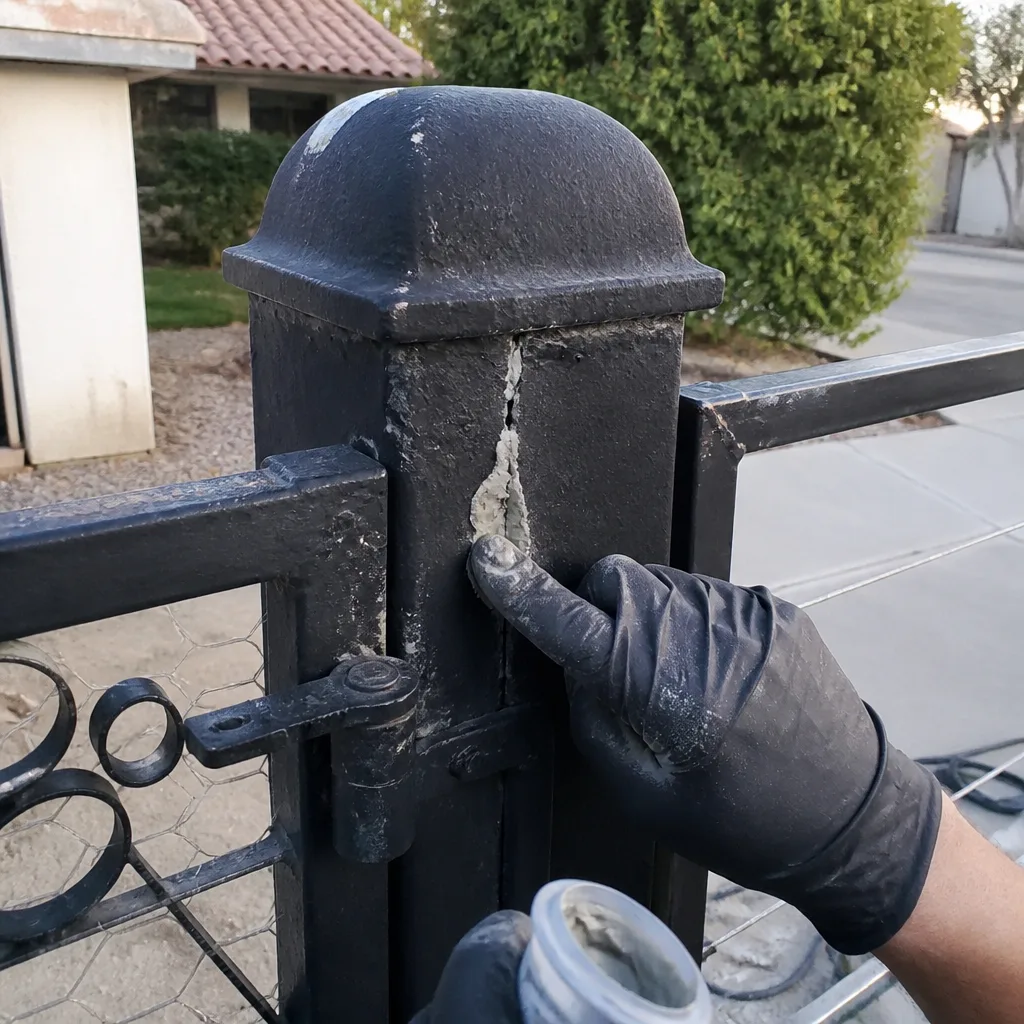
Annual checks require tools most homeowners own (multimeter, clamp meter) or can borrow. These are the deep-health indicators that predict major component failure.
Motor Amp Draw
The opener motor draws more current as load increases. A motor that once pulled 3.5 amps now pulling 5.5 amps is working 57% harder. Something is wrong: binding hinges, misaligned track, failing gearbox, or gate weight that has increased (vegetation growth, added decoration, waterlogged wood).
Threshold: Compare running amp draw to the nameplate rating or your prior annual measurement. An increase over 20% warrants investigation. An increase over 40% means stop using the gate until the cause is found.
Measurement method: Use a clamp meter on the hot conductor to the operator while the gate runs a full cycle. Record open-direction and close-direction amps separately; closing against a latch or stop typically reads higher.
Gearbox Condition
The reduction gearbox between motor and output shaft contains worm gears, helical gears, or planetary gears, depending on operator design. Gear wear shows as backlash (rotational play) and noise.
Threshold: With the gate disconnected from the operator (manual release engaged), rotate the output arm or sprocket by hand. Backlash over 15 degrees of rotation indicates significant gear wear. Grinding or clicking during powered operation confirms it.
Tempe-specific note: Dust that bypasses the gearbox seal acts as grinding compound. In our experience, Mighty Mule and Ghost Controls operators in exposed locations (no courtyard wall, no gate house) show gearbox wear 30-40% earlier than sheltered installations. Annual gearbox inspection is not optional for exposed operators in Tempe.
Safety Edge Function
ASTM F2200 requires safety edges on sliding gates and many swing-gate configurations. The edge is a contact strip or pressure sensor on the leading edge of the gate that stops and reverses travel on contact.
Threshold: The gate must reverse within 2 seconds of contact anywhere along the edge. Test with a soft object (foam pool noodle works) at the top, middle, and bottom of the edge. No dead zones. No delay over 2 seconds.
Documentation requirement: ASTM F2200 compliance testing must be documented annually for liability purposes. Your photo log (see next section) satisfies this if it shows the test object, the timestamp, and the reversing gate.
How to Photograph and Log Your Inspections
A photo that doesn’t answer “what was the condition on what date” is useless to the next technician. Our Gate Repair in Tempe team starts every unknown-gate job by asking the homeowner for prior records. Usually there aren’t any. The technician spends the first 30 minutes discovering what the last technician already knew.
Under The Haven Standard, we leave every job with a documented photo record. You can apply the same discipline to your maintenance checks. Here’s how:
- File naming: YYYY-MM-DD_Item_Descriptor.jpg. Example: 2025-05-15_Hinge-Upper_Play-2mm.jpg. The date-first format sorts chronologically in any file system.
- What to frame: Include the measurement tool in the shot. A photo of a hinge means nothing. A photo of a dial indicator reading 2.3mm on a hinge barrel is evidence. Include a reference object for scale: a coin, a ruler, your thumb.
- Context shots: One close-up of the measurement, one medium shot showing the component’s location on the gate, one wide shot showing the gate in its environment. Three photos per item minimum.
- Where to store: Cloud storage with automatic backup (Google Drive, iCloud, Dropbox). Create a folder per gate, subfolder per year. Email yourself the log summary after each check so there’s a timestamped record independent of your phone.
- What to log in writing: Date, item, measurement, pass/fail, next check due. Example: “2025-05-15 / Upper hinge lateral play / 2.1mm / PASS / Next check: 2025-08-15.” If fail: “2025-05-15 / Battery backup voltage under load / 11.4V / FAIL / Replacement ordered, scheduled 2025-05-22.”
The value of this record compounds. When you call for service, you can say “the upper hinge play went from 1.8mm in February to 4.2mm in May” instead of “the gate is making a noise.” The technician knows where to look and what changed. Under Haven Standard Clause 4 (Evidence on every job), our technician will add to your record, not replace it. Find more guides & resources in our blog.
The Five Most Skipped Items That Cause Emergency Calls
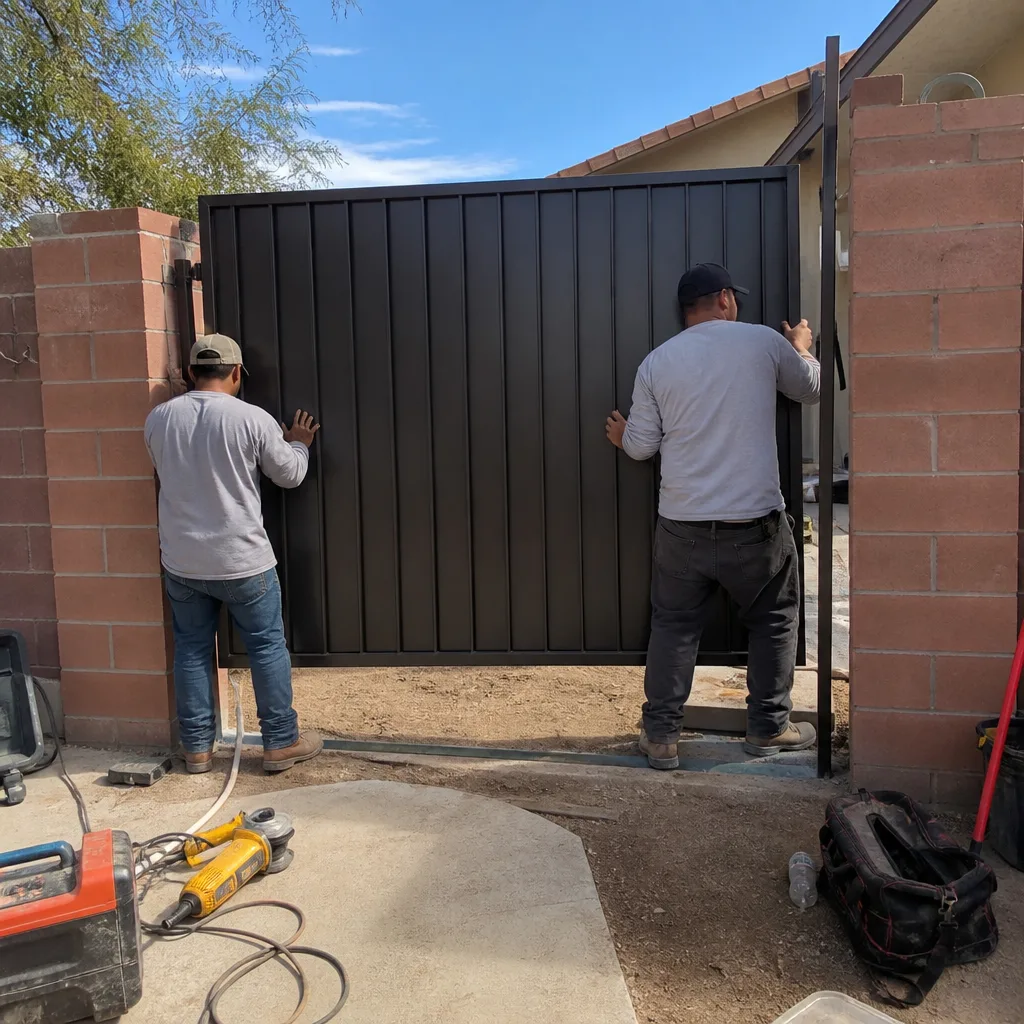
These five items appear on standard checklists but get skipped because they’re inconvenient to check, or because the threshold isn’t obvious. They account for the majority of after-hours emergency calls we handle in Tempe.
1. Battery Backup Condition
Homeowners check the opener, not the battery. The battery is inside a housing, behind a cover, or in a separate enclosure. Out of sight, out of mind. When the July power outage hits and the gate won’t open, it’s a problem. Check monthly during summer. Replace proactively at 24 months in Tempe heat.
2. Limit-Switch Creep
Limits drift slowly. The gate still works, just a little louder, just a little harder. Homeowners adapt to the new normal until the gate slams the stop and strips the gearbox. Mark your stop positions with tape. Check quarterly. A 25mm drift is the action threshold.
3. Ground-Level Obstruction Sensors
Photo-eyes get checked; pressure-sensitive ground loops and edge sensors don’t. A ground loop with a broken wire or an edge sensor with failed foam backing won’t trigger until something is trapped. Test monthly with a soft object, same as the safety edge.
4. Lubricant Type on Chain vs. Belt Drives
This gets skipped because it’s not a “check,” it’s a knowledge item. But using the wrong lube destroys the component. Chain: lithium grease, thin film, wipe excess. Belt: nothing, ever. WD-40 on a belt drive attracts dust and creates abrasive slurry. We’ve replaced belts in Tempe that failed in 18 months because someone “helped” with a spray can.
5. Post-Anchor Inspection After Monsoon Saturation
Homeowners check posts in dry weather. The critical check is 48-72 hours after heavy rain, when the soil is saturated and any void or weakness is exposed. In Tempe, that’s typically mid-July through early August. Check plumb after the second monsoon storm of the season, not before.
The Three-Strike Scoring Method
Vague checklists produce vague results because there’s no consequence to a “check” that finds nothing. The three-strike method forces a decision:
- Strike 1: Item fails threshold. Date-stamp the failure. Schedule repair or re-check within 30 days. Log the planned action.
- Strike 2: Same item fails at next scheduled check. No more “I’ll get to it.” The problem is persistent. Schedule professional evaluation within 14 days.
- Strike 3: Same item fails a third consecutive check. Stop operating the gate until evaluated. The failure pattern indicates progressive damage that will cascade to other components.
This prevents the “I’ve been meaning to fix that” spiral. A hinge with 3mm play that gets ignored for a year becomes a hinge with 8mm play, a twisted gate frame, a stripped operator sprocket, and a $1,200 repair instead of a $180 hinge replacement.
The scoring method also protects against overreaction. A single failure might be measurement error, temporary condition, or a threshold set too tight. Three consecutive failures on the same item, measured the same way, is a real problem.
We apply a version of this internally: any gate that requires three visits for the same symptom within 12 months triggers a full system review under our 365-Day Done Right Promise. There’s usually an underlying cause that wasn’t caught the first time.
Common Mistakes to Avoid
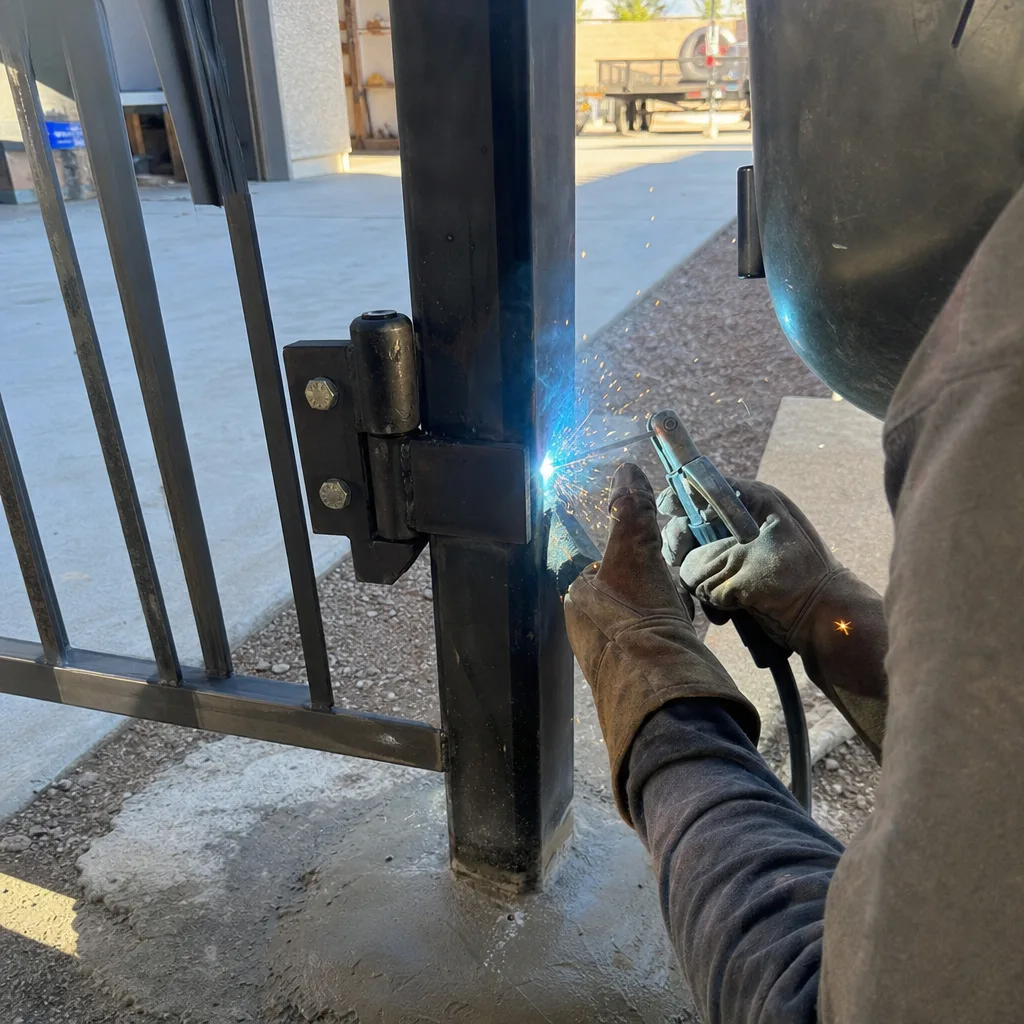
- Using a national maintenance schedule without Tempe adjustment. Monthly checks in Michigan are quarterly in Arizona; our dust season doesn’t exist there. Adapt intervals to local conditions, not package instructions.
- Cleaning photo-eyes with tap water or dry cloth. Tempe’s hard water leaves mineral film. Dry cloths grind dust into the lens surface. Use distilled water and microfiber, replaced when it shows grit.
- Checking post plumb in dry soil only. The critical condition is saturated soil after rain. A post that’s plumb in May can lean 10mm in August. Time your check to the soil condition, not the calendar.
- Lubricating belt drives. Any lubricant on a belt attracts dust and hardens into abrasive compound. Belt drives run dry. If the belt squeaks, it’s misaligned or worn, not under-lubricated.
- Ignoring operator amp draw increases under 1 amp. A 0.5-amp increase over six months is 14% higher load on a 3.5-amp motor. That’s meaningful. Log small changes; they predict big failures.
- Storing photos without metadata or naming. IMG_4723.jpg tells you nothing in three years. Date-first naming and cloud backup with automatic timestamp preservation are minimum standards for a useful record.
- Waiting for noise before checking gearbox. Gearbox noise means damage has occurred. Backlash measurement catches wear before it becomes noise. Annual check, every year, whether it sounds fine or not.
When to Call a Professional
Call when three consecutive checks show the same failure, when any safety system fails its test, when motor amp draw increases over 40%, or when you find post movement over 10mm. These are not “watch and wait” conditions; they’re “stop using the gate until evaluated” conditions.
Also call when you don’t have the right tool for the measurement. A guess is worse than no check at all because it creates false confidence. If you don’t own a clamp meter, don’t estimate amp draw. If you don’t have a dial indicator, measure hinge play with feeler gauges or call someone who has the tool.
Gate Installation in Tempe and repair work should leave documentation, not just a fixed gate. Vance Gate Repair Tempe offers free estimates in Tempe - call (623) 323-3849. Under the Haven Standard, you’ll get a written scope and price before any work starts, a photographed record of what was found and what was done, and the 365-Day Done Right Promise on all completed work. A live person answers the phone 24 hours a day, seven days a week.
Frequently Asked Questions
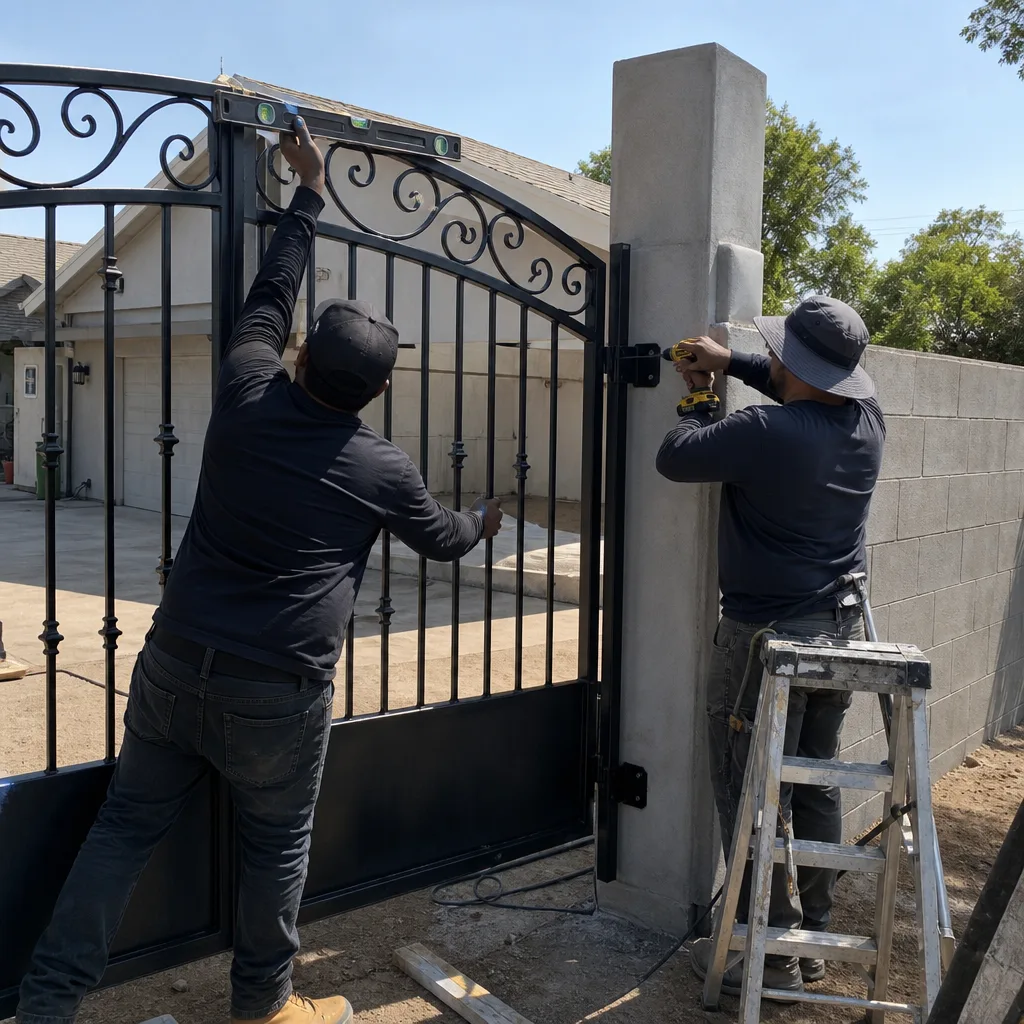
A thorough inspection of a single residential gate in Tempe typically runs $150-$250, depending on gate type and accessibility. This includes all measurements documented in this guide, a written report with photos, and a written repair quote if anything fails threshold. Call (623) 323-3849 for an exact quote - estimates are free.
Most checks require only basic tools: level, tape measure, multimeter, clamp meter. The safety-edge and photo-eye tests are simple operational checks. What requires experience is interpreting marginal results - a hinge at exactly 3mm play, a motor drawing 19% more than last year - and knowing whether to repair or replace. Use this guide for monitoring; call a pro for decisions at the margin.
Tempe’s maintenance schedule is similar to Phoenix, Mesa, and Scottsdale: monthly during May-July dust season, quarterly otherwise, annual deep check. What differs is soil type and exposure. Tempe’s clay-heavy soils north of US-60 need more frequent post checks than sandy areas in south Scottsdale. Exposed gates near the Salt River bed see more dust loading than courtyard-protected gates in Arcadia. Adjust intervals based on your specific microclimate, not just city.
LiftMaster and Elite have the most accessible documentation and widely available parts. DoorKing systems are robust but require proprietary programming tools for some adjustments. Mighty Mule and Ghost Controls are simpler mechanically but have shorter service intervals in desert conditions. We service all nine major brands - Gate Motor & Opener in Tempe work is our core service - and we don’t steer customers toward replacement when repair is viable.
Routine maintenance and like-for-like part replacement don’t require permits. Structural modifications, operator replacement on a sliding gate, or any work affecting the public sidewalk or alley may require a Tempe building permit. We check permit requirements as part of our written scope when the work crosses that line. If another company tells you permits aren’t needed for major work, get a second opinion.
Operator replacement from progressive overload. A gate with binding hinges, creeping limits, and a dragging safety edge can force a $600-$900 operator to pull 2x its design load. The motor overheats, the gearbox strips, and the homeowner faces $1,800-$3,200 for a new operator when $400 in hinge and limit work would have saved it. Our Tempe records show this pattern in roughly 20% of operator replacements - all preventable with measured maintenance.
The Bottom Line
A gate maintenance checklist without measurements is just a list of things to worry about. This guide gives you pass-fail thresholds for every critical component, intervals adjusted for Tempe’s dust, heat, and monsoon cycles, a photo-logging system that makes your record useful to the next technician, and a three-strike scoring method that forces action before small problems become expensive ones. The homeowners who avoid emergency calls are the ones who know the difference between 2mm and 5mm of hinge play, who mark their gate stop positions with tape and check them quarterly, who replace a $45 battery instead of waiting for a summer outage. Start with the monthly dust-season checks. Build the habit of logging what you found. When a measurement fails three times running, you have the evidence to make the call - and the number to reach someone who’ll give you a written price before any work starts.
Written by Adrian Vance, Owner at Vance Gate Repair Tempe, serving Tempe since 2014.