
Last updated September 22, 2026
Free on-site gate assessment - hinges, posts, and your LiftMaster or Nice gate operator checked before anything is quoted
The assessment is free and the quote is the invoice.

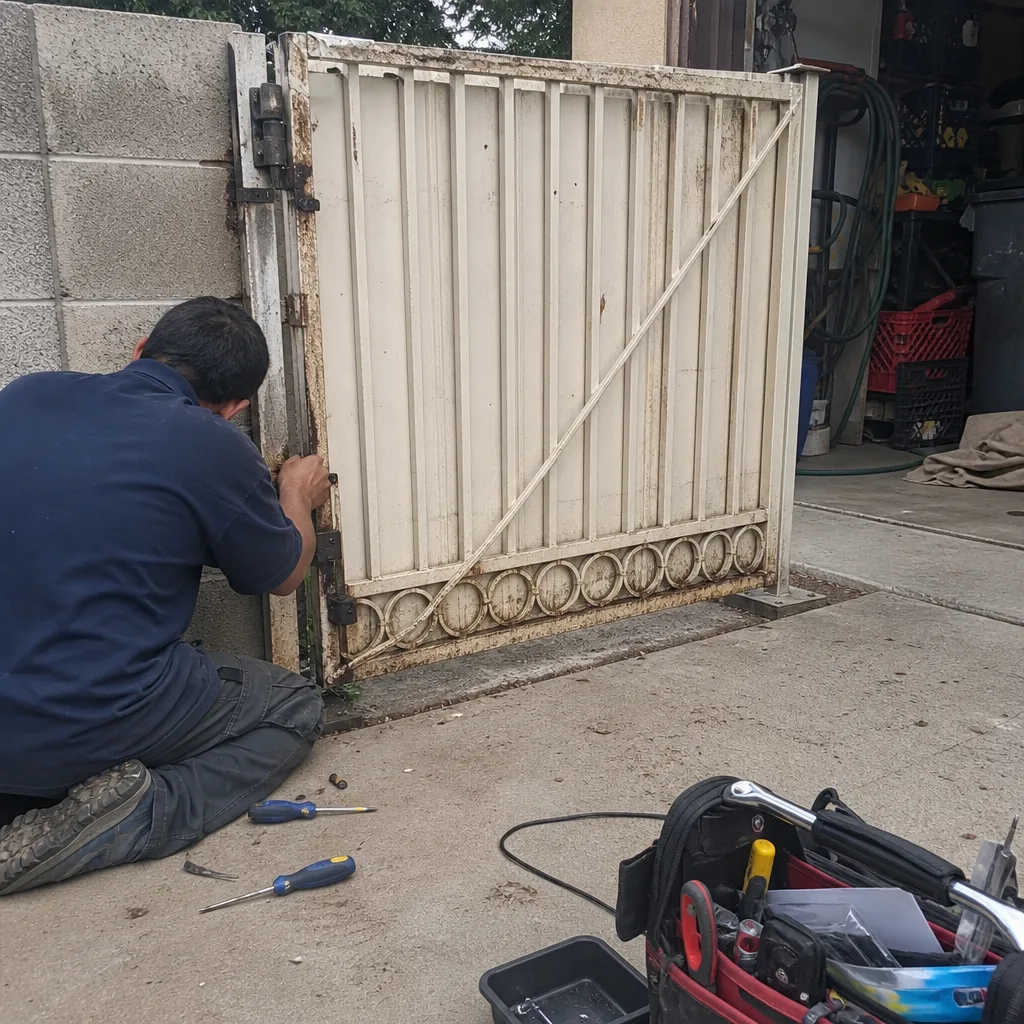 Before
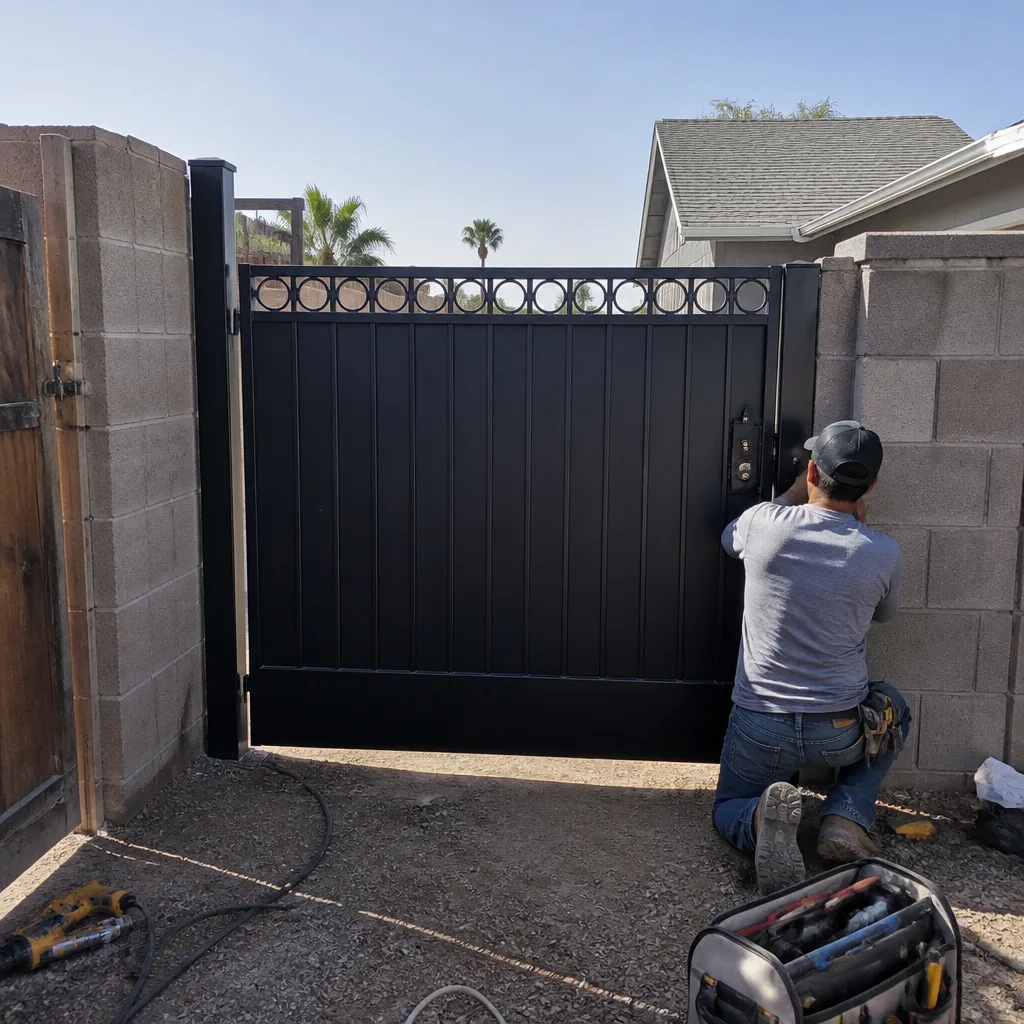 After
After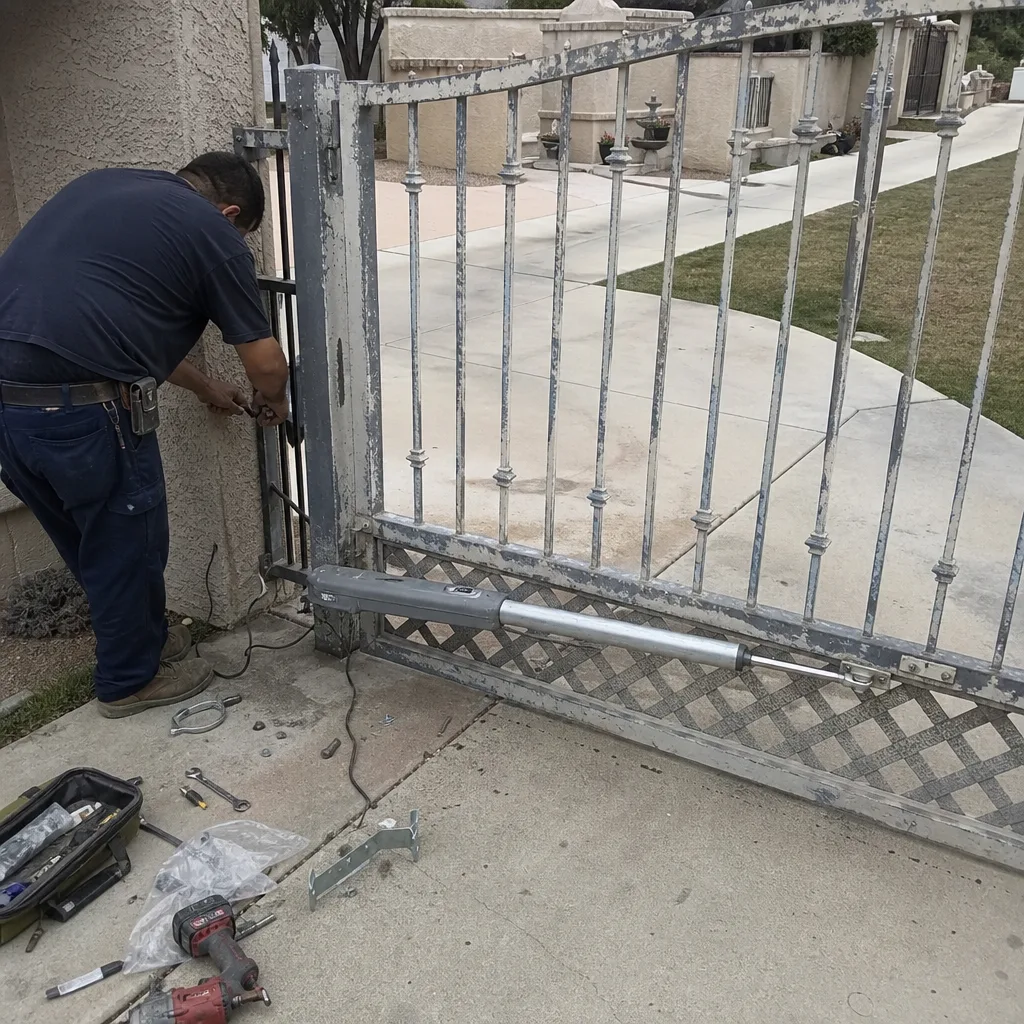 Before
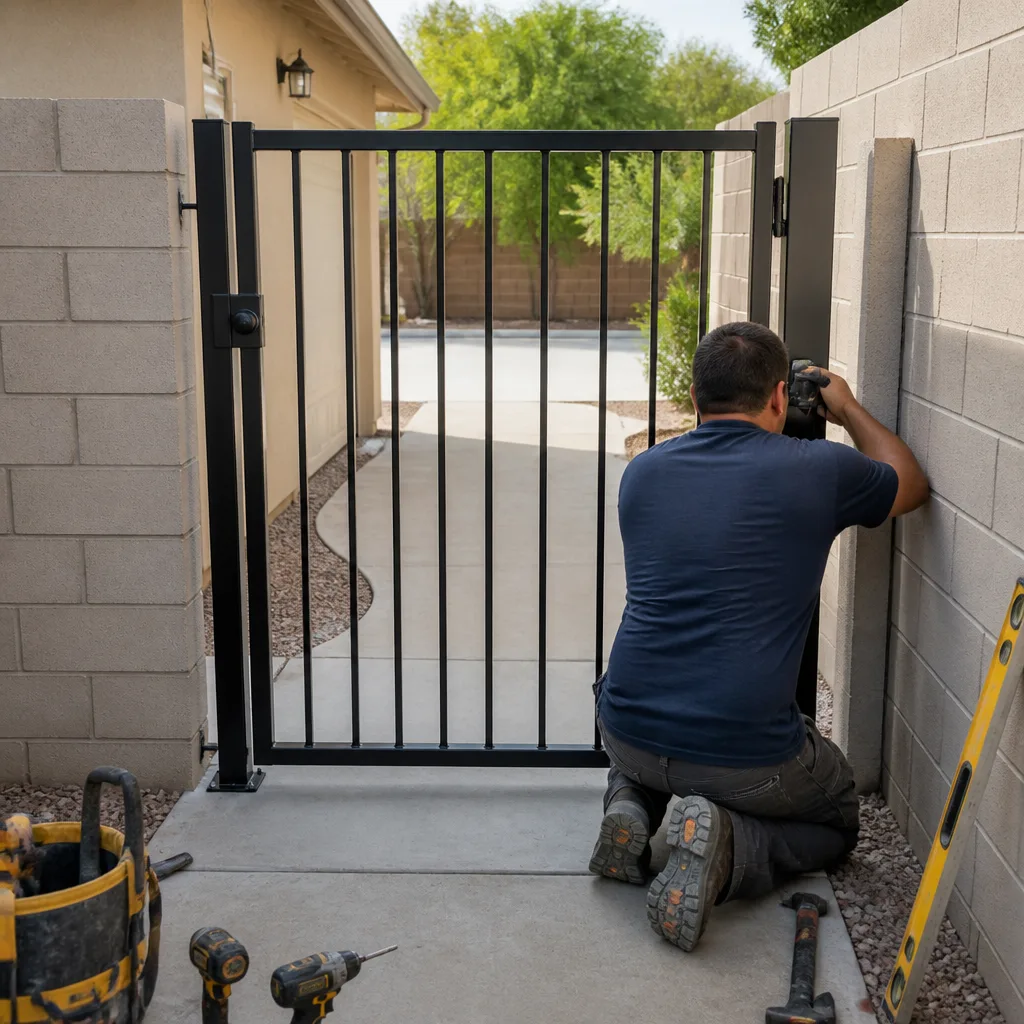 After
After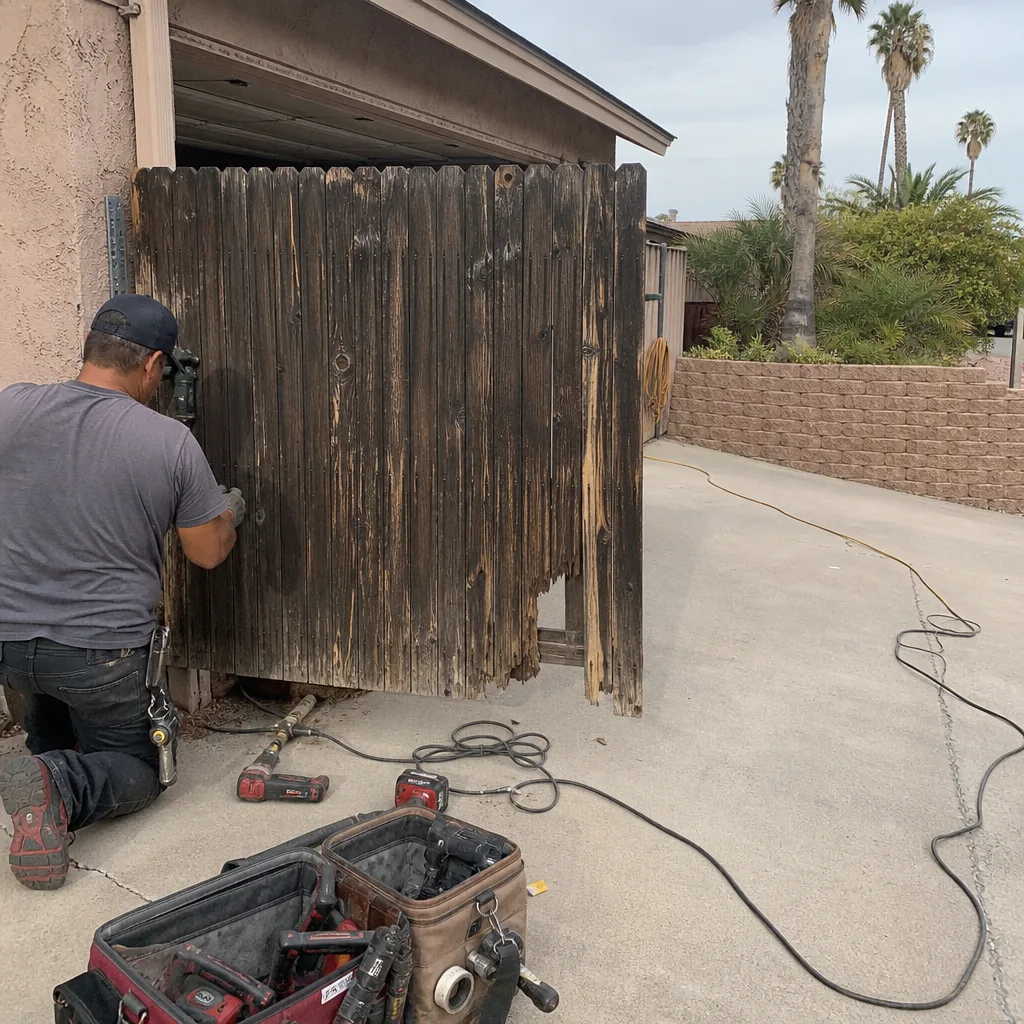 Before
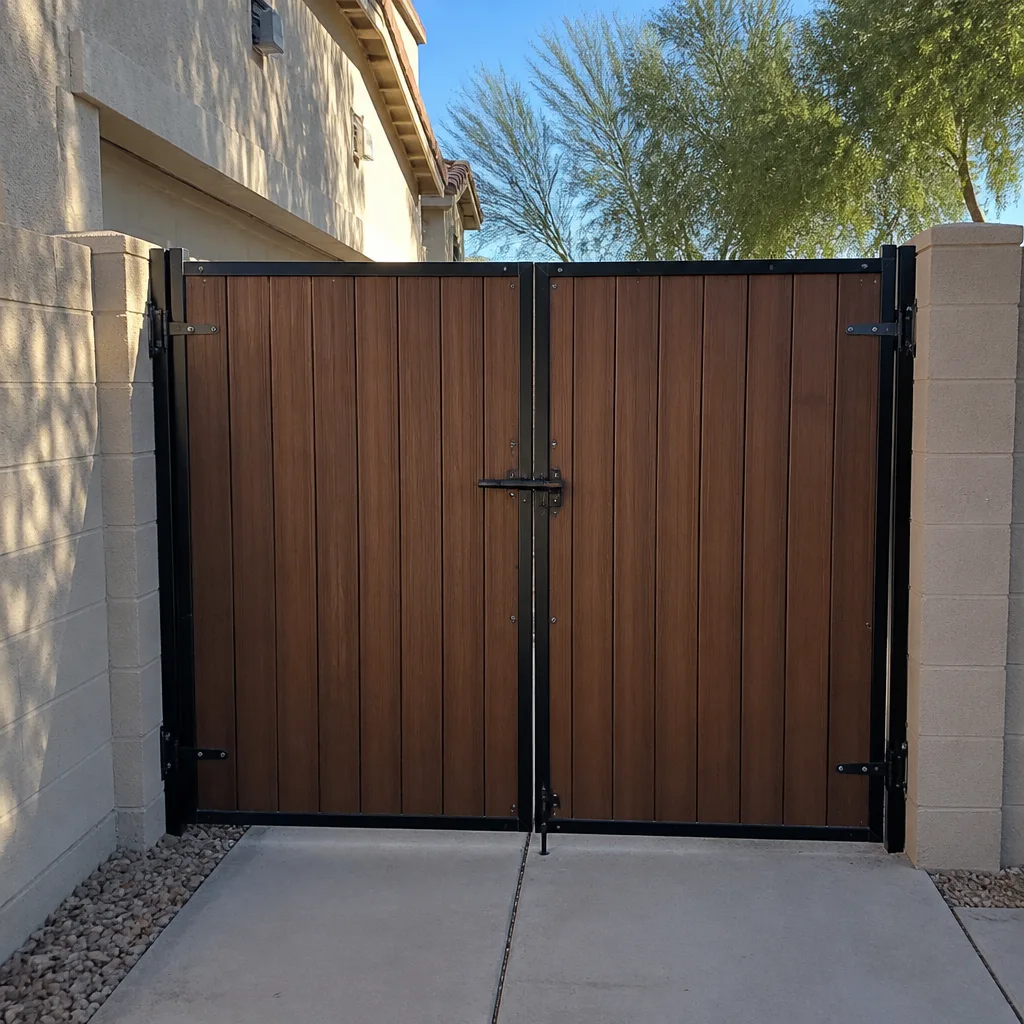 After
AfterThe Complete Guide to Gate Repair in Tempe
A gate that works fine in January and grinds to a stop in July hasn’t broken - it’s been slowly binding since installation, and the summer heat just crossed the threshold. Most “sudden” gate failures in Tempe aren’t sudden at all. They’re the endpoint of a cause-and-effect chain that starts with thermal expansion, gathers momentum through alkaline dust infiltration, and finishes with hardware that’s slipped past its torque spec one degree at a time. In this guide, we’ll map that chain so you can read your gate’s behavior like a technician reads a diagnostic code - and know what kind of gate repair you’re actually facing before anyone shows up with a quote.
Quick Answer
Gate repair in Tempe typically addresses three interacting failure modes: heat-expanded metal causing misalignment, alkaline dust accelerating motor wear, and undertorqued hardware working loose over seasonal cycles. Most residential repairs fall between $180 and $650 depending on whether the issue is mechanical (hinges, rollers, wheels), electrical (boards, sensors, wiring), or structural (post lean, concrete damage); see our Gate Repair Cost Breakdown: The Tempe Homeowner’s Reference for 2026 for detailed pricing by category. A documented baseline visit - with photographed limit-switch readings and a wiring diagram - reduces the cost of every future service call by eliminating rediscovery time.
Table of Contents
- How Thermal Expansion Destroys Alignment in Tempe Summers
- The East Valley Dust Problem: Why Tempe Gates Fail Faster Than Coastal Systems
- The Three Failure Categories: Mechanical, Electrical, Structural
- Reading Your Gate’s Behavior Before It Stops Completely
- What a Documented Baseline Visit Captures - and Why It Saves Money
- Gate Repair Cost Breakdown in Tempe
- Automation Brands and Parts Availability in the Tempe Market
- Common Mistakes to Avoid
- When to Call a Professional
- Frequently Asked Questions
 Before
 After
AfterHow Thermal Expansion Destroys Alignment in Tempe Summers
Steel expands at roughly 0.00000645 inches per inch per degree Fahrenheit. Aluminum expands almost twice that rate. On a 115°F July afternoon in Tempe, with gate steel sitting at 140°F or higher in direct sun, a 16-foot steel swing gate grows by nearly 3/16 of an inch from its January dimension. That doesn’t sound like much until you realize the gate was installed in March, when the ambient temperature was 72°F and the steel was cool enough to handle without gloves.
The installer set the hinge pins, adjusted the latch receiver, and programmed the limit switches - all at one temperature. Six months later, the expanded gate is binding against the jamb, the latch is missing the strike plate by an eighth of an inch, and the operator arm is fighting lateral load it was never designed to handle. We’ve seen this exact pattern in neighborhoods from Gate Repair in Tempe calls across the city, particularly in the older sections of Maple-Ash and the ranch-style homes south of Baseline where original gates from the 1980s and 1990s still hang on their original posts.
The failure isn’t the heat itself. It’s the mismatch between the installation temperature and the operating temperature, compounded by hardware that wasn’t retorqued after the first seasonal cycle. Here’s what happens in sequence:
- Season one: Gate installed in mild weather. All clearances look correct. Hinge bolts torqued to spec.
- First summer: Metal expands. Gate rubs slightly at the latch end. The operator works harder but still moves the gate. Homeowner notices nothing, or dismisses a slight squeak.
- First winter: Metal contracts. Clearances return. The slight looseness in the hinge bolts from summer vibration now allows the gate to settle 1/32 inch lower on the pin.
- Second summer: Expanded gate now binds against the expanded jamb. Operator stalls. Homeowner calls for “sudden” failure.
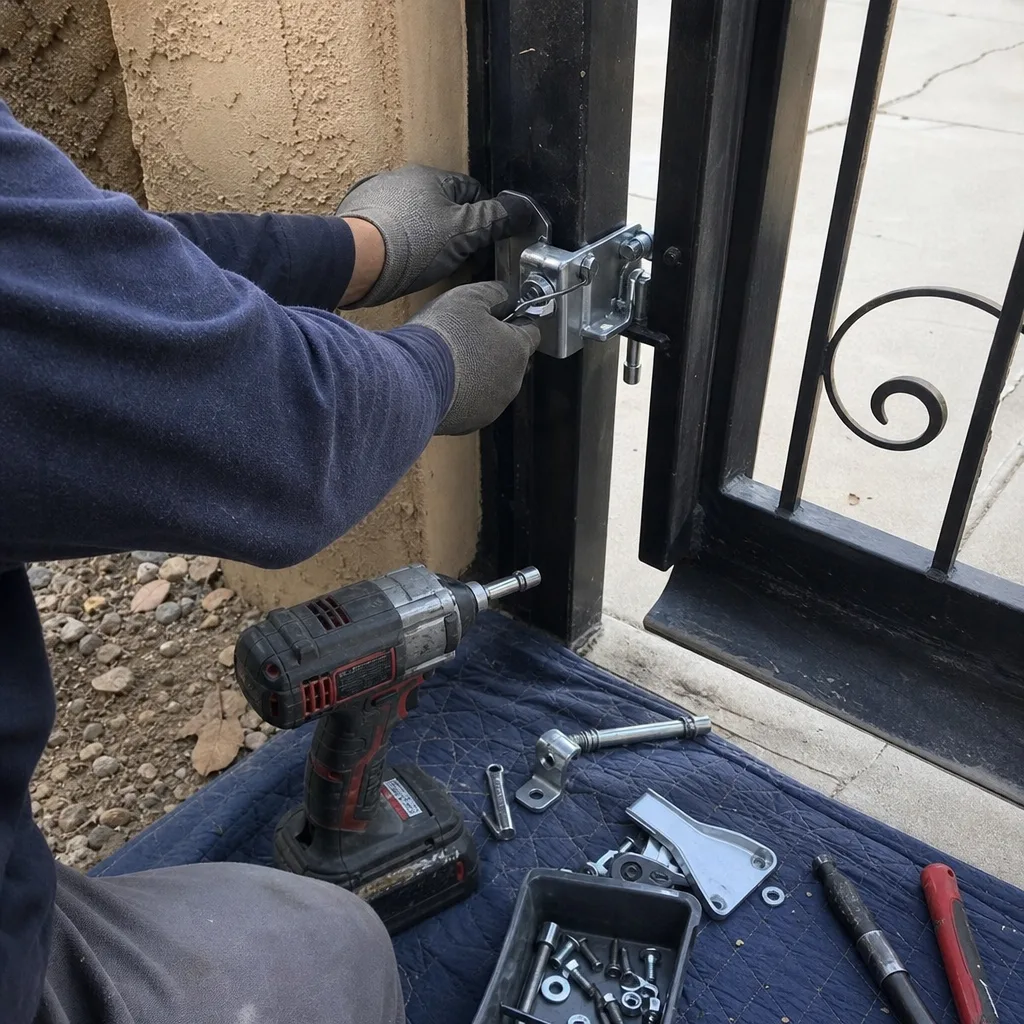
The repair isn’t replacing the operator. It’s resetting the hinge geometry, retorquing all fasteners to spec plus a thread-locking compound, and reprogramming the limit switches at summer temperature. In our experience, about 40% of “motor replacement” calls in Tempe during July and August resolve to alignment issues that a baseline documentation visit would have flagged the previous October - one reason we recommend reading our DIY vs Professional Gate Repair: The Tempe Homeowner’s Decision Guide before deciding on service.
Specific neighborhoods show this pattern more clearly. The gated communities along Pecos Road, built during the 2003-2007 construction boom, used aluminum-frame gates with steel posts - the worst thermal mismatch combination. We’ve documented hinge-pin galling (cold welding between pin and bushing from friction heat) in these systems at three times the rate we see in all-steel or all-aluminum installations. The repair is a bushing replacement with a bronze insert and a revised torque spec that accounts for the differential expansion rate.
The East Valley Dust Problem: Why Tempe Gates Fail Faster Than Coastal Systems
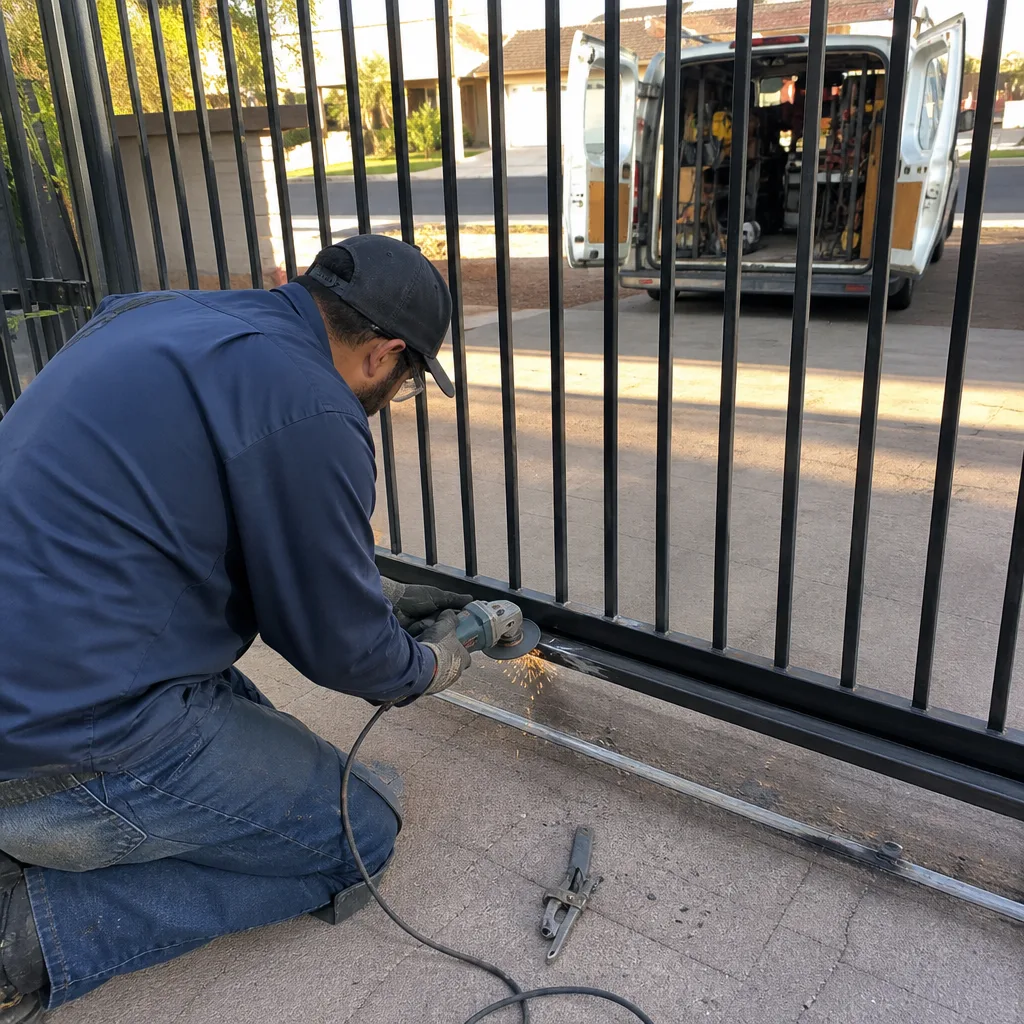
The dust that settles on Tempe gates isn’t generic desert dirt. It’s alkaline - pH typically 8.5 to 9.5 - and fine-grained enough to pass through standard motor housing seals rated for “dust resistant” rather than “dust tight.” This matters because the internal environment of a gate operator is a magnet for exactly this particle size.
Inside a Gate Motor & Opener in Tempe, the motor brushes ride against a copper commutator, creating a microscopic arc at each segment transition. That arc generates ozone and a slight electrostatic charge. Alkaline dust particles, carried in through the cooling vents, adhere to the commutator surface. The alkali reacts with copper oxide to form copper carbonate - the green corrosion visible on old pennies. On a commutator, this raises surface resistance, increases arcing, and accelerates brush wear from a typical 8-10 year life to 3-4 years in exposed Tempe installations.
We’ve opened operators in the McClintock corridor that looked like they’d been underwater. The dust had packed into every crevice, absorbed humidity from monsoon season, and formed a conductive crust across the circuit board. The symptom was intermittent operation - gate works at 8 AM, stalls at 2 PM, works again at 7 PM - that tracked with temperature and humidity, not with any mechanical fault. The repair was complete board cleaning, brush replacement, and seal upgrade to IP65-rated gaskets. Without the cleaning, a new board would have failed the same way in two seasons.
Photo-eye misalignment from dust accumulation is the most common service call we handle in Tempe, and it’s almost entirely preventable. The infrared beam between transmitter and receiver needs a clear optical path. Alkaline dust scatters the beam the same way fog scatters headlights. A photo-eye that reads 100% signal strength in clean conditions drops to 60% with a light film, and the operator’s safety logic interprets anything below a threshold (typically 70-75%) as an obstruction. The gate reverses, or refuses to close, or throws a fault code.
The diagnostic signal is consistent: gate opens normally (photo-eye not in the path during opening), but won’t close, or reverses after six inches of travel. In Tempe, we check photo-eye alignment first on every call from May through September. The fix is cleaning with optical-grade solvent (not Windex - ammonia residues attract more dust), realignment to spec, and a documented reading of the signal strength percentage left in the job record. On the next service call, we compare that number. If it’s dropped 15 points in a year, the seal is failing and we replace it before the intermittent fault starts.
The Three Failure Categories: Mechanical, Electrical, Structural
Every gate failure sorts into one of three categories, and knowing which one you’re facing changes both the cost expectation and the urgency of response. Here’s how we classify them in the field, with typical Tempe repair ranges based on 22,000+ documented jobs since 2014.
Mechanical Failures
These are the moving parts: hinges, rollers, wheels, chains, belts, operator arms, and the gate leaf itself. In Tempe, mechanical failures dominate the summer months because thermal expansion turns small misalignments into binding forces.
- Hinge pin and bushing replacement: $180-$320. Most common on steel gates over 12 feet with original brass or untreated steel bushings. We use oil-impregnated bronze or polymer-lined bushings rated for dry operation.
- Rollers and track repair (sliding gates): $220-$480. The V-groove rollers on sliding gates concentrate load on a small contact patch. In Tempe’s heat, grease thins and migrates, leaving metal-on-metal contact. We’ve replaced rollers in the Kiwanis Park area that had worn 1/4-inch flats into their circumference from running dry.
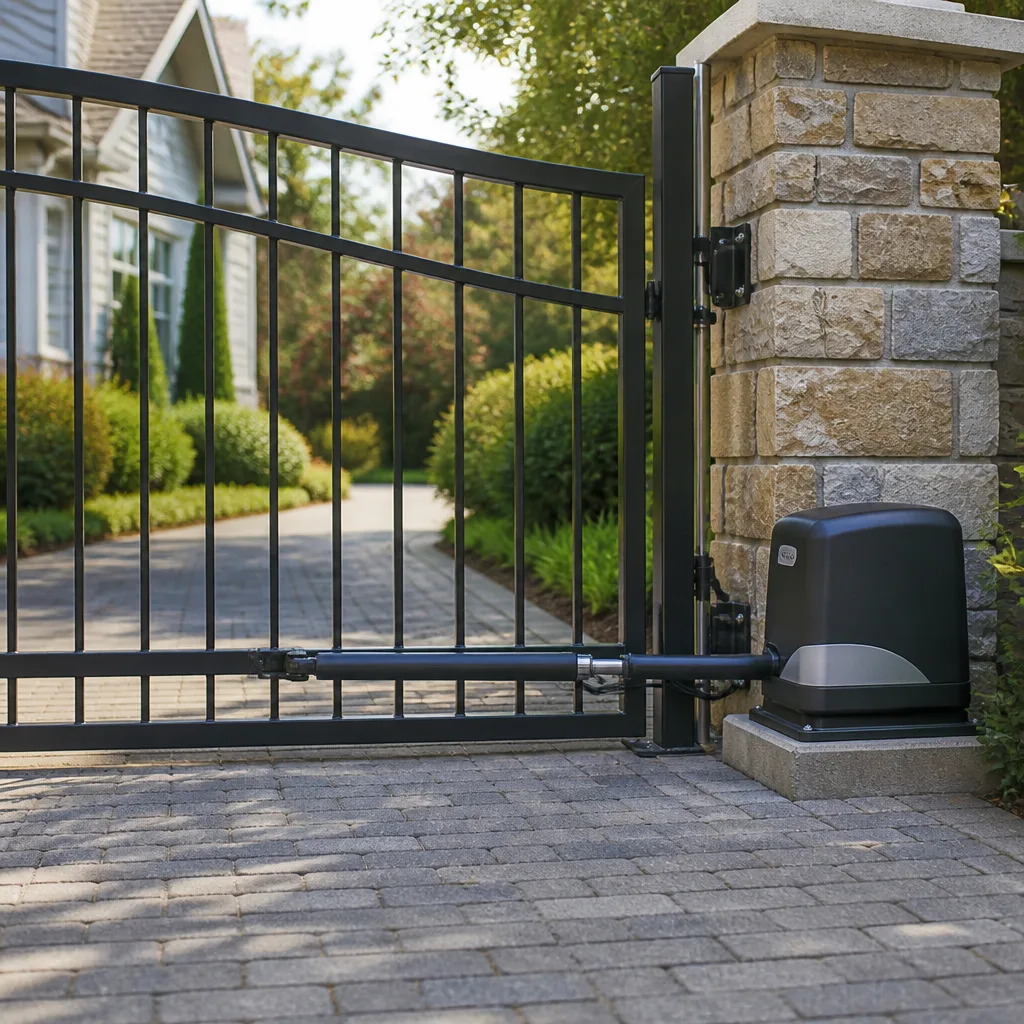
- Operator arm and bracket: $280-$520. The arm that connects the motor to the gate is the fuse in the system - it fails before the motor does, if it’s doing its job. Bracket failures usually trace to undertorqued fasteners that worked loose over thermal cycles.
- Chain or belt replacement: $240-$400. Chain stretch is measurable: a #40 roller chain should have no more than 3% elongation over 12 inches. Beyond that, the sprocket teeth wear to match the elongated pitch, and both must be replaced.
Electrical Failures
Electrical failures are more common in Tempe than in humid climates because alkaline dust creates conductive paths that humidity alone wouldn’t. They’re also the category where documented baseline readings pay off most directly.
- Control board repair or replacement: $340-$680. Boards from Ghost Controls and DoorKing units are repairable in about 30% of cases - traceable cold solder joints, replaceable relays, cleanable corrosion. Elite and Mighty Mule boards tend toward modular replacement rather than component-level repair. We always attempt repair first under Clause 1 (written price before work), with the replacement option priced and documented if repair fails.
- Photo-eye replacement or realignment: $140-$260. Single-beam systems are simpler; dual-beam or through-beam systems used on commercial properties require precise alignment and documented signal strength.
- Transformer or power supply: $180-$320. Voltage sag during summer peak demand in Tempe (APS and SRP both see 3-5% drop on critical days) stresses older transformers. We measure input and output voltage under load, not just at idle, and document both readings.
- Wiring harness repair: $160-$340. Underground conduit fills with condensation during monsoon season; the alkali in the dust accelerates insulation degradation. We see this most in properties with original direct-burial cable rather than conduit-protected runs.
Structural Failures
Structural failures are the most expensive and the most preventable. They’re also the ones where a “gate company” without welding capability or concrete experience will quote replacement when repair is viable.
- Post reset or replacement: $480-$1,200. A leaning gate post in Tempe usually traces to one of three causes: insufficient concrete depth (36 inches minimum for a 6-foot post in expansive clay soils), inadequate drainage at the base (monsoon water pools and softens the bearing), or impact damage from vehicles or landscaping equipment. We excavate, assess the post condition, and either reset with corrected drainage or replace with schedule-40 steel pipe and a proper concrete footing.
- Gate frame weld repair: $280-$520. Aluminum gates crack at heat-affected zones from the original fabrication. Steel gates rust at weld joints where the galvanizing was burned away. We document the crack origin, repair with matching filler metal, and re-galvanize or powder-coat the repair zone.
- Concrete spalling and footing repair: $340-$680. The alkali in Tempe dust reacts with concrete surfaces over time, especially where irrigation overspray keeps the surface damp. Spalled concrete exposes rebar, which rusts and expands, accelerating the damage. We cut back to sound concrete, treat the rebar, and pour with sulfate-resistant mix.
Reading Your Gate’s Behavior Before It Stops Completely
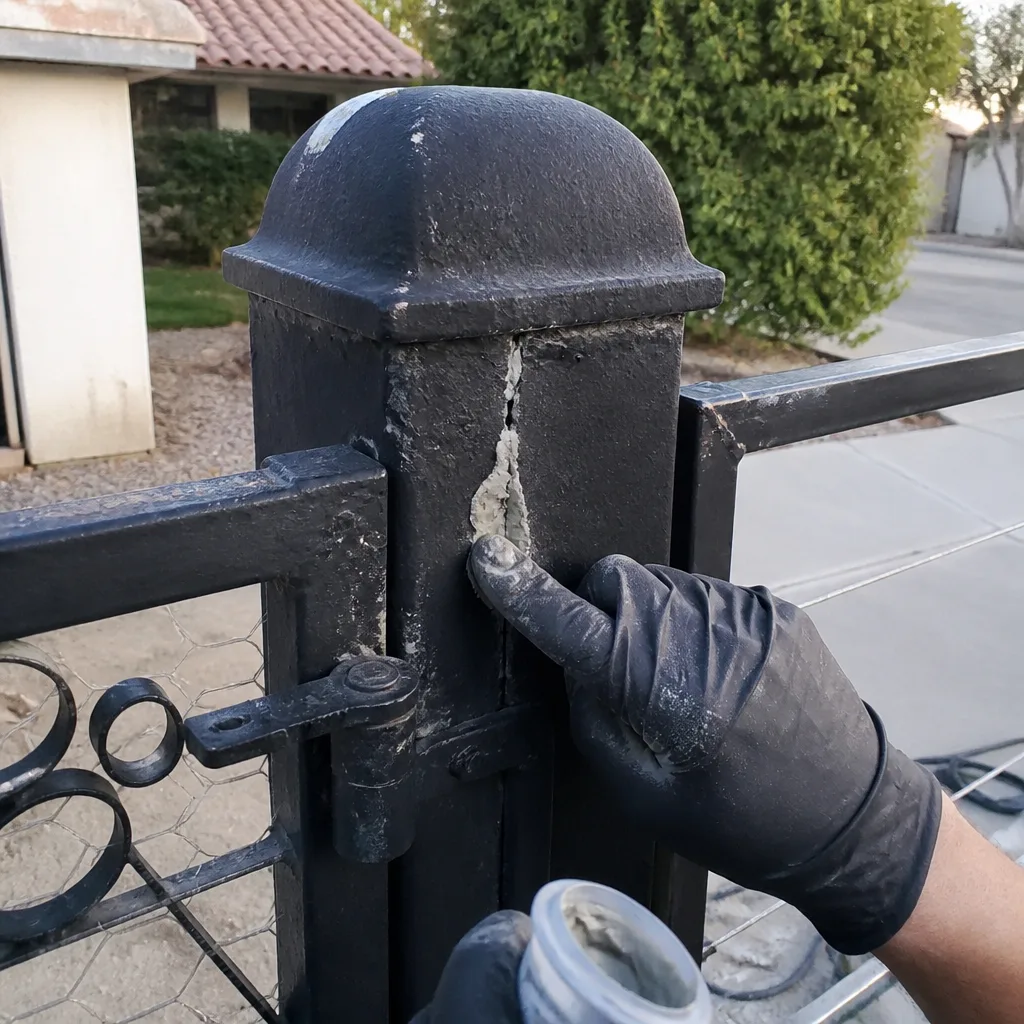
A gate that stops working gave warning signs for weeks or months. The problem is that most homeowners don’t know which changes matter. Here’s the diagnostic vocabulary we use on every Vance Gate Repair Tempe home service call, and what each signal means.
Speed Change
The operator is designed to move the gate at a consistent speed, typically 12-16 inches per second for residential swing gates. If you notice the gate slowing during the middle of its travel - not at the start (normal high-torque startup) and not at the end (normal deceleration ramp) - the motor is working against increased mechanical load. Possible causes:
- Hinge binding from lack of lubrication or bushing wear. The motor draws more current to maintain speed, which we can measure with a clamp meter.
- Track obstruction or roller flat-spotting on sliding gates. The gate “hops” or shudders at the same point in travel each cycle.
- Operator arm misalignment. The arm is pushing at an angle rather than along the line of force, converting linear motion into binding torque at the bracket.
We document the no-load and loaded current draw on every baseline visit. A 15% increase over six months is the threshold for preventive maintenance.
Sound Change
Every gate has a normal sound signature. Changes in that signature are specific:
- Grinding or growling: Metal on metal, usually hinge or roller. The frequency tells us the size of the contact patch - high-frequency squeal is small-point contact (dry pin in bushing), low-frequency growl is larger surface (roller flat spot).
- Clicking at regular intervals: Chain riding over worn sprocket teeth, or a loose chain slapping the guide. Count the interval: 12 clicks per gate cycle on a 12-foot gate with 3-inch sprocket pitch means every tooth is damaged.
- Electrical hum that changes pitch: Motor struggling against load, or capacitor beginning to fail. The capacitor provides the phase shift for single-phase motors; as it degrades, the motor draws more current and runs hotter.
- Solenoid “thunk” without movement: Electrical command is reaching the operator, but mechanical lockout (safety edge, photo-eye, loop detector) is preventing motion. This is a safety-system fault, not a motor fault.
Drift
Drift is the gate’s position changing over time without command. A swing gate that doesn’t quite reach the closed stop, or a sliding gate that gaps 2 inches from the jamb, is drifting. The causes are cumulative and specific to Tempe’s climate:
Thermal expansion changes the limit-switch trigger point. Mechanical limit switches (microswitches with actuator arms) have a physical trip point. If the gate expands, the trip cam reaches the switch earlier in the travel, and the gate stops short. Electronic limit systems (encoder-based, used on newer DoorKing and Elite operators) store the position in memory and don’t drift with temperature - but they can lose calibration if power is interrupted, and they require a documented reset procedure.
We’ve documented drift patterns across seasons in Tempe: gates typically lose 1/4 to 1/2 inch of closed position from January to July, then recover in October. A baseline visit captures the January position with photos; the July service call compares against that record. If the drift exceeds the seasonal pattern, there’s mechanical wear (hinge pin elongation, roller wear) accelerating the change.
What a Documented Baseline Visit Captures - and Why It Saves Money
Most gate service calls start from zero: technician arrives, diagnoses the symptom, proposes a repair, and leaves. The next call, even from the same company, starts from zero again. The Haven Standard was designed to eliminate this rediscovery cost.
A documented baseline visit - which we offer as a standalone service or include with any repair - captures the following:
- Photographed gate position: Gate fully open, fully closed, and at the limit-switch trigger points. These photos go in the job record and are emailed to the homeowner.
- Limit-switch readings: For electronic-limit operators, the encoder count at open and closed positions. For mechanical switches, the actuator arm angle and contact resistance in ohms.
- Current draw profile: Motor current at startup, mid-travel, and end-of-travel, measured with a calibrated clamp meter. This is the most predictive diagnostic we have - current rise precedes mechanical failure by months.
- Wiring diagram: Hand-drawn or CAD-generated schematic of the actual installation, not the generic manual diagram. We note wire colors, terminal numbers, and any field modifications. This saves 30-60 minutes on every future electrical diagnosis.
- Hardware torque log: Fastener size, specified torque, and actual torque measured with a calibrated wrench. We flag any fastener below 85% of spec for retorquing.
- Photo-eye signal strength: Percentage reading at time of visit, with transmitter and receiver model numbers. Future misalignment calls compare against this number.
The cost of a baseline visit in Tempe is $140-$180, depending on gate type and accessibility. The savings come on every subsequent call. A technician with this record doesn’t spend 20 minutes tracing wires to find which terminal the safety edge connects to. Doesn’t retorque hardware that was documented tight six months ago. Doesn’t replace a photo-eye that was reading 94% last visit and reads 72% now - the diagnosis is dust accumulation or seal failure, not component failure.
Under Clause 4 (Evidence on every job), this documentation is included at no additional charge on every Vance Gate Repair Tempe visit. We leave a copy with the homeowner and file the master in the job record. When you call back in two years, any technician - not just the one who was here before - has the complete history.
Gate Repair Cost Breakdown in Tempe
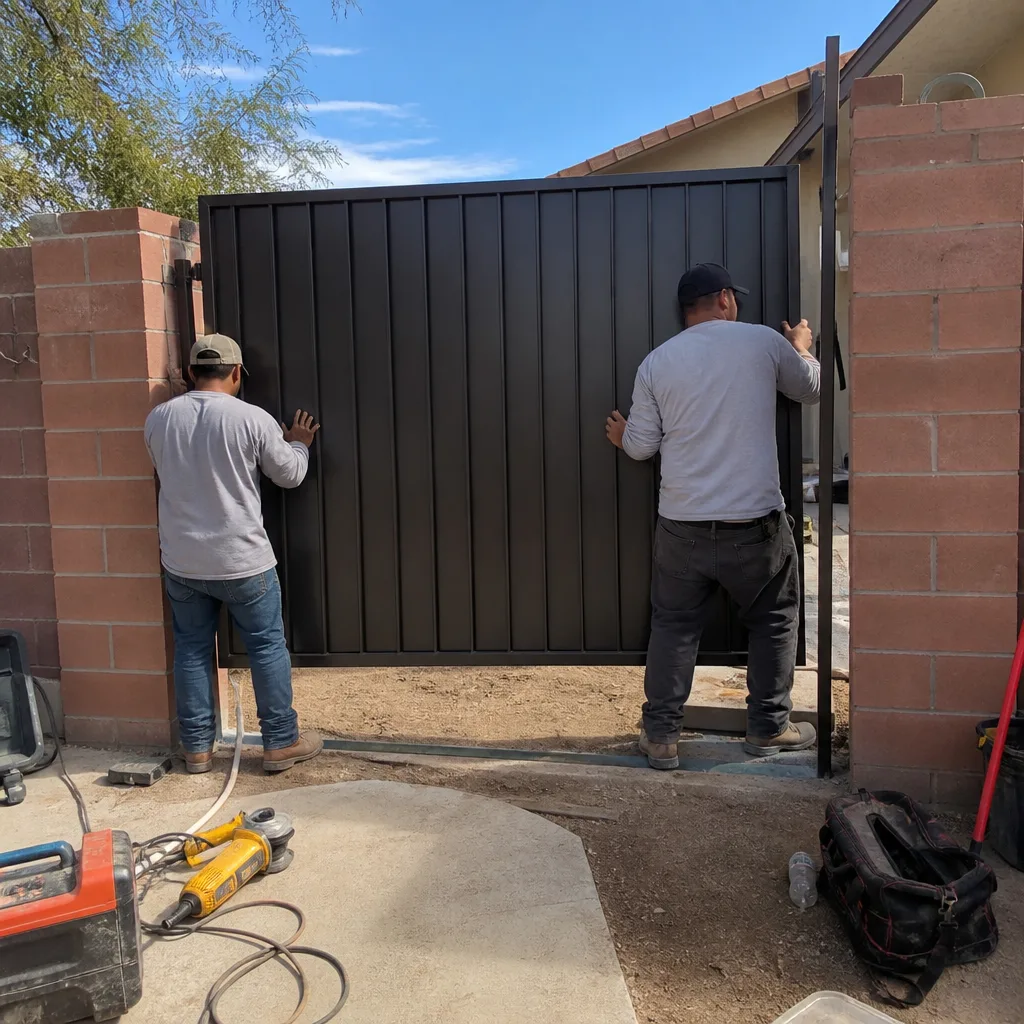
These ranges reflect our documented pricing on 22,000+ jobs since 2014, updated for current parts costs and labor rates in the Tempe market. Every price is written and agreed before work starts, per Haven Standard Clause 1.
| Repair Category | Typical Range | What Affects Price |
|---|---|---|
| Hinge pin / bushing replacement | $180 - $320 | Gate weight, access, bushing material |
| Roller and track repair (sliding) | $220 - $480 | Number of rollers, track length, embedded vs. surface mount |
| Operator arm / bracket | $280 - $520 | Brand, arm type (linear vs. articulated), bracket fabrication |
| Chain or belt replacement | $240 - $400 | Chain size, sprocket condition, tensioner type |
| Control board repair | $240 - $420 | Board age, availability of replacement components |
| Control board replacement | $340 - $680 | Brand, features (WiFi, battery backup), warranty length |
| Photo-eye realignment | $140 - $200 | Beam type, mounting condition, access |
| Photo-eye replacement | $180 - $260 | Single vs. dual beam, conduit requirements |
| Transformer / power supply | $180 - $320 | Voltage, current rating, enclosure type |
| Wiring harness repair | $160 - $340 | Length of run, conduit condition, burial depth |
| Post reset (existing post) | $480 - $720 | Post condition, concrete depth, drainage correction |
| Post replacement | $680 - $1,200 | Post size, gate weight, footing requirements |
| Gate frame weld repair | $280 - $520 | Metal type, crack length, finish matching |
| Concrete spalling repair | $340 - $680 | Area, rebar exposure, surface finish |
These ranges include parts, labor, and the documented photo record. They do not include permit fees, which apply to structural modifications in Tempe requiring building department approval. Most repairs are classified as maintenance and don’t trigger permit requirements; we identify any permit need before quoting and include the fee in the written price if applicable.
The price you’re quoted is the price you pay. If we open an operator and find additional damage not visible during external diagnosis, we document it with photos, stop work, and present a revised written price before continuing. No surprise invoice at the end.
Automation Brands and Parts Availability in the Tempe Market
One of the most expensive mistakes a homeowner can make is calling a company that only services one brand. The technician arrives, declares your operator “obsolete” or “unsupported,” and quotes a full replacement - when the actual fault was a $40 relay or a $12 capacitor.
We service nine major automation brands in Tempe, which means we repair what’s actually failed rather than steering toward replacement. Here’s how parts availability breaks down for common repairs:
- LiftMaster: Excellent parts availability through regional distribution. Control boards, gear assemblies, and safety sensors typically in stock or 24-hour order. Common in Tempe on residential swing and slide gates from 2010 onward.
- FAAC and BFT: European brands with strong commercial presence in Arizona. Hydraulic operators (FAAC 400 series, BFT SUB) have rebuildable power units - seal kits, valve bodies, and pump assemblies extend service life to 15-20 years. Parts ship from East Coast distribution; 2-3 day lead time for most items.
- Linear: Broad residential and light commercial line. ProControl and SwingGate series use standardized control boards across multiple models, improving parts interchangeability. Common in Tempe multi-family installations.
- Viking: Heavy-duty commercial and estate residential. Gear reducers are rebuildable; we stock common ratios. Control boards are model-specific but available with 48-hour lead time.
- Ghost Controls: Growing residential presence, particularly on DIY-installed farm and ranch gates. We see these in the outlying Tempe acreage properties and in the Salt River Pima-Maricopa Indian Community boundaries. Control boards are proprietary but repairable for common faults.
- DoorKing: Commercial and gated-community standard. 9100 and 6300 series operators are modular - motor, control, and access modules separate. This modularity means we can replace a failed motor without touching the control programming, preserving community access codes.
- Elite: Wide residential range. CSW and SL series common in Tempe. Some legacy boards are obsolete; we maintain a test stock for component-level repair when replacements are unavailable.
- Mighty Mule: Entry-level residential, often DIY-installed. We repair these when the fault is straightforward, and we’re transparent when the cost of repair approaches replacement value. The Haven Standard applies equally: written price before work, documented record after.
Our parts sourcing includes local Tempe-area suppliers for same-day needs, regional distribution for 24-48 hour items, and direct manufacturer relationships for obsolete or specialized components. We never mark up parts above retail - our margin is in labor, documented in the written quote.
Common Mistakes to Avoid
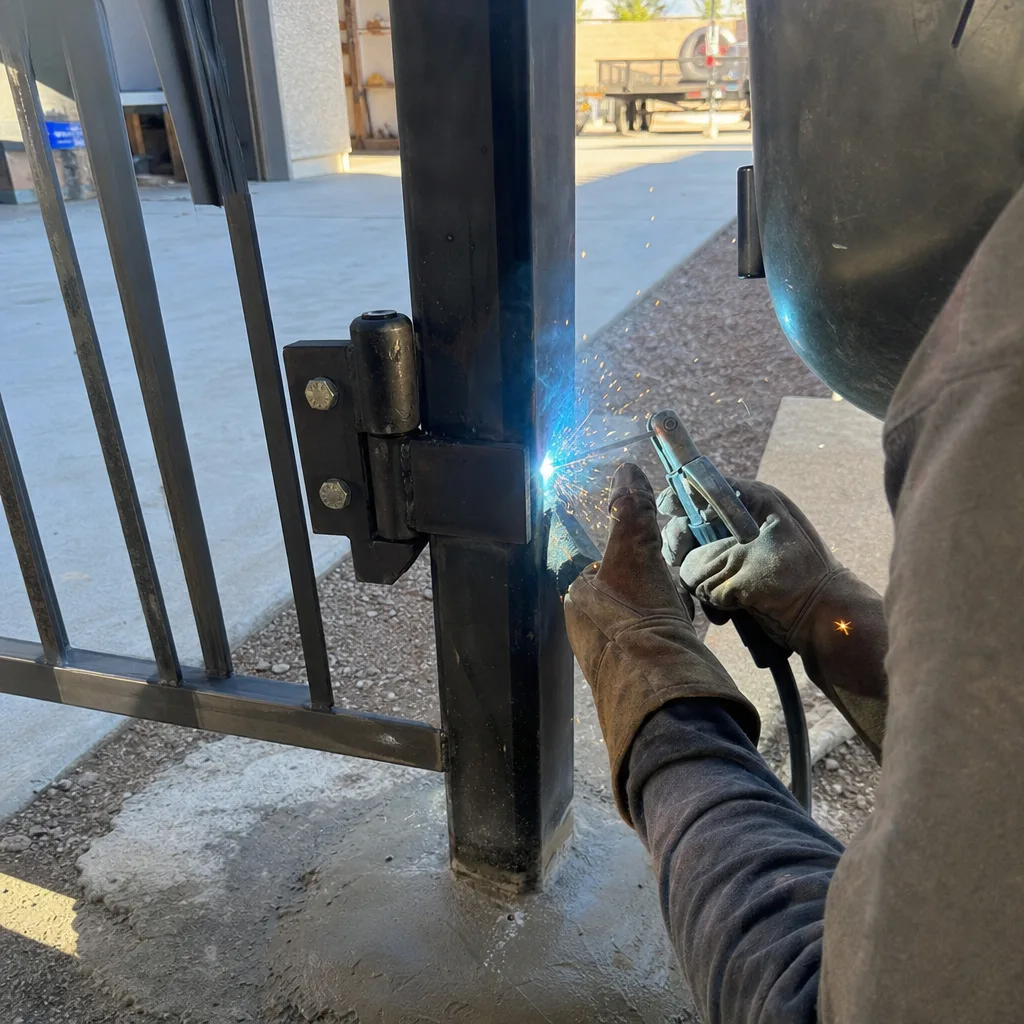
- Ignoring seasonal speed changes. A gate that slows in July and recovers in October isn’t “just the heat” - it’s binding that will accelerate wear. Address it in September before the next cycle compounds the damage.
- Using WD-40 on gate hinges. WD-40 is a water displacer, not a lubricant. It evaporates and leaves a sticky residue that collects alkaline dust. Use a dry-film lubricant or lithium grease rated for 300°F+.
- Power-washing the operator enclosure. High-pressure water defeats the seals and drives dust into the electronics. Clean the exterior with a damp cloth; leave internal cleaning to a technician with the enclosure open and components protected.
- Adjusting limit switches without measuring. Moving a limit switch to “fix” drift without understanding why the drift happened masks the underlying fault. The gate will drift again, and the next adjustment has less range to work with.
- Accepting a verbal estimate for structural work. Post replacement and concrete repair have too many variables for phone pricing. A written scope with excavation depth, concrete mix spec, and drainage detail protects both parties.
- Replacing an operator without checking the gate mechanics. We’ve seen three-year-old operators fail because the gate they were moving had binding hinges. The new operator fails the same way in 18 months. Always diagnose the mechanical system first.
- Skipping the documented baseline after a major repair. The best time to establish a record is when everything is working correctly. Post-repair baseline captures the “new normal” for future comparison.
When to Call a Professional
Call a gate repair technician when you observe any of the following: the gate reverses or stops without visible obstruction, the operator hums without moving the gate, you see visible damage to hinges or welds, the post has visible lean or soil cracking at the base, or the gate’s speed or sound has changed from its normal pattern. These are not cosmetic issues - they’re early-stage failures that become more expensive if deferred.
For safety-related faults - a gate that doesn’t reverse on contact, a safety edge that doesn’t respond to pressure, or a photo-eye that can be blocked by a leaf without triggering - call immediately. These are liability hazards, not convenience issues.
Vance Gate Repair Tempe offers free estimates in Tempe - call (623) 323-3849. A live person answers 24 hours a day. We’ll schedule a diagnostic visit, provide a written price before any work starts, and leave you with a documented photo record of what we found. If you have a written estimate from another company, we’ll review it at no cost under our free second-opinion policy.
Frequently Asked Questions
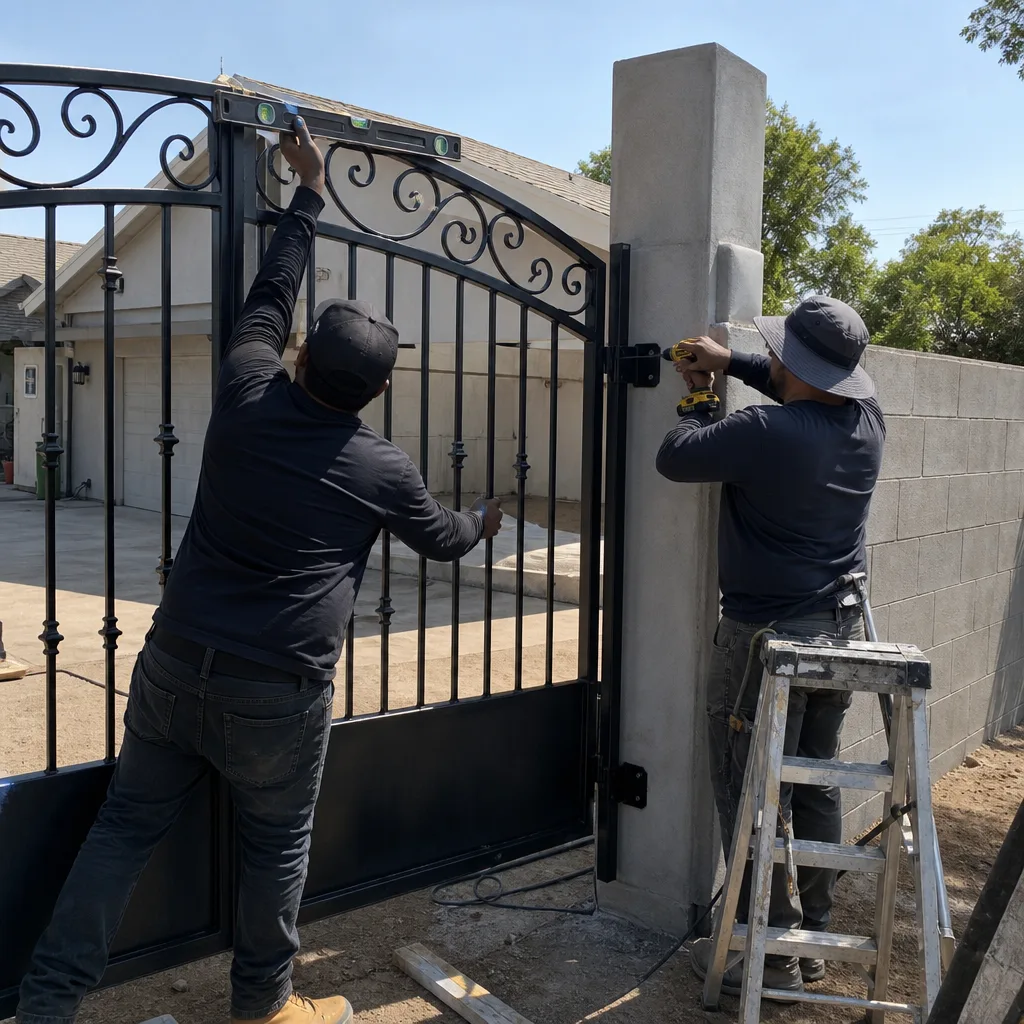
Most residential gate repairs in Tempe fall between $180 and $650, with simple mechanical adjustments at the low end and control board replacement or post work at the high end. The exact price depends on the failure category (mechanical, electrical, or structural), parts availability for your specific operator brand, and whether the gate is accessible without special equipment. We provide a written, itemized price before any work starts - call (623) 323-3849 for a free estimate.
About 60% of “dead” gate motors we diagnose in Tempe are repairable - failed capacitors, worn brushes, damaged wiring, or control board faults that don’t require full replacement. We test the motor under load, check the mechanical system it drives, and quote repair first. Replacement is recommended only when the motor frame is damaged, the stator windings are shorted, or parts are obsolete and repair cost exceeds 70% of replacement value. The written quote shows both options when applicable.
This pattern in Tempe almost always traces to thermal or electrical load issues. The operator may be overheating from increased mechanical resistance (binding hinges, dry rollers) or from internal electrical faults (failing capacitor, degraded motor windings) that worsen as temperature rises. Photo-eyes can also drift out of alignment as the gate frame expands. We diagnose with a mid-afternoon service call, measuring current draw and component temperatures under actual operating conditions.
Most gate repairs are classified as maintenance and don’t require permits. Structural modifications - post replacement with footing changes, new electrical service runs, or safety system upgrades - may trigger Tempe building department requirements. We identify permit needs during the estimate visit, include permit fees in the written price when applicable, and handle the submission. You don’t need to visit the city office.
We service and repair nine major brands: LiftMaster, FAAC, BFT, Linear, Viking, Ghost Controls, DoorKing, Elite, and Mighty Mule. This range means we can work with whatever operator is installed on your property rather than steering you toward a specific replacement. We stock common parts for same-day repair and source specialized components with documented lead times.
If any repair we complete isn’t right - the gate doesn’t operate as specified, the same component fails within normal use, or our documentation doesn’t match what we find - we make it right at no additional charge within one full year. No argument, no fee, no expiration date within that window. This applies to all completed work, not just parts. The promise is in writing on every invoice.
Listen and observe. Mechanical problems usually produce sound changes (grinding, squealing, clicking) and speed changes before complete failure. Electrical problems often present as intermittent operation, fault codes, or complete non-response without mechanical warning. A simple test: disconnect the operator and try to move the gate by hand. If it binds or drags, the problem is mechanical. If it moves freely but the operator won’t run, the problem is electrical. Call (623) 323-3849 and we’ll confirm with a diagnostic visit.
The Bottom Line
Gate repair in Tempe is less about fixing what’s broken today and more about understanding why it broke in this climate, with this dust, at this time of year. Thermal expansion, alkaline dust accumulation, and undertorqued hardware interact in predictable ways that show up as speed changes, sound changes, and drift long before the gate stops moving. Reading those signals early, documenting the baseline when everything works, and choosing a repair approach that addresses cause rather than symptom - that’s what separates a lasting repair from a recurring problem. The Haven Standard exists because we’ve seen too many homeowners pay twice to rediscover the same fault. Written price before work. Documented record after. One year to make it right.
Ready to schedule? Call Vance Gate Repair Tempe at (623) 323-3849. A live person answers 24/7. We’ll provide a free estimate with a written price before any work starts, and every visit leaves you with a documented photo record of what we found and what we did.
Written by Adrian Vance, Owner at Vance Gate Repair Tempe, serving Tempe since 2014.